What Happens When an ETF Changes Its Index?
What happens when an ETF changes its index? Learn how holdings, risk, costs, taxes, and investment strategy can change after an index switch.
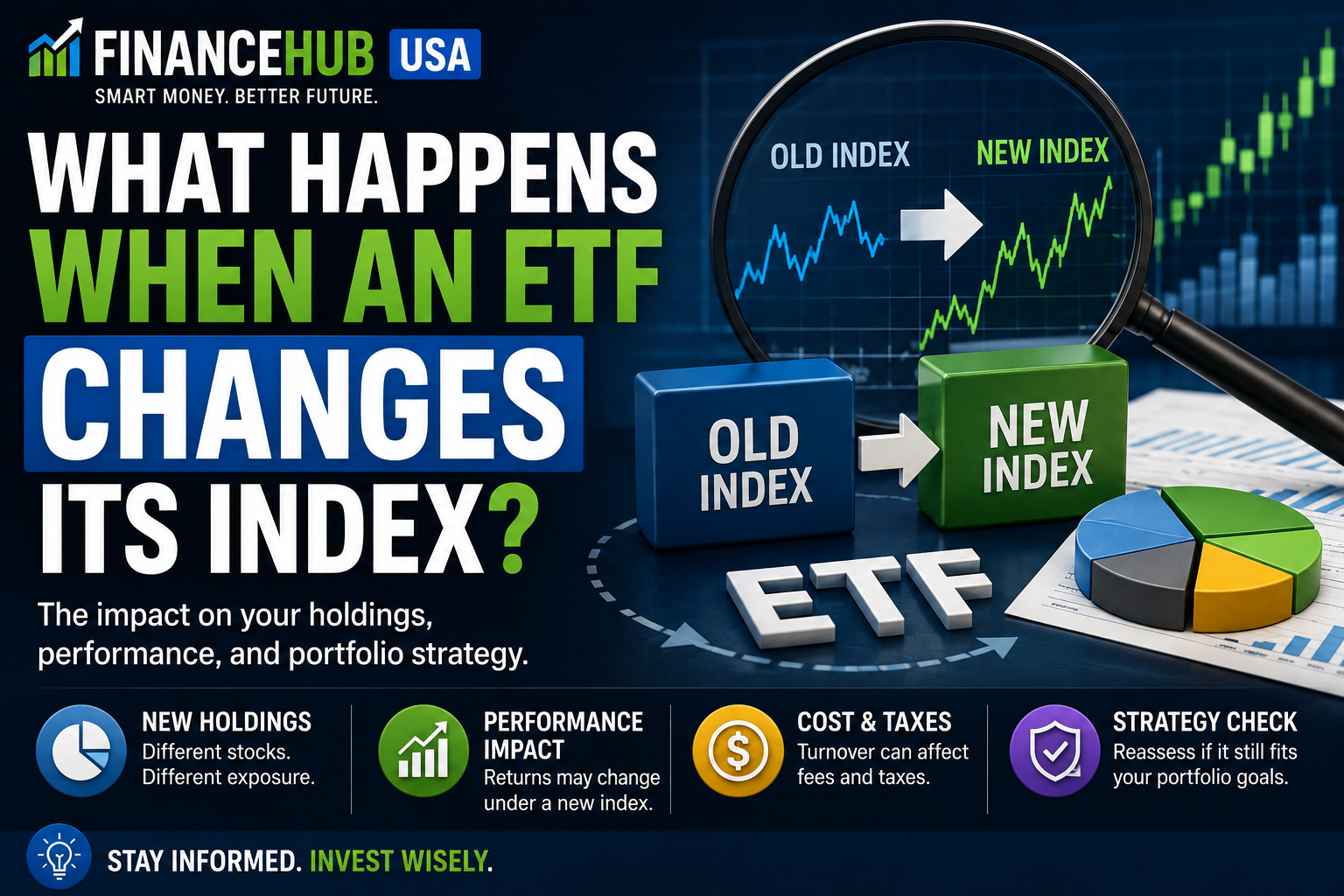

Exchange-traded funds are often viewed as relatively simple investments: choose an ETF that tracks a market index, buy shares, and let the fund follow that benchmark. But the benchmark itself is not necessarily permanent. An ETF provider can decide to replace the fund's underlying index, potentially changing what the portfolio owns and how those investments are selected and weighted.
So, what happens when an ETF changes its index? Investors normally continue owning the same ETF shares, but the fund may buy and sell securities to reposition its portfolio around the new benchmark. Depending on how different the two indexes are, the switch can alter sector exposure, company size, geographic diversification, portfolio turnover, dividend characteristics, risk, and future performance.
An index change therefore deserves more attention than a simple name or branding update. For an index-based ETF, the benchmark is essentially the blueprint for the portfolio. Changing that blueprint can materially change the investment shareholders originally purchased.
Key Takeaways
- Shareholders generally continue owning the same ETF shares when its underlying index changes.
- The ETF may need to buy and sell securities to align its portfolio with the new benchmark.
- A new index can change sector, geographic, market-cap, factor, and company-level exposure.
- The benchmark change itself does not normally force shareholders to sell.
- Portfolio turnover associated with the transition can affect trading costs and the fund's tax profile.
- Historical performance from before the change may become less representative of the ETF's future strategy.
- Investors should compare the old and new methodologies before deciding whether the ETF still fits their portfolio.
Why Would an ETF Change Its Underlying Index?
An ETF's underlying index serves as the blueprint for an index-based fund. The benchmark methodology determines which securities qualify for inclusion, how positions are weighted, when the index rebalances, and how companies enter or leave the benchmark.
An ETF sponsor may decide to change benchmarks for several reasons. The provider may believe another index better represents the fund's investment objective, want a methodology with broader diversification, seek different eligibility criteria, or make a change connected with index licensing or other operational considerations.
The SEC explains that index-based ETFs seek to track the performance of a specified securities index. Unlike an actively managed fund, the portfolio is generally structured around its benchmark rather than having a manager independently select securities with the primary objective of outperforming the market.
That makes the index particularly important. If the benchmark changes, the rules guiding the portfolio can change with it.
| Potential Reason for Index Change | Possible Effect |
|---|---|
| Broader benchmark | ETF may gain exposure to additional companies or market segments |
| Different weighting methodology | Position sizes can change even when many holdings remain the same |
| New eligibility requirements | Some existing holdings may no longer qualify |
| Different market coverage | Exposure to company sizes, sectors, or countries can shift |
| Different index provider | Methodology, selection criteria, and rebalancing rules can change |
What Happens to the ETF's Existing Holdings?
If the new index contains different securities or assigns different weights to existing holdings, the ETF generally needs to adjust its portfolio so it can begin tracking the new benchmark.
That process can require the fund to sell securities associated with the old index and purchase securities represented in the new one. Holdings appearing in both benchmarks may remain in the portfolio but at different weights.
Hypothetical Example
Imagine the hypothetical FinanceHub U.S. Equity ETF tracks an index consisting primarily of large-cap companies. Its provider later announces that the ETF will track a broader index containing large-, mid-, and small-cap stocks.
| Portfolio Segment | Old Index | New Index |
|---|---|---|
| Large-Cap Stocks | 80% | 60% |
| Mid-Cap Stocks | 20% | 30% |
| Small-Cap Stocks | 0% | 10% |
To align with the hypothetical new benchmark, the ETF would need to reduce some large-cap exposure, increase its positions in mid-cap companies, and establish new small-cap positions.
The investor still owns the ETF, but the economic exposure represented by those shares has changed.
Do Investors Have to Sell Their ETF Shares?
Usually, no. An index change does not normally require shareholders to sell their ETF shares simply because the benchmark is changing. The portfolio adjustments happen inside the fund.
However, investors should not interpret that operational convenience as a reason to ignore the change. An ETF purchased for one investment purpose can become less appropriate if its new benchmark materially changes the exposure.
For example, an investor might originally choose an ETF specifically because it provides concentrated exposure to large U.S. companies. If the ETF later adopts a broader benchmark that adds significant mid- and small-cap exposure, the fund could remain a diversified equity investment while no longer performing exactly the same job in that investor's portfolio.
Investors should therefore review the fund's updated official materials rather than making a decision based solely on its ticker symbol, name, or historical reputation.
How Does the ETF Transition to the New Index?
The fund sponsor normally announces the benchmark change and an effective date. Around the transition, portfolio managers can reposition the ETF so its holdings correspond more closely with the new index methodology.
The magnitude of the transition depends heavily on the overlap between the two benchmarks.
| Index Overlap | Potential Portfolio Adjustment |
|---|---|
| Very high overlap | Relatively limited trading may be required |
| Moderate overlap | Multiple holdings and portfolio weights may change |
| Low overlap | Substantial portfolio restructuring may be necessary |
ETF portfolio managers also have mechanisms that can help facilitate portfolio changes. SEC investor materials explain that ETF shares are created and redeemed in large blocks known as creation units, often through transactions involving baskets of securities and other assets.
The exact transition process depends on the fund, but the basic objective is straightforward: move the ETF from a portfolio designed around the old benchmark toward one capable of tracking the new benchmark.

Can an Index Change Affect ETF Performance?
Yes. Once the ETF begins tracking a different benchmark, its future returns should increasingly reflect the securities, weighting rules, and methodology of the new index rather than the old one.
Suppose Index A heavily weights technology companies while Index B uses a broader sector allocation. During a strong technology rally, Index A might outperform. During a major technology downturn, that same concentration could work in the opposite direction.
Changing from Index A to Index B therefore changes more than the benchmark's name. It can change the factors driving the ETF's returns.
| Index Feature | Potential Investment Impact |
|---|---|
| Market-cap weighting | Largest companies can dominate performance |
| Equal weighting | Smaller constituents receive relatively greater influence |
| Sector constraints | Can reduce or increase industry concentration |
| Small-cap exposure | Can alter volatility and return characteristics |
| International exposure | Can introduce currency, geopolitical, and country-specific risks |
| Factor methodology | Can tilt the portfolio toward value, growth, quality, momentum, or other characteristics |

Does an Index Change Create Taxes for Investors?
Not automatically. An ETF changing securities inside its portfolio does not mean every shareholder immediately realizes a personal taxable capital gain.
The ETF shares owned by an investor and the individual securities owned by the fund are separate layers. An investor generally recognizes a capital gain or loss when selling ETF shares in a taxable account, while the fund itself manages transactions involving its portfolio securities.
However, ETFs can make capital-gain distributions, and portfolio turnover associated with a significant benchmark transition can be relevant to the fund's tax profile. The SEC notes that investors can potentially owe taxes on ETF distributions and on gains realized when ETF shares are sold.
Account type also matters. Activity occurring inside a tax-advantaged retirement account generally does not create the same immediate federal tax consequences for the account owner as taxable distributions or realized gains in a regular brokerage account, although withdrawals from retirement accounts are governed by separate tax rules.
Could an Index Change Increase the ETF's Costs?
Potentially. Repositioning a portfolio can involve trading costs and market-impact considerations, particularly when the old and new benchmarks differ substantially.
Investors should also check whether the ETF's expense ratio is changing around the same time. A benchmark change itself does not automatically require the fund's management fee to increase or decrease.
ETF investors should consider more than the published expense ratio. Other potential costs can include bid-ask spreads, brokerage commissions where applicable, trading costs within the fund, and premiums or discounts between the ETF's market price and net asset value.
A benchmark change is therefore a useful opportunity to reassess the ETF's overall cost structure.
FinanceHub USA Analysis: The Index Is the ETF's Rulebook
For a passive index ETF, investors should think of the benchmark as more than a comparison statistic. It is effectively the rulebook that determines what the fund is trying to own.
Two indexes both described as "U.S. large cap" can produce meaningfully different portfolios because they may use different inclusion criteria, weighting systems, rebalancing schedules, profitability screens, sector classifications, or market-cap thresholds.
This means an ETF can keep the same ticker while its investment exposure changes beneath the surface.
Historical returns from before the benchmark switch can also become less representative of the strategy investors will own going forward. Those historical returns actually occurred, but they may reflect portfolio rules that are no longer being followed.
The most useful response to an index change is therefore not automatically to sell. Instead, compare the old and new methodologies and determine whether the new portfolio still performs the job you originally assigned to the ETF.

How Should You Compare the Old Index With the New Index?
The most important step after an ETF announces a benchmark change is comparing the methodologies rather than simply comparing the names of the indexes.
Two benchmarks that appear to cover the same market can produce noticeably different portfolios.
Investors should examine factors such as market-cap ranges, sector exposure, geographic coverage, weighting methodology, constituent-selection rules, rebalancing frequency, profitability screens, factor exposure, and the number of securities included.
| Feature to Compare | Why It Matters |
|---|---|
| Number of holdings | Can affect diversification and company-specific risk |
| Weighting methodology | Determines how much influence individual securities have |
| Sector exposure | Can increase or reduce concentration in particular industries |
| Market-cap exposure | Can shift the portfolio toward large-, mid-, or small-cap companies |
| Geographic exposure | Can introduce different country and currency risks |
| Rebalancing rules | Influence how frequently holdings and weights change |
| Factor screens | Can introduce value, growth, quality, momentum, or other investment tilts |
Investors should examine both the index methodology and the ETF's actual holdings. This can be particularly important with smart-beta or other rules-based strategies where benchmarks containing many of the same companies can nevertheless assign dramatically different weights to them.
What Happens to Tracking Error?
An index ETF generally seeks returns that correspond closely to its benchmark before considering expenses. In practice, however, ETF performance can differ somewhat from index performance.
The difference in return between a fund and its benchmark is commonly discussed as tracking difference, while tracking error generally describes the variability of those differences over time.
Fees, transaction costs, portfolio sampling, cash balances, taxes, corporate actions, and operational factors can contribute to differences between a fund and its benchmark.
During a significant benchmark transition, investors may want to pay particular attention to how efficiently the fund moves toward its new portfolio. If substantial trading is required, transition costs can affect results even though the objective is ultimately to track the new benchmark.
After the transition, the relevant comparison changes as well. Historical tracking against the old index describes the previous strategy. Future tracking should be evaluated against the new benchmark.
Could the ETF's Expense Ratio Change?
Changing an index does not automatically change an ETF's expense ratio. However, investors should check the updated prospectus and fund announcements to determine whether fees are changing at the same time.
An expense ratio represents a fund's annual operating expenses as a percentage of its average net assets. Those expenses reduce investor returns over time.
Example: How a Small Fee Difference Adds Up
Suppose two hypothetical ETFs produce identical gross investment returns but charge different annual expense ratios. ETF A charges 0.10%, while ETF B charges 0.35%.
On a $10,000 investment, the approximate first-year cost difference—ignoring market movements, compounding, and other expenses—would look like this:
| ETF | Hypothetical Expense Ratio | Approximate Annual Cost on $10,000 |
|---|---|---|
| ETF A | 0.10% | $10 |
| ETF B | 0.35% | $35 |
| Difference | 0.25 percentage points | $25 |
The difference appears small over one year, but recurring expenses can have a larger cumulative effect over long investment horizons because money used to cover expenses is no longer available to compound.
Investors should therefore compare the updated ETF with competing funds rather than assuming it remains the best option simply because they already own it.
Can Dividend Income Change After the Index Switch?
Yes. An ETF's future distributions can change if the new benchmark creates a portfolio with a different dividend profile.
Imagine an ETF switching from a broad market-cap-weighted index to an index emphasizing companies with stronger dividend characteristics. If the new holdings collectively generate more dividend income, the ETF's future distributions could potentially increase.
The opposite can also happen if the new benchmark shifts toward companies that retain more earnings rather than distributing them to shareholders.
Investors should not assume that a benchmark change guarantees a particular future yield. Company dividends can be increased, reduced, suspended, or eliminated, and ETF portfolio weights can change over time.
Example: What Could Happen to a $10,000 ETF Investment?
Consider an investor with $10,000 in a hypothetical fund called U.S. Core 500 ETF. The fund originally tracks Index A, a market-cap-weighted benchmark dominated by large U.S. companies.
The ETF provider announces that the fund will instead track Index B, which includes more companies and introduces greater mid- and small-cap exposure.
| Characteristic | Before Change | After Change |
|---|---|---|
| Investment value at transition | $10,000 | $10,000 before market movements and transition effects |
| Benchmark | Index A | Index B |
| Large-cap exposure | 90% | 70% |
| Mid-cap exposure | 10% | 25% |
| Small-cap exposure | 0% | 5% |
| Holdings | 500 | 750 |
The benchmark change itself does not magically add or subtract thousands of dollars from the investor's account. Instead, it changes what that $10,000 investment represents going forward.
If smaller companies subsequently outperform large companies, the new benchmark could benefit relative to the previous strategy. If smaller companies underperform, the opposite could occur.
The important point is that the investor's future return drivers have changed.
Should You Sell an ETF After It Changes Its Index?
Not automatically. An index change is a reason to reevaluate an investment, not necessarily a reason to exit immediately.
Before making a decision, consider:
- Does the new benchmark still match my objective? Determine whether the ETF continues providing the exposure you originally wanted.
- How different are the holdings? Compare the portfolio before and after the transition.
- Has concentration changed? Examine the largest positions and sector weights.
- Are fees changing? Review the updated prospectus and expense ratio.
- Has the risk profile changed? New exposure to smaller companies, foreign markets, particular sectors, or investment factors can alter volatility.
- Would selling create taxes? Selling ETF shares at a gain in a taxable brokerage account can generate a taxable capital gain.
- Is there a better alternative? Compare competing ETFs that track the old benchmark or provide similar exposure.
The ETF's prospectus and shareholder materials are particularly useful because they describe the fund's objective, principal investment strategies, risks, costs, and other important characteristics.
Common Mistakes Investors Make After an ETF Index Change
- Ignoring the announcement. A benchmark change can materially alter the portfolio.
- Looking only at the ETF ticker. The ticker can remain unchanged even when the underlying strategy changes.
- Assuming similar index names mean identical exposure. Methodology matters more than branding.
- Using historical performance without context. Previous returns may reflect a benchmark the ETF no longer tracks.
- Ignoring taxes before selling. Selling appreciated ETF shares in a taxable account can create capital-gains consequences.
- Focusing only on the expense ratio. Costs matter, but exposure, diversification, risk, liquidity, and methodology matter too.
- Assuming more holdings always means better diversification. Hundreds of securities can still produce concentrated exposure if the weighting methodology heavily favors a relatively small group of companies.
FinanceHub USA Analysis: Treat an Index Change Like a New Investment Decision
An investor does not necessarily need to sell an ETF when its benchmark changes, but the fund deserves essentially the same review you would perform before making a new investment.
The key question is not whether the new index is objectively "better." It is whether the new index is better suited to the role the ETF plays in your portfolio.
For example, an investor using an ETF specifically for large-cap exposure may not want a benchmark that substantially expands into smaller companies. Another investor seeking broader diversification could view exactly the same change positively.
The benchmark switch can also make long-term performance charts less intuitive. Returns earned under the old index describe a strategy that may no longer exist in the same form. Investors evaluating the fund going forward should therefore place greater emphasis on the new methodology, holdings, costs, concentration, and risks.
This is an important principle for long-term investors: do not continue owning an ETF solely because it was appropriate when you originally purchased it. What matters is whether the investment you own today still serves your financial objective.
For investors comparing long-term ETF opportunities, read our related FinanceHub USA guide: Top 5 ETFs to Buy in 2026 for Long-Term Growth.
Final Thoughts
So, what happens when an ETF changes its index? Shareholders generally continue owning the same ETF shares, but the investment underneath those shares can change meaningfully.
The fund may buy and sell securities to align with the new benchmark, potentially changing sector exposure, company-size exposure, geographic diversification, portfolio turnover, dividend characteristics, costs, risk, and future performance.
The appropriate response is not necessarily to buy or sell immediately. Instead, compare the old and new index methodologies, examine the updated holdings, check expenses, understand potential tax consequences, and determine whether the ETF still fits the role it is supposed to play in your portfolio.
An ETF's ticker may remain unchanged, but its benchmark determines much of what investors actually own.
Continue exploring FinanceHub USA for practical guides covering ETFs, stocks, investing, retirement planning, banking, credit, and personal finance.
Investment Disclaimer: This article is for general educational and informational purposes only and does not constitute investment, financial, tax, or legal advice. Investing involves risk, including the possible loss of principal. Before making investment decisions, consider your financial situation, objectives, time horizon, and risk tolerance.
Official Investor Resources
Frequently asked questions
What happens when an ETF changes its index?
The ETF generally begins adjusting its portfolio to track the new benchmark. Investors normally keep their ETF shares, but the securities and exposures represented by those shares can change.
Do I have to sell my ETF when its index changes?
Usually no. An index change does not normally require shareholders to sell, but investors should determine whether the new benchmark still fits their goals.
Can an ETF change its holdings after switching indexes?
Yes. The fund may sell securities associated with the old benchmark, buy securities included in the new benchmark, and change the weights of holdings appearing in both.
Can an ETF index change affect performance?
Yes. Future performance will increasingly reflect the composition and methodology of the new benchmark, which may have different sector, company-size, geographic, or factor exposure.
Does an ETF index change create a tax bill?
Not automatically for each shareholder. However, ETFs can make taxable capital-gain distributions, and selling ETF shares at a gain in a taxable account can create capital-gains taxes.
Can an ETF's expense ratio change when its index changes?
It can, but a benchmark change does not automatically require a fee change. Investors should review the updated prospectus and fund disclosures.
Can an ETF's dividend yield change after switching indexes?
Yes. A new benchmark can change the portfolio's dividend-producing holdings and weights, which can affect future distributions.
What should I compare when an ETF changes indexes?
Compare holdings, weighting methodology, sector exposure, market-cap exposure, geographic exposure, index rules, rebalancing frequency, fees, risk, and the number of securities.
Does the ETF ticker change when the index changes?
Not necessarily. An ETF can potentially retain the same ticker even though its underlying benchmark and portfolio strategy change.
Should I sell an ETF if I don't like the new index?
Selling may be reasonable if the new strategy no longer fits your investment plan, but consider alternatives, transaction costs, and potential taxes before making a decision.


