Are Venmo Payments Taxable in 2026?
Learn when Venmo payments are taxable in 2026, when they're tax-free, and what the latest IRS guidance means for individuals and small businesses.
Are Venmo Payments Taxable in 2026?

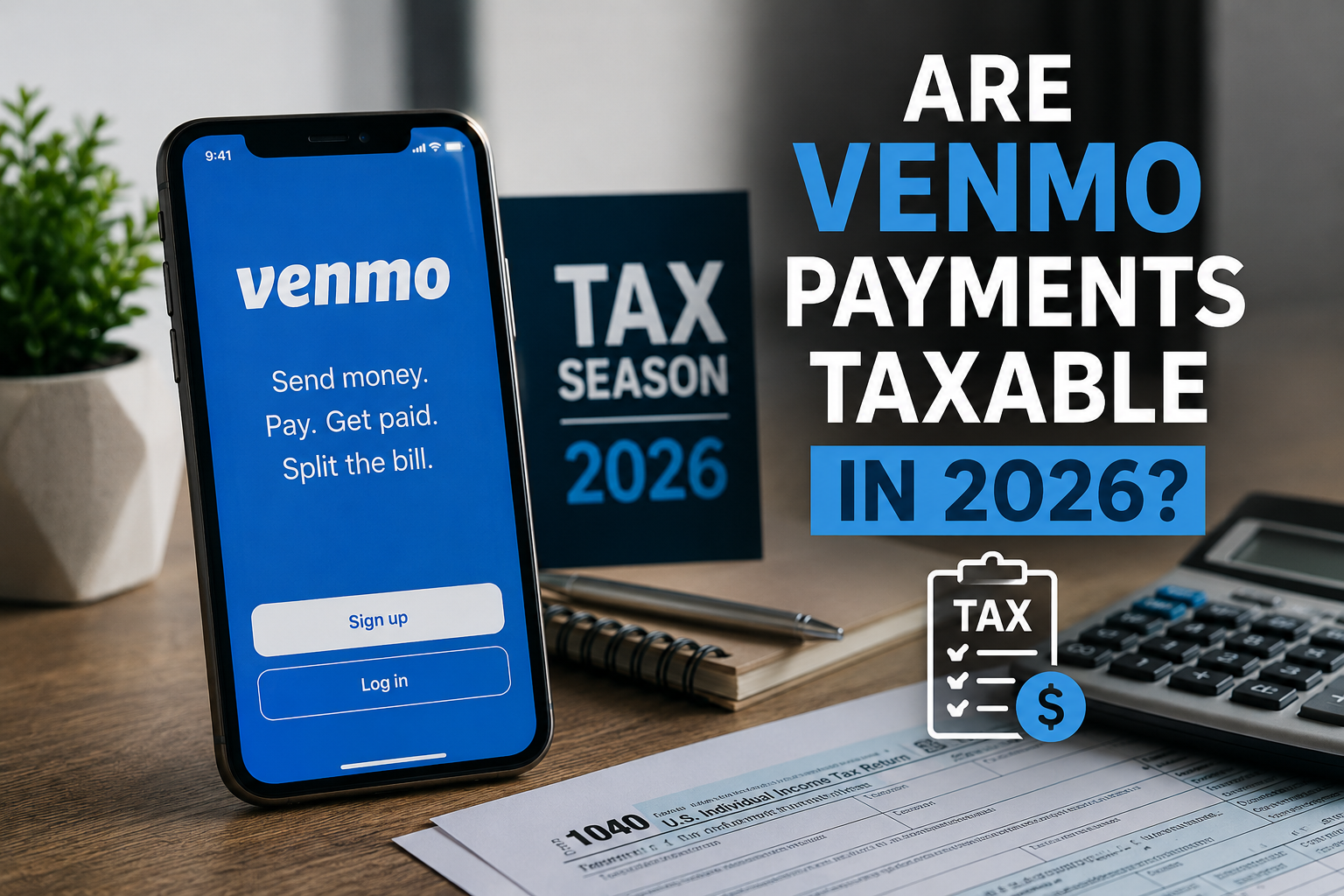
Receiving money through Venmo does not automatically mean that you owe federal income tax.
The tax treatment depends primarily on why you received the payment, not on the fact that Venmo was used.
Money received for freelance work, business sales, professional services, rental activity, or other taxable income generally remains taxable even when it arrives through a payment app. Personal reimbursements, many gifts, and transfers between friends or relatives are generally treated differently because they are not payments for goods or services.
There is also an important distinction between taxable income and Form 1099-K reporting. A payment can be taxable even if Venmo does not send you a Form 1099-K, and receiving a Form 1099-K does not automatically mean every dollar shown represents taxable profit.
Are Venmo Payments Taxable in 2026?
Some Venmo payments are taxable and others are not.
A useful starting question is:
Did you receive the money in exchange for goods, services, work, or another income-producing activity?
If the answer is yes, the payment may represent taxable income.
If the payment simply reimbursed you for someone else's share of a personal expense, it generally is not income.
| Type of Venmo Payment | Generally Taxable? |
|---|---|
| Payment for freelance work | Generally yes |
| Payment for business services | Generally yes |
| Sale of products for profit | Generally yes |
| Payment for rental activity | May be taxable depending on the activity |
| Friend reimbursing you for dinner | Generally no |
| Roommate reimbursing shared utilities | Generally no |
| Birthday gift | Generally not income to the recipient |
| Repayment of a personal loan | Principal repayment generally is not income |
These are general examples. The tax treatment can depend on the facts surrounding a particular transaction.
When Venmo Payments Are Generally Taxable
If you receive money for providing goods or services, the payment generally does not become tax-free simply because it arrived through Venmo.
Examples can include:
- Freelance work
- Consulting
- Graphic design
- Website development
- Photography
- Tutoring
- Online product sales
- Home services
- Side-hustle income
- Other self-employment activity
Example: Freelance Income
Suppose Emily completes a freelance design project and her client sends her $1,500 through Venmo.
The fact that the client used Venmo instead of a check, ACH transfer, or cash does not generally change the underlying character of the payment.
If the $1,500 represents compensation for services, it may be taxable business or self-employment income.
Personal Reimbursements Are Different
Now suppose Emily pays a $120 restaurant bill for herself and three friends.
Each friend later sends her $30 through Venmo.
Emily receives $90 through the app, but that $90 does not represent payment for work or a business sale. It simply reimburses her for money she already spent on behalf of her friends.
That distinction is critical.
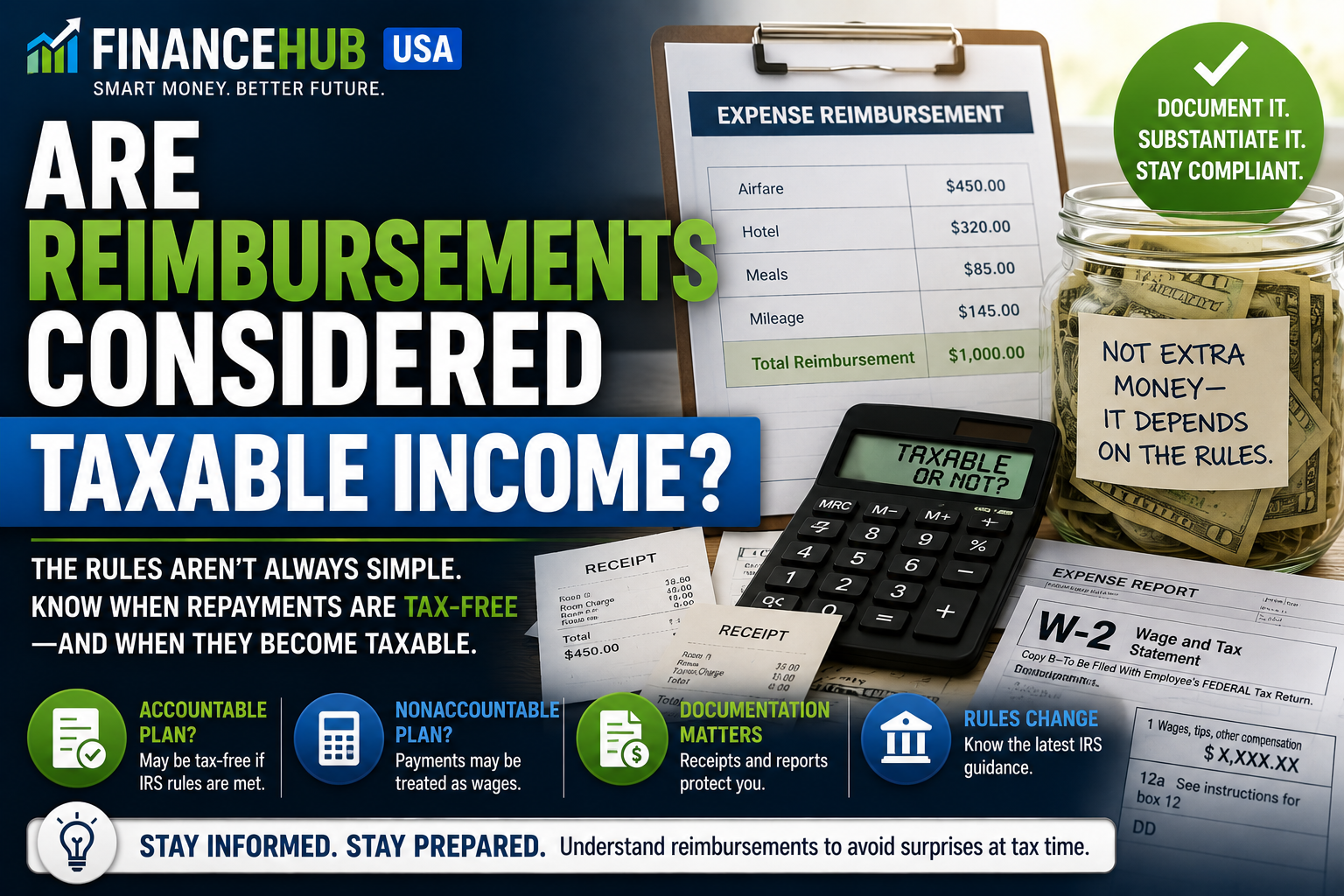
The IRS states that personal payments from family and friends that are not for goods or services should not be reported on Form 1099-K. :contentReference[oaicite:1]{index=1}
Examples of Venmo Payments That Are Usually Personal
- Splitting restaurant bills
- Sharing rent or utilities
- Reimbursing travel expenses
- Repaying money borrowed from a friend
- Sending a birthday or holiday gift
- Sharing the cost of concert tickets
- Reimbursing groceries purchased for a household
The important question is whether the payment represents income.
Does Venmo Report Payments to the IRS?

Venmo and other payment apps can be required to report certain payments for goods or services on Form 1099-K.
For third-party settlement organizations, the federal reporting threshold currently requires reporting when both of the following conditions are met during the calendar year:
- Payments for goods or services exceed $20,000
- The total number of transactions exceeds 200
The IRS restored this threshold after legislative changes reversed the lower thresholds that had received substantial attention in previous years. :contentReference[oaicite:2]{index=2}
The 2026 Form 1099-K Threshold
| Federal Requirement for Third-Party Payment Apps | Current Threshold |
|---|---|
| Gross payments for goods or services | More than $20,000 |
| Number of transactions | More than 200 |
Both conditions generally must be exceeded for the federal third-party settlement organization reporting requirement.
However, the IRS notes that a payment platform may still send a Form 1099-K even when payments or transaction counts are below the federal threshold. :contentReference[oaicite:3]{index=3}
Form 1099-K Does Not Determine Whether Income Is Taxable
This is one of the most important points to understand.
The reporting threshold applies to when a payment platform may be required to send an information return.
It is not an income-tax exemption.
Suppose you earn $8,000 from freelance work paid through Venmo but do not meet the federal Form 1099-K reporting threshold.
The absence of a Form 1099-K does not automatically make the $8,000 tax-free.
The IRS instructs taxpayers to use Form 1099-K together with their other records to determine and report taxable income. :contentReference[oaicite:4]{index=4}
What If You Receive a Form 1099-K?
Form 1099-K reports gross payment activity meeting applicable reporting requirements.
It does not necessarily calculate your taxable profit.
For example, suppose a small business receives $30,000 in qualifying payments through Venmo.
The business may also have deductible expenses such as:
- Inventory
- Shipping
- Advertising
- Software
- Supplies
- Payment-processing fees
- Other ordinary and necessary business expenses
Taxable business profit is not necessarily equal to gross Venmo receipts.
The appropriate calculation depends on the taxpayer's business records and tax situation.
What If Venmo Reports a Personal Payment by Mistake?
A Form 1099-K can sometimes contain transactions that the recipient believes were personal rather than business-related.
If that happens, do not simply ignore the form.
Compare it with your records and review the IRS guidance for handling an incorrect or unexpected Form 1099-K.
Maintaining documentation can help show the purpose of the transaction.
Venmo and Selling Personal Items
Selling personal property creates another important distinction.
Suppose you bought a used couch several years ago for $1,000 and later sell it through an online marketplace for $400, receiving the money through Venmo.
You received $400, but that does not necessarily mean you earned $400 of taxable profit.
You sold the item for less than your original cost.
Example: Selling at a Loss
| Item | Amount |
|---|---|
| Original purchase price | $1,000 |
| Sale price | $400 |
| Difference | -$600 |
The tax rules for personal property differ from business inventory, and losses on personal-use property generally do not receive the same treatment as business losses.
Keep documentation showing what you originally paid when selling valuable personal items.
What If You Sell Something for More Than You Paid?
Suppose instead that you bought a collectible for $500 and later sold it for $900.
The simplified gain would be:
$900 − $500 = $400
That gain may have tax consequences even though the transaction occurred through Venmo.
Again, the payment app itself does not determine the tax result.
Business Revenue Is Not the Same as Business Profit
This distinction matters for freelancers and small-business owners.
Suppose a business receives $50,000 in Venmo payments during the year.
It also incurs:
| Business Expense | Amount |
|---|---|
| Supplies | $8,000 |
| Advertising | $3,000 |
| Software | $1,500 |
| Other qualifying expenses | $7,500 |
| Total expenses | $20,000 |
A simplified illustration would produce:
$50,000 gross revenue − $20,000 qualifying expenses = $30,000 net business income
Actual taxable income can differ depending on accounting methods, deductible expenses, other income, and tax rules.
Self-Employment Taxes May Also Apply
Someone earning business or freelance income may have obligations beyond regular federal income tax.
Self-employed individuals may also need to consider:
- Self-employment tax
- Estimated tax payments
- Business deductions
- State and local taxes
Venmo does not change these rules simply because it is a digital payment platform.
Should You Keep Personal and Business Venmo Payments Separate?
Separating business and personal activity can make recordkeeping much easier.
A clear system can help you identify:
- Business revenue
- Personal reimbursements
- Potentially deductible expenses
- Transactions associated with invoices
- Payments that may appear on tax forms
This does not mean mixing the transactions automatically makes them taxable.
The benefit is organization.
What Records Should You Keep?

If you use Venmo for income-producing activity, consider maintaining records such as:
- Invoices
- Receipts
- Purchase records
- Business expense records
- Customer payment descriptions
- Venmo transaction history
- Bank statements
- Tax forms received
Good documentation becomes particularly important when your payment history includes both personal and business transactions.
Do Gifts Received Through Venmo Count as Income?
A legitimate personal gift is generally not treated as taxable income to the recipient merely because it was sent through Venmo.
Gift-tax rules can create separate considerations for the person giving the gift when amounts become sufficiently large, but that is different from treating the recipient's ordinary gift as business income.
The description attached to a payment does not by itself determine the tax treatment. The underlying facts matter.
Are Venmo Reimbursements Taxable?
A genuine reimbursement generally does not create income when someone is simply paying you back for their share of an expense.
Example
You purchase four concert tickets for $100 each and pay the full $400.
Three friends each reimburse you $100.
You receive $300 through Venmo, but economically you have only recovered the money you advanced for your friends.
You did not earn $300 from providing a service.
Are Rent Payments Through Venmo Taxable?
This depends on the transaction.
If your roommate sends you money for their share of rent that you then pass to the landlord, the payment may simply be a personal reimbursement.
If you own rental property and a tenant sends rent through Venmo, that payment may represent rental income subject to applicable tax rules.
The word "rent" in a Venmo description is therefore not enough by itself to determine tax treatment.
What About Tips Received Through Venmo?
If tips are received in connection with work or services, they may constitute taxable income.
The fact that a customer sends the tip digitally rather than leaving cash does not generally change the underlying nature of the income.
State Tax Rules Can Also Matter
This article focuses primarily on general federal tax treatment.
State and local income-tax obligations can differ depending on where you live and conduct business.
Some states may also have information-reporting rules that differ from federal reporting requirements.
Taxpayers should review the rules that apply in their jurisdiction.
FinanceHub USA Analysis: Separate Taxability From Reporting
The biggest source of confusion around Venmo taxes is that consumers often treat two different questions as though they were the same:
- Is this payment taxable income?
- Will Venmo report this payment on Form 1099-K?
They are not the same question.
| Situation | Taxable? | Form 1099-K Required? |
|---|---|---|
| $5,000 of freelance income through Venmo | Generally yes | May be below the federal TPSO threshold |
| $500 reimbursement from friends | Generally no | Personal payments should not normally be reported as goods or services |
| $25,000 of business payments across 250 transactions | Generally business income before applicable expenses | Generally meets the federal TPSO reporting threshold |
The tax character comes from the underlying transaction.
The reporting threshold determines whether a platform has a federal information-reporting obligation.
Common Venmo Tax Mistakes
- Assuming every Venmo payment is taxable. Personal reimbursements and transfers are not automatically income.
- Assuming payments below the 1099-K threshold are tax-free. Taxable income generally remains reportable regardless of whether a form is issued.
- Assuming a 1099-K equals taxable profit. The form reports gross payments, not necessarily net business income.
- Keeping no records of personal-item sales. Cost basis can matter when determining whether a gain occurred.
- Mixing business and personal activity without documentation. This can make tax preparation more difficult.
- Ignoring self-employment obligations. Freelance income can involve additional tax considerations.
- Ignoring an unexpected Form 1099-K. Review the form and compare it with your records rather than assuming it is irrelevant.
A Simple Venmo Tax Checklist
For each significant payment you receive, ask:
- Why did I receive this money?
- Was it payment for goods or services?
- Was it simply a reimbursement?
- Was it a gift?
- Did I sell personal property?
- What did I originally pay for the item?
- Do I have an invoice or receipt?
- Was the payment connected to a business activity?
Answering these questions throughout the year can make tax preparation much easier.
Final Thoughts
Are Venmo payments taxable in 2026?
The answer depends on the reason for the payment.
Payments received for business activity, freelance work, services, or taxable sales generally remain taxable regardless of whether they arrive through Venmo, cash, a check, or another payment method.
Personal reimbursements, shared expenses, and many gifts generally do not become taxable income simply because Venmo was used.
For 2026, the federal Form 1099-K reporting threshold for third-party settlement organizations generally applies when payments for goods or services exceed $20,000 and 200 transactions. That reporting rule should not be confused with the rules determining whether income itself is taxable. :contentReference[oaicite:5]{index=5}
The most useful strategy is to maintain clear records throughout the year and separate personal transfers from business activity whenever practical.
Continue exploring FinanceHub USA for practical guides covering taxes, digital payments, budgeting, banking, credit, and personal finance.
Sources and Further Reading
Frequently asked questions
Are personal Venmo payments taxable?
Generally, no. Personal reimbursements, gifts, and shared expenses are usually not considered taxable income.
Do freelancers have to report Venmo income?
Yes. If you receive payments through Venmo for freelance work, consulting, products sold, or services provided, that income generally must be reported on your tax return.
Does Venmo automatically report every payment to the IRS?
No. Reporting depends on federal tax reporting requirements. However, taxpayers remain responsible for reporting taxable income even if they do not receive an information return.
Can I use the same Venmo account for personal and business transactions?
You can, but it's generally not recommended. Keeping personal and business transactions separate makes bookkeeping and tax preparation much easier.
What records should I keep when using Venmo for business?
Maintain invoices, receipts, payment confirmations, bank statements, and any documentation that explains why each payment was received.