How Much Money Should You Have Left After Bills?
How much money should you have left after bills? Learn practical savings targets, budgeting benchmarks, and what to do when your monthly margin feels too small.


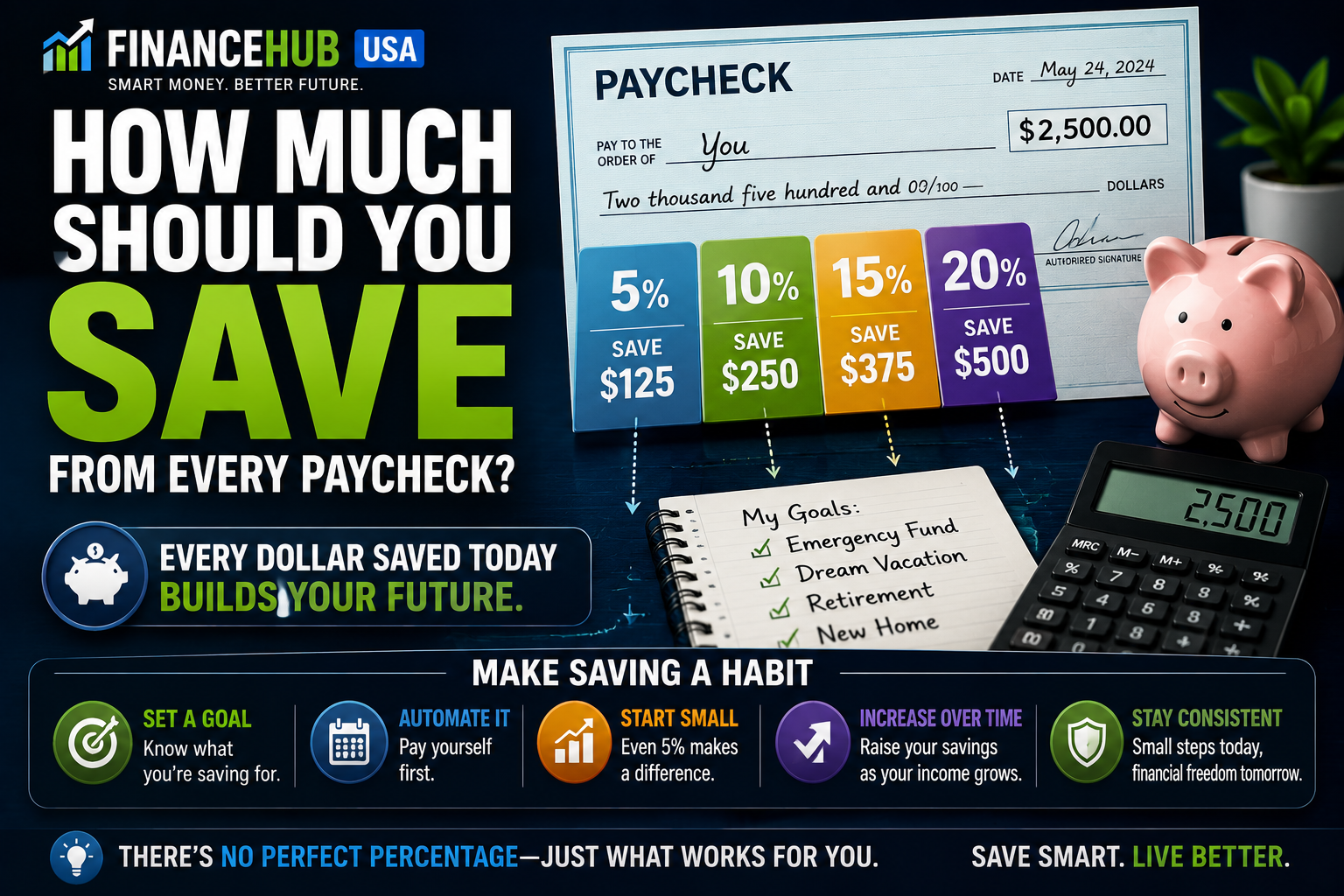
There is no universal amount you should have left after paying your monthly bills. A useful benchmark is to work toward having roughly 10% to 20% of your take-home income available for savings, extra debt payments, investing, and other financial goals. But the percentage that matters most is one you can sustain without falling behind on essential expenses or relying on new debt.
For example, someone taking home $5,000 per month might eventually aim to direct $500 to $1,000 toward financial goals. A household facing high housing, childcare, healthcare, insurance, or debt costs may have considerably less room in its budget. That does not automatically mean the household is managing money poorly.
A more useful way to evaluate your situation is to measure your financial margin: the percentage of take-home income that remains after accounting for your actual expenses. Tracking that margin over time can show whether your budget is becoming more flexible or more vulnerable.
How Much Money Should You Have Left After Bills Each Month?
Rather than looking for one perfect dollar amount, compare what remains with your monthly take-home income. A 10% to 20% margin can provide meaningful room for savings and other goals, while a smaller positive margin can still represent progress.
One well-known budgeting approach is the 50/30/20 framework, which uses after-tax income as a starting point for dividing money among needs, wants, and savings or debt-related goals. The Consumer Financial Protection Bureau provides budgeting resources that can help consumers compare income, spending, and financial priorities.
The percentages below are illustrations rather than requirements:
| Monthly Take-Home Pay | 5% Margin | 10% Margin | 20% Margin |
|---|---|---|---|
| $2,500 | $125 | $250 | $500 |
| $3,000 | $150 | $300 | $600 |
| $4,000 | $200 | $400 | $800 |
| $5,000 | $250 | $500 | $1,000 |
| $6,000 | $300 | $600 | $1,200 |
| $8,000 | $400 | $800 | $1,600 |
These numbers become more useful when treated as measurements rather than grades. Someone with a 7% margin that is steadily improving may be moving in the right direction, while someone showing a 20% margin on paper could still have problems if major annual expenses have been left out of the budget.
How to Calculate Your Financial Margin After Bills
Start with monthly take-home income—the money that actually reaches your household after taxes and payroll deductions. Then subtract the expenses you realistically expect to pay.
Money left after bills = Take-home income − Monthly expenses
Once you know the dollar amount, calculate the percentage:
Financial margin = (Money left after expenses ÷ Take-home income) × 100
Suppose you take home $5,000 per month and have the following expenses:
- Housing: $1,600
- Groceries: $600
- Transportation: $450
- Utilities and phone: $300
- Insurance: $250
- Minimum debt payments: $300
- Other regular spending: $500
Total spending is $4,000, leaving $1,000.
($1,000 ÷ $5,000) × 100 = 20%
In this example, the household has a 20% monthly financial margin.
Do Not Forget Irregular Expenses
One of the easiest ways to overestimate the amount truly left after bills is to count only expenses that occur every month. Annual insurance premiums, car maintenance, medical costs, gifts, school expenses, home repairs, travel, and other irregular costs still consume income.
For example, if you expect $2,400 of irregular expenses during the next year, setting aside roughly $200 per month for those costs gives you a more realistic picture of your actual margin.

What Does Your Financial Margin Tell You?
Your margin is most useful as an indicator of flexibility. A larger positive margin generally gives you more room to absorb unexpected expenses, build cash reserves, reduce debt, and pursue longer-term goals.
| Financial Margin | What It May Indicate | Possible Next Focus |
|---|---|---|
| 0% or below | Expenses are using all or more of current take-home income | Identify the source of the cash-flow shortfall |
| 1%–5% | Very limited room for unexpected expenses | Build a small recurring buffer |
| 5%–10% | Positive breathing room, but still limited flexibility | Strengthen reserves and improve the margin over time |
| 10%–20% | Meaningful capacity for financial goals | Allocate the surplus intentionally |
| 20%+ | Strong potential capacity for saving and other goals | Review long-term priorities and avoid lifestyle creep |
FinanceHub USA note: These ranges are planning illustrations, not official financial standards. Household circumstances vary substantially, and a percentage alone cannot determine whether a budget is healthy.
Is Having 20% Left After Bills Good?
Having around 20% of take-home income available after normal spending can provide substantial financial flexibility. On $5,000 of monthly take-home income, that represents $1,000 that could potentially be directed toward emergency savings, additional debt payments, retirement, investing, or upcoming expenses.
But the percentage should not be treated as a financial score. A household with a smaller margin may have unusually high childcare or healthcare costs, while a household showing a large surplus may simply have failed to include predictable annual expenses.
What ultimately matters is whether the margin is real, sustainable, and being used intentionally.
Is Having 10% Left After Bills Enough?
A 10% margin can still create meaningful breathing room. Someone taking home $4,000 per month with $400 genuinely available after expenses has $4,800 of annual potential cash flow if that margin remains consistent.
If 20% is unrealistic, improving from 3% to 5%, or from 5% to 10%, can be more useful than adopting an aggressive target that repeatedly forces you to use credit or pull money back out of savings.

Where Should Money Left After Bills Go?
Once you have a genuine monthly surplus, decide what job those dollars should perform. The appropriate order depends on your circumstances, but common priorities include:
- Build accessible emergency savings. A cash reserve can help prevent an unexpected expense from immediately becoming new debt. The CFPB's emergency-fund guide explains why even a relatively small financial shock can be difficult to absorb without savings.
- Evaluate expensive debt. High-interest balances can consume future cash flow. If you are deciding between the two priorities, see Should You Save Money or Pay Off Debt First?
- Prepare for irregular expenses. Insurance premiums, repairs, medical expenses, and other predictable but non-monthly costs should have room in the budget.
- Review workplace retirement benefits. If your employer offers matching contributions, understand the plan's rules and how the benefit fits into your broader financial priorities.
- Fund longer-term goals. Once immediate cash-flow risks are better controlled, additional margin can support retirement, investing, and other long-term objectives.
FinanceHub USA Analysis: The Direction of Your Margin Matters
A single month's surplus tells only part of the story. The direction of your financial margin can be even more informative.
Imagine two households that each take home $6,000 per month.
| Household A | Household B | |
|---|---|---|
| Take-home income | $6,000 | $6,000 |
| Monthly expenses | $5,700 | $4,500 |
| Money remaining | $300 | $1,500 |
| Financial margin | 5% | 25% |
Their incomes are identical, but their capacity to absorb an unexpected expense is dramatically different.
Now suppose Household A increases its margin from 5% to 8% over the next year while Household B falls from 25% to 15% because spending grows rapidly. Household B still has the larger margin, but Household A is moving in the stronger direction.
That is why FinanceHub USA recommends looking at both your current margin and its trend. Ask:
- Is the percentage improving or shrinking?
- Are recurring expenses growing faster than take-home income?
- Are irregular expenses included in the calculation?
- Would an unexpected expense immediately require borrowing?
- Is additional income creating more financial margin or simply more spending?
What If You Have Little or No Money Left After Bills?
If almost nothing remains—or your expenses exceed your take-home income—do not begin by forcing an arbitrary 20% target. First determine what is creating the shortfall.
Review several months of actual transactions rather than relying on memory. Separate spending into three groups:
- Fixed obligations: housing, loan payments, insurance, childcare, and similar commitments.
- Variable necessities: groceries, fuel, utilities, and other costs that fluctuate.
- Discretionary spending: restaurants, entertainment, subscriptions, and optional purchases.
This distinction matters because the solution depends on the source of the pressure. If optional spending is consuming the margin, relatively small changes may help. If housing, transportation, healthcare, or debt obligations consume nearly all available income, the solution may require larger structural changes or additional income.
Example: Turning a $100 Margin Into $500
Suppose Alex takes home $4,500 per month and spends approximately $4,400, leaving only $100. His financial margin is:
($100 ÷ $4,500) × 100 ≈ 2.2%
After reviewing three months of transactions, Alex identifies the following recurring opportunities:
| Change | Monthly Improvement |
|---|---|
| Unused subscriptions and services | $90 |
| Reduced restaurant and delivery spending | $160 |
| Lower insurance cost after comparing options | $70 |
| Reduced miscellaneous spending | $80 |
| Total improvement | $400 |
Alex's monthly margin rises from $100 to approximately $500 without assuming an increase in income.
His new margin is approximately:
($500 ÷ $4,500) × 100 ≈ 11.1%
If the $400 monthly improvement is maintained for 12 months, it creates $4,800 of additional annual cash-flow capacity before considering interest, investment returns, or future changes in expenses.
How to Increase the Money You Have Left Each Month
When your margin is too small, prioritize changes that can improve cash flow repeatedly rather than focusing exclusively on one-time cuts.
- Start with large recurring expenses. Housing and transportation can consume much more of a budget than small discretionary purchases.
- Review debt costs. Expensive interest payments can reduce monthly flexibility.
- Compare insurance carefully. Evaluate premiums together with coverage, exclusions, and deductibles rather than choosing solely on price.
- Audit subscriptions and recurring charges. Cancel services that no longer provide enough value to justify their monthly cost.
- Examine food and transportation spending. These variable categories can sometimes provide recurring opportunities without requiring major lifestyle changes.
- Increase income when expense cuts have reached their limit. Additional hours, higher compensation, a job change, or another sustainable source of income can sometimes improve the margin more than repeatedly cutting small expenses.
Track Your Financial Margin Over Time
Calculating your margin once is useful. Tracking it periodically is more useful. Consider recording your take-home income, expenses, dollar surplus, and percentage margin every few months.
| Period | Take-Home Income | Expenses | Money Left | Financial Margin |
|---|---|---|---|---|
| January | $5,000 | $4,750 | $250 | 5% |
| April | $5,000 | $4,600 | $400 | 8% |
| July | $5,200 | $4,576 | $624 | 12% |
This kind of trend is more informative than checking your bank balance on one particular day. It shows whether the underlying relationship between income and spending is actually improving.

Final Thoughts
There is no universal dollar amount everyone should have left after paying bills. A margin of roughly 10% to 20% of take-home income can be a useful planning benchmark, but your appropriate target depends on your expenses, obligations, household circumstances, and financial priorities.
More important than hitting an arbitrary percentage is understanding your financial margin and improving it over time. Someone moving from a 2% margin to 5%, and eventually from 5% to 10%, is creating progressively more room to handle emergencies and pursue financial goals.
Calculate the margin using real expenses, include irregular costs, track the percentage periodically, and decide intentionally what to do with the money that remains.
The goal is not to finish every month with a perfect number. It is to build a sustainable and increasingly resilient gap between what your household earns and what it needs to spend.
Related reading: How to Create a Budget That Actually Works
Related reading: Should You Save Money or Pay Off Debt First?
Sources and further reading:
Frequently asked questions
Is $500 a month left after bills good?
It depends on your income and financial obligations. If you take home $3,000 per month, $500 represents about 16.7% of your income and can provide meaningful room for saving or paying down debt. If you take home $10,000, the same $500 represents only 5%. Your percentage and overall financial situation provide more context than the dollar amount alone.
Is having 20% of your income left after bills good?
Having around 20% of take-home pay available for savings, investing, or additional debt payments can be a useful benchmark and aligns with the savings portion of the 50/30/20 framework. It is not a requirement, however, and a lower percentage can still represent meaningful financial progress.
How much money should I have left after bills and groceries?
There is no universal dollar amount. One useful benchmark is to work toward having approximately 10% to 20% of take-home pay available for savings and other financial goals after accounting for regular spending, including groceries. Your realistic percentage may be higher or lower depending on your fixed expenses and responsibilities.
What if I have no money left after paying my bills?
Start by reviewing your largest recurring expenses and separating essential costs from discretionary spending. Housing, transportation, insurance, debt interest, food, and subscriptions are useful areas to examine. If your expenses already reflect a very lean budget, increasing income may have a greater impact than repeatedly cutting small purchases.
Should all the money left after bills go into savings?
Not necessarily. Depending on your circumstances, the money may be divided among emergency savings, high-interest debt repayment, retirement contributions, investments, upcoming irregular expenses, and other financial goals.
How much should I have left over after bills?
Rather than targeting one dollar amount, consider your remaining money as a percentage of take-home income. Having 10% to 20% available for savings and other financial goals can be a useful benchmark, but your appropriate target depends on your cost of living, debt, household responsibilities, and financial priorities.
How do I calculate the percentage of income I have left?
Subtract monthly spending from monthly take-home income. Divide the amount remaining by your take-home income and multiply by 100. For example, $1,000 remaining from $5,000 of take-home pay equals a 20% financial margin.