Can You Pay Off a Personal Loan Early?
Find out whether you can pay off a personal loan early, when it makes financial sense, and how early repayment could save you money in 2026.
Can You Pay Off a Personal Loan Early?

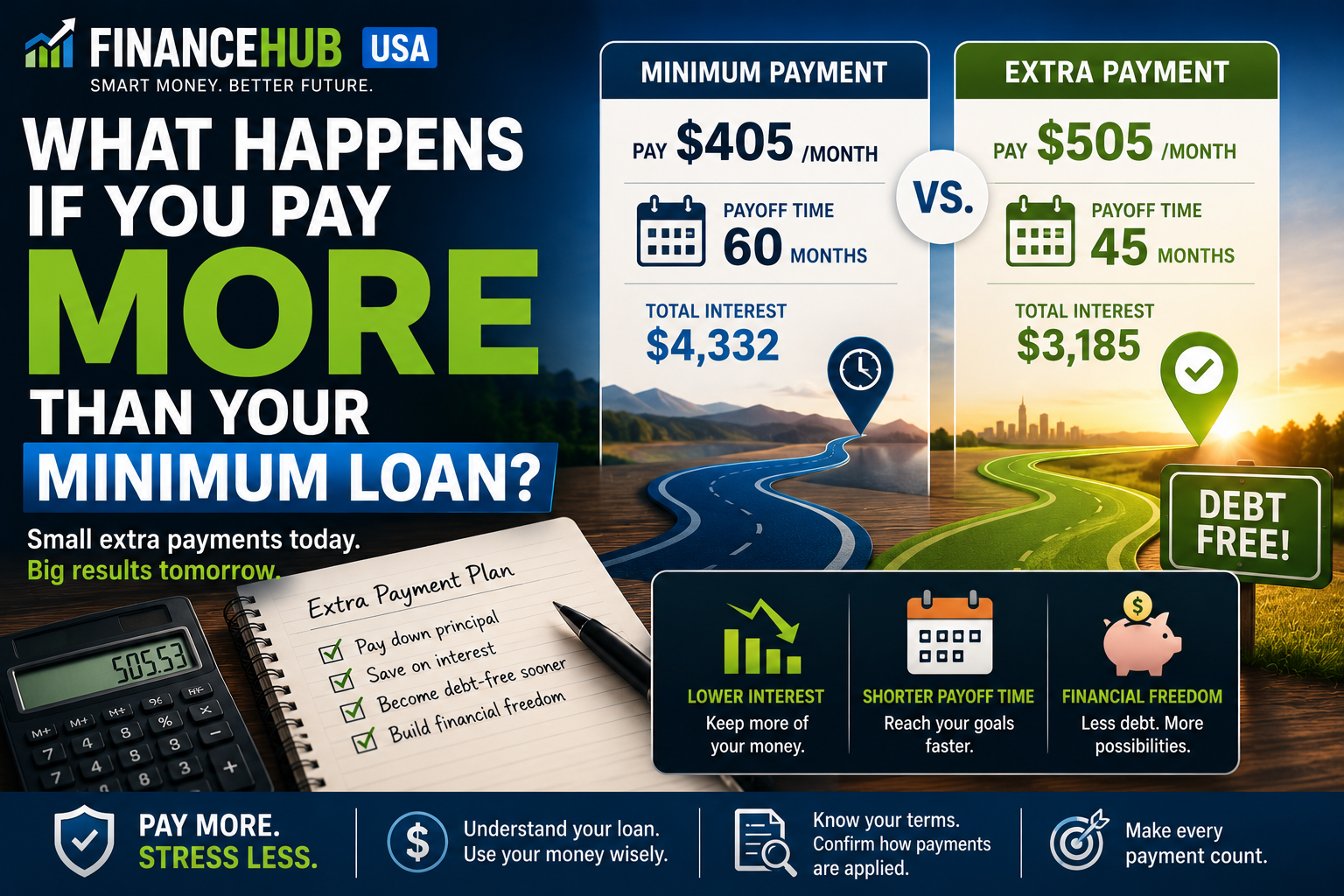
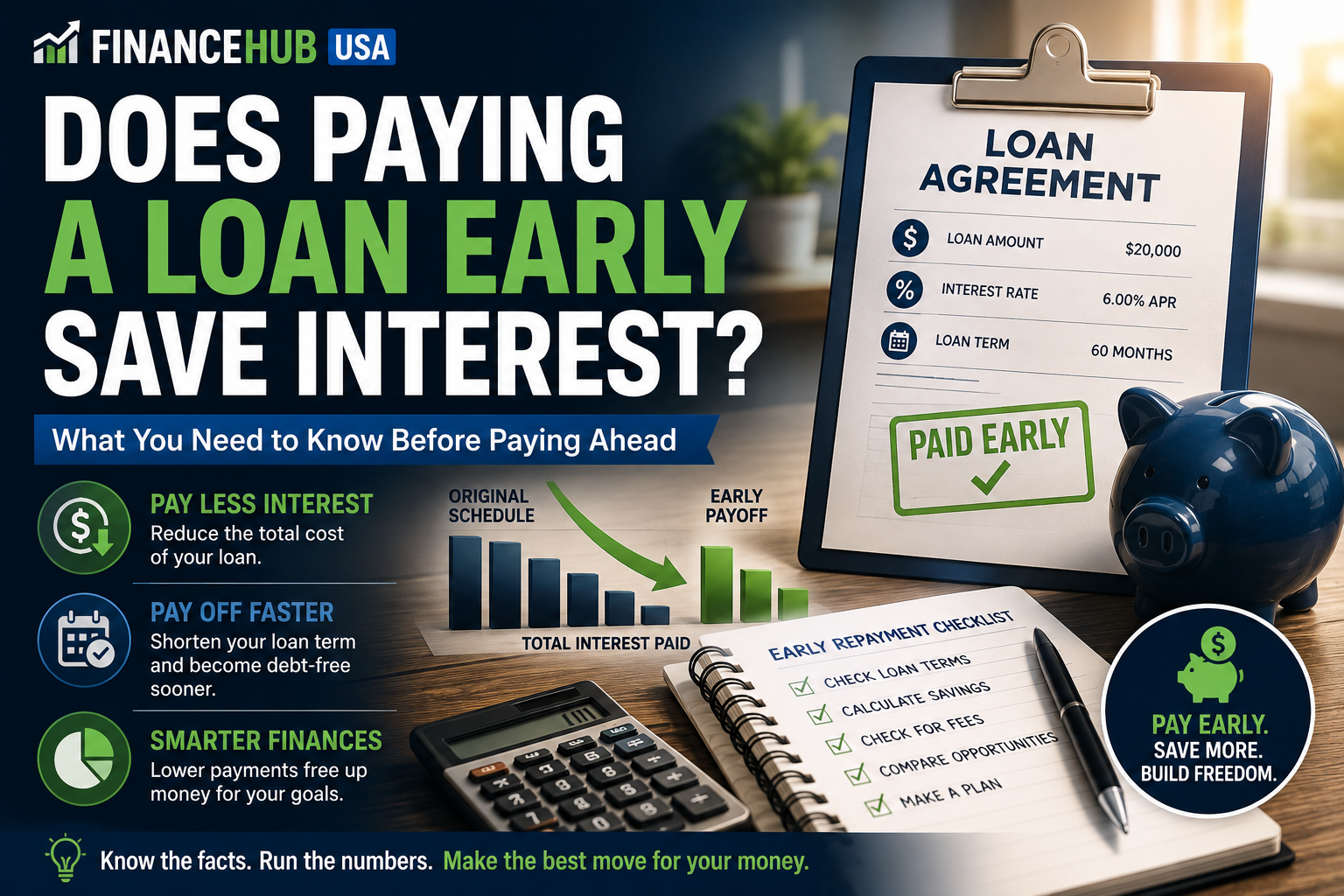
Paying off a personal loan early can reduce interest costs, eliminate a monthly payment, and improve your future cash flow.
But before sending a large extra payment, it is important to understand how your specific loan works. Some lenders allow early repayment with no additional cost. Others may have prepayment penalties, special payoff procedures, or interest calculations that affect how much you actually save.
So, can you pay off a personal loan early? In many cases, yes. Whether you should do it depends on the loan terms, remaining interest, your emergency savings, other debt, and what else you could do with the money.
Can You Pay Off a Personal Loan Before the Final Due Date?
Many personal loans allow borrowers to make additional principal payments or repay the remaining balance before the scheduled end of the loan.
For example, suppose you borrow $15,000 on a five-year repayment schedule. Two years later, you receive a bonus and decide to eliminate the remaining balance.
If the loan allows early repayment without a significant penalty, paying it off may reduce the amount of future interest you would otherwise pay.
The exact savings depend on:
- Your remaining principal balance
- Your interest rate
- How much time remains on the loan
- How the lender calculates interest
- Any prepayment penalty or payoff fee
Start by Requesting a Payoff Quote
Do not assume that the current balance shown in your online account is automatically the exact amount required to close the loan.
A lender may provide a payoff quote that includes:
- Remaining principal
- Accrued interest through a specific date
- Applicable fees
- Any prepayment penalty
The quote may also be valid only through a particular date because interest can continue accruing until the loan is paid in full.
Before sending a lump-sum payment, contact the lender or review the online account instructions to confirm the exact payoff amount and where it should be sent.
What Is a Prepayment Penalty?

A prepayment penalty is a fee that may be charged when a borrower pays off a loan earlier than scheduled.
Not every personal loan has one.
If a penalty exists, the loan agreement should explain how it is calculated.
A prepayment penalty could potentially be:
- A fixed dollar amount
- A percentage of the remaining balance
- A formula based on interest the lender expected to receive
The important comparison is not simply whether a penalty exists.
It is whether the interest saved by paying early is greater than the cost of the penalty and whether using the cash fits your broader financial plan.
Example: Is Paying Early Worth It?
Suppose you have:
| Loan Detail | Amount |
|---|---|
| Remaining principal | $8,000 |
| Estimated future interest if paid as scheduled | $1,200 |
| Prepayment penalty | $200 |
A simplified comparison would be:
$1,200 estimated interest avoided − $200 penalty = $1,000 potential savings
This simplified example suggests that early repayment could still reduce total borrowing costs.
Actual savings depend on the loan's amortization schedule, timing, interest calculation, fees, and lender terms.
How Personal Loan Interest Affects Early Payoff Savings
Many installment loans use a structure where each payment includes both interest and principal.
Early in the loan, a larger portion of the payment may go toward interest. As the balance falls, more of the payment generally goes toward principal.
Because of that, paying a loan off earlier in its term can sometimes save more interest than paying it off shortly before the final scheduled payment.
Simple Interest Loans
With many simple-interest loans, interest is based on the outstanding principal balance.
Reducing the principal sooner can reduce the amount of interest that accrues later.
Other Loan Structures
Some loans may use different methods or have contractual terms that affect early repayment.
That is why borrowers should verify how interest is calculated instead of assuming every personal loan behaves the same way.
Benefits of Paying Off a Personal Loan Early

1. Lower Total Interest Cost
If your loan accrues interest on the remaining balance, reducing or eliminating that balance earlier can reduce future interest charges.
2. Eliminate a Monthly Payment
Removing the loan payment can increase monthly financial flexibility.
For example, if your personal loan payment is $450 per month, paying the loan off means that $450 can potentially be redirected toward:
- Emergency savings
- Retirement contributions
- Other debt
- Short-term goals
- Long-term investing
3. Reduce Debt Obligations
Having fewer required monthly payments can make household cash flow easier to manage.
4. Simplify Your Finances
Eliminating one account means one less due date, payment, and balance to monitor.
When Paying Off a Personal Loan Early May Not Be the Best Move
Early repayment is not automatically the best financial choice in every situation.
You Have Very Little Emergency Savings
Suppose you have $8,000 in cash and owe $8,000 on a personal loan.
Using every dollar to eliminate the loan would leave you with no liquid reserve.
If a medical expense, car repair, or income disruption occurs immediately afterward, you may need to borrow again.
Keeping some emergency liquidity can therefore be more valuable than becoming debt-free one month sooner.
You Have More Expensive Debt
If you have a personal loan at 8% APR but also carry a credit card at 24% APR, the higher-rate balance may deserve greater attention.
The cost difference can be substantial.
| Debt | Balance | Illustrative APR |
|---|---|---|
| Personal loan | $5,000 | 8% |
| Credit card | $5,000 | 24% |
All else equal, directing extra money toward the more expensive debt can potentially reduce borrowing costs faster.
A Significant Prepayment Penalty Applies
If the penalty is large enough, it can reduce or eliminate the financial benefit of paying early.
You Need the Cash Soon
Money used to repay the loan generally becomes inaccessible.
If you expect a major expense soon, such as moving, medical treatment, taxes, or a home repair, keeping more liquidity may be appropriate.
Should You Pay Off a Loan or Invest the Money?
This is one of the most common comparisons borrowers make.
Suppose your personal loan charges 7% interest and you have $10,000 available.
Paying down the loan reduces a known borrowing cost.
Investing the $10,000 may produce a higher return over time, but market returns are uncertain and can be negative.
That means the comparison is not simply:
7% loan versus an assumed 10% stock market return.
The more complete comparison should consider:
- Loan interest rate
- Investment risk
- Expected time horizon
- Taxes
- Investment fees
- Emergency savings
- Your ability to tolerate market losses
Why Paying Off Debt Is Different From Earning an Investment Return
Avoiding future loan interest is more predictable than earning a future stock-market return.
If paying $1,000 toward principal eliminates a known amount of future interest under your loan terms, that savings is tied directly to the loan contract.
An investment return, by comparison, is uncertain.
A stock portfolio can rise, fall, or remain below the original investment for an extended period.
For this reason, borrowers should avoid treating an expected investment return as guaranteed when comparing it with debt repayment.
Should You Pay Off the Loan or Build an Emergency Fund?
This decision depends on how vulnerable your household would be without cash savings.
Consider two borrowers:
| Borrower A | Borrower B | |
|---|---|---|
| Emergency savings | $500 | $15,000 |
| Personal loan balance | $8,000 | $8,000 |
| Extra cash available | $5,000 | $5,000 |
Borrower A may place greater value on preserving or strengthening emergency savings.
Borrower B already has a larger financial cushion and may be in a stronger position to use the $5,000 for debt reduction.
Related reading: Should You Save Money or Pay Off Debt First?
Does Paying Off a Personal Loan Early Help Your Credit Score?
Paying off debt can improve your overall financial position, but the effect on a credit score is not always immediate or uniformly positive.
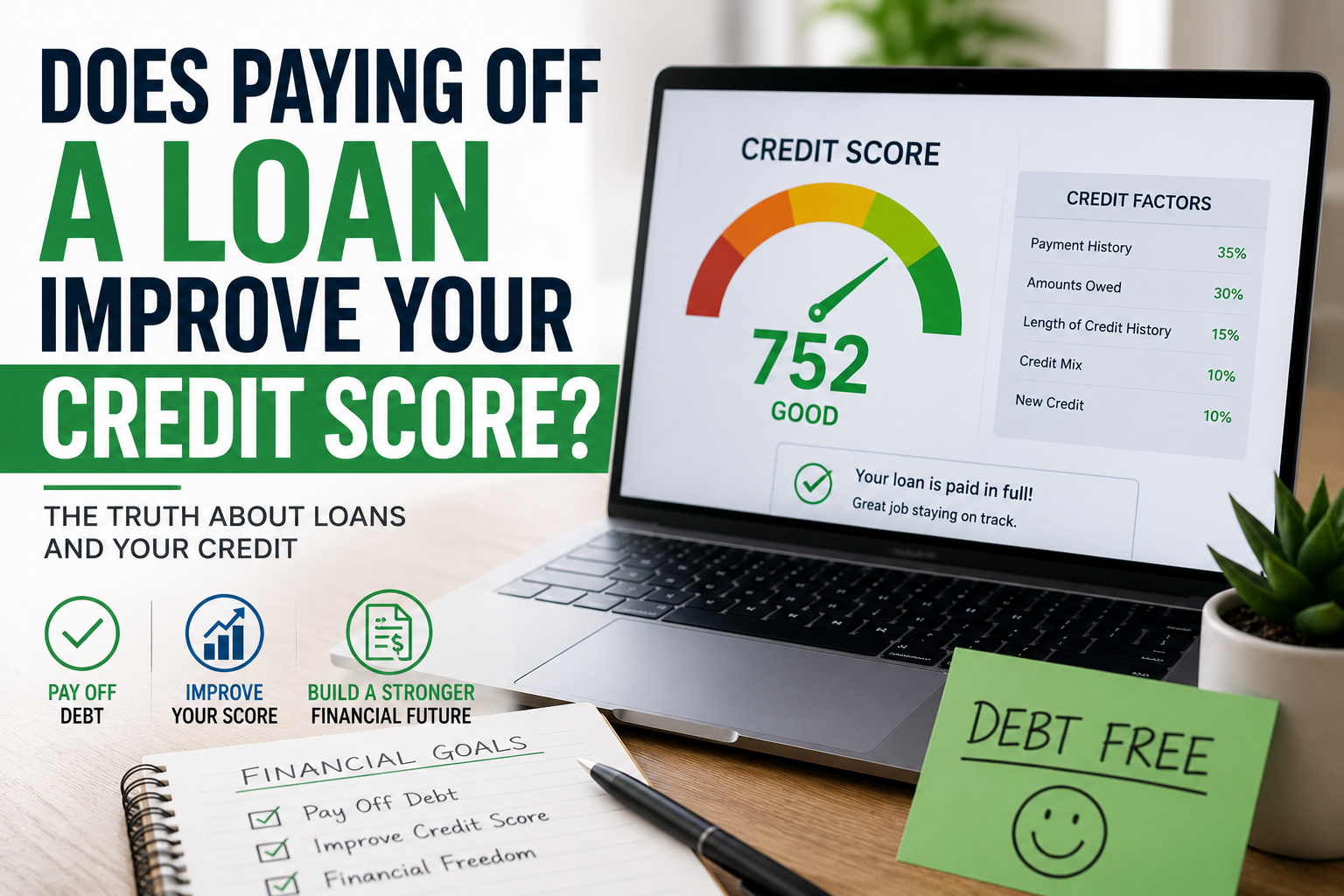
Credit scoring models can consider multiple factors, including:
- Payment history
- Amounts owed
- Length of credit history
- Types of credit accounts
- Recent credit activity
When an installment loan is paid off, the account may be reported as closed or paid.
Your credit score could rise, fall slightly, or change very little depending on the rest of your credit profile and the scoring model being used.
Paying interest solely to keep a loan open for credit-score purposes is generally not a strong financial reason by itself.
Does Paying Off a Personal Loan Early Remove It From Your Credit Report?
Paying off the loan does not necessarily cause the account to disappear immediately from your credit history.
A closed account in good standing can remain on a credit report for a period of time according to credit-reporting rules and practices.
The account status should eventually show that the debt was paid or closed as applicable.
What Happens to Automatic Payments After the Loan Is Paid Off?
After making the final payment, verify that:
- The lender shows a zero balance
- The account is marked paid in full
- No additional interest remains due
- Automatic withdrawals have stopped
Keep the payoff confirmation for your records.
If the lender reports the account incorrectly to the credit bureaus, documentation showing the payoff can be useful when disputing an error.
Extra Payment vs. Full Early Payoff
You do not necessarily need enough cash to pay off the entire loan to reduce interest.
An extra principal payment can also shorten the repayment period or reduce future interest, depending on the loan terms.
Suppose your normal monthly payment is $400 and you decide to add another $100.
Your payment becomes:
$400 + $100 = $500
If the lender applies the additional $100 directly to principal, the outstanding balance can decline faster.
Confirm how the lender applies extra payments.
Make Sure Extra Payments Are Applied to Principal
Some loan systems may treat additional money differently.
For example, an extra payment might:
- Reduce principal immediately
- Advance the next payment due date
- Be applied according to another contractual method
If your goal is to reduce the outstanding balance faster, verify with the lender that the extra amount is being applied as intended.
Example: Small Extra Payments Can Add Up
Suppose a borrower pays an additional $100 each month toward a personal loan.
| Extra Monthly Payment | Extra Paid During One Year |
|---|---|
| $25 | $300 |
| $50 | $600 |
| $100 | $1,200 |
| $200 | $2,400 |
The exact effect on interest and payoff time depends on the balance, APR, remaining term, and how additional payments are applied.
Should You Use a Bonus or Tax Refund to Pay Off a Personal Loan?
A one-time payment can be an efficient way to reduce debt without changing your regular monthly budget.
Before using the full amount, consider dividing it among priorities.
For example, someone receiving a $5,000 bonus might decide to allocate:
| Goal | Illustrative Amount |
|---|---|
| Personal loan principal | $3,000 |
| Emergency savings | $1,500 |
| Upcoming expenses | $500 |
This is only an illustration, but it demonstrates that debt repayment does not have to be an all-or-nothing decision.
FinanceHub USA Analysis: Measure the Return on Cash Flow Too
Borrowers often focus entirely on interest savings, but eliminating a monthly payment also changes future cash flow.
Suppose you use $7,000 to eliminate a personal loan with a $350 monthly payment.
Once the loan is gone, you recover:
$350 × 12 = $4,200 per year of monthly cash flow
This does not mean you earned a $4,200 investment return. The $7,000 principal had to be paid eventually.
But removing the obligation can make future budgeting more flexible.
The key question becomes:
What will you do with the monthly payment after the debt is gone?
If the $350 simply turns into additional lifestyle spending, the long-term benefit may be smaller.
If it is redirected toward savings, retirement, or another high-priority goal, the payoff can become part of a larger financial strategy.
Redirect the Old Loan Payment After Payoff
One practical strategy is to keep the former loan payment in your monthly budget even after the debt is eliminated.
Instead of sending $350 to the lender, you could automatically direct it toward:
- Emergency savings
- 401(k) or IRA contributions
- A home down-payment fund
- Other debt
- Long-term investing
That prevents the payment from disappearing into lifestyle inflation.
When Paying Off the Loan Early May Be Especially Attractive
Early repayment may deserve stronger consideration when:
- The APR is high
- No meaningful prepayment penalty exists
- You already have sufficient emergency savings
- You have no significantly higher-interest debt
- The monthly payment is restricting your cash flow
- You want to reduce fixed financial obligations
When Keeping the Loan Longer May Be Reasonable
Continuing with the scheduled payments may be reasonable when:
- The interest rate is relatively low
- A significant prepayment penalty applies
- Paying early would drain emergency savings
- You have more expensive debt to eliminate first
- You need liquidity for a near-term obligation
The decision should be based on the full financial picture rather than the emotional appeal of becoming debt-free as quickly as possible.
Common Personal Loan Payoff Mistakes
- Sending the online balance without requesting a payoff quote. Accrued interest or fees can leave a small balance behind.
- Ignoring a prepayment penalty. Review the contract before making a large payment.
- Using all available cash. Becoming debt-free while having no emergency savings can create a new financial problem.
- Paying a low-rate loan while carrying much higher-rate debt. Compare borrowing costs across accounts.
- Assuming extra payments automatically reduce principal. Confirm how the lender applies additional money.
- Assuming paying off the loan will automatically improve your credit score. Credit-score effects depend on the overall credit profile.
- Failing to redirect the old monthly payment. Use the freed cash flow intentionally after the debt is gone.
A Personal Loan Early Payoff Checklist
Before paying off your loan early, ask:
- What is the exact payoff amount?
- How long is the payoff quote valid?
- Does the loan have a prepayment penalty?
- How much future interest would I avoid?
- How much emergency savings would remain?
- Do I have higher-interest debt?
- Do I need this cash within the next 12 months?
- How will I use the monthly cash flow after payoff?
FinanceHub USA Framework: Compare Cost, Liquidity, and Cash Flow
| Factor | Question |
|---|---|
| Cost | How much interest and fees can early repayment eliminate? |
| Liquidity | How much accessible cash will remain after payoff? |
| Other debt | Is another balance charging a higher interest rate? |
| Cash flow | How much monthly income becomes available after payoff? |
| Alternative use | What else could the money reasonably be used for? |
A strong decision considers all five rather than focusing on only one number.
Final Thoughts
Can you pay off a personal loan early?
In many cases, yes. Borrowers can often make additional principal payments or repay the remaining balance before the scheduled final payment.
But before doing so, review the loan agreement and request an exact payoff quote.
Pay particular attention to:
- Prepayment penalties
- Remaining principal
- Accrued interest
- How extra payments are applied
- Emergency savings
- Higher-interest debt
- Future cash needs
Early repayment can reduce interest costs and eliminate a monthly obligation, but the strongest choice depends on what paying the loan off would do to the rest of your financial position.
If paying early leaves you with adequate liquidity, avoids meaningful interest, and improves your monthly cash flow, it may be a useful strategy.
If it drains your emergency savings or prevents you from addressing substantially more expensive debt, continuing the scheduled payments may be more appropriate.
The goal is not simply to become debt-free as quickly as possible. It is to use your money in a way that strengthens both your current cash flow and your long-term financial stability.
Continue exploring FinanceHub USA for practical guides covering personal loans, debt repayment, credit, budgeting, saving, and long-term financial planning.
Related reading: How to Create a Budget That Actually Works
Related reading: Should You Save Money or Pay Off Debt First?
Related reading: How Much Money Should You Have Left After Bills?
Sources and Further Reading
Frequently asked questions
Can I pay off my personal loan before the scheduled end date?
Yes. Most personal loans allow early repayment, although borrowers should review their loan agreement to determine whether any prepayment penalties apply.
Will paying off a personal loan early improve my credit score?
It can have a positive long-term impact by reducing overall debt, although the immediate effect on your credit score may vary depending on your overall credit profile.
What is a prepayment penalty?
A prepayment penalty is a fee charged by some lenders when a borrower pays off a loan before the agreed repayment period ends.
Should I invest or pay off my loan first?
The answer depends on factors such as your loan's interest rate, investment opportunities, emergency savings, and financial goals. Comparing the guaranteed interest savings with potential investment returns can help guide the decision.
Does paying off a loan early eliminate future interest?
In most cases, yes. Once the remaining balance is paid in full, borrowers generally avoid paying interest that would have accumulated over the remaining life of the loan.