Liability vs Full Coverage Car Insurance Explained
Learn the difference between liability and full coverage car insurance, what each policy protects, and how to choose the right option for your budget in 2026.
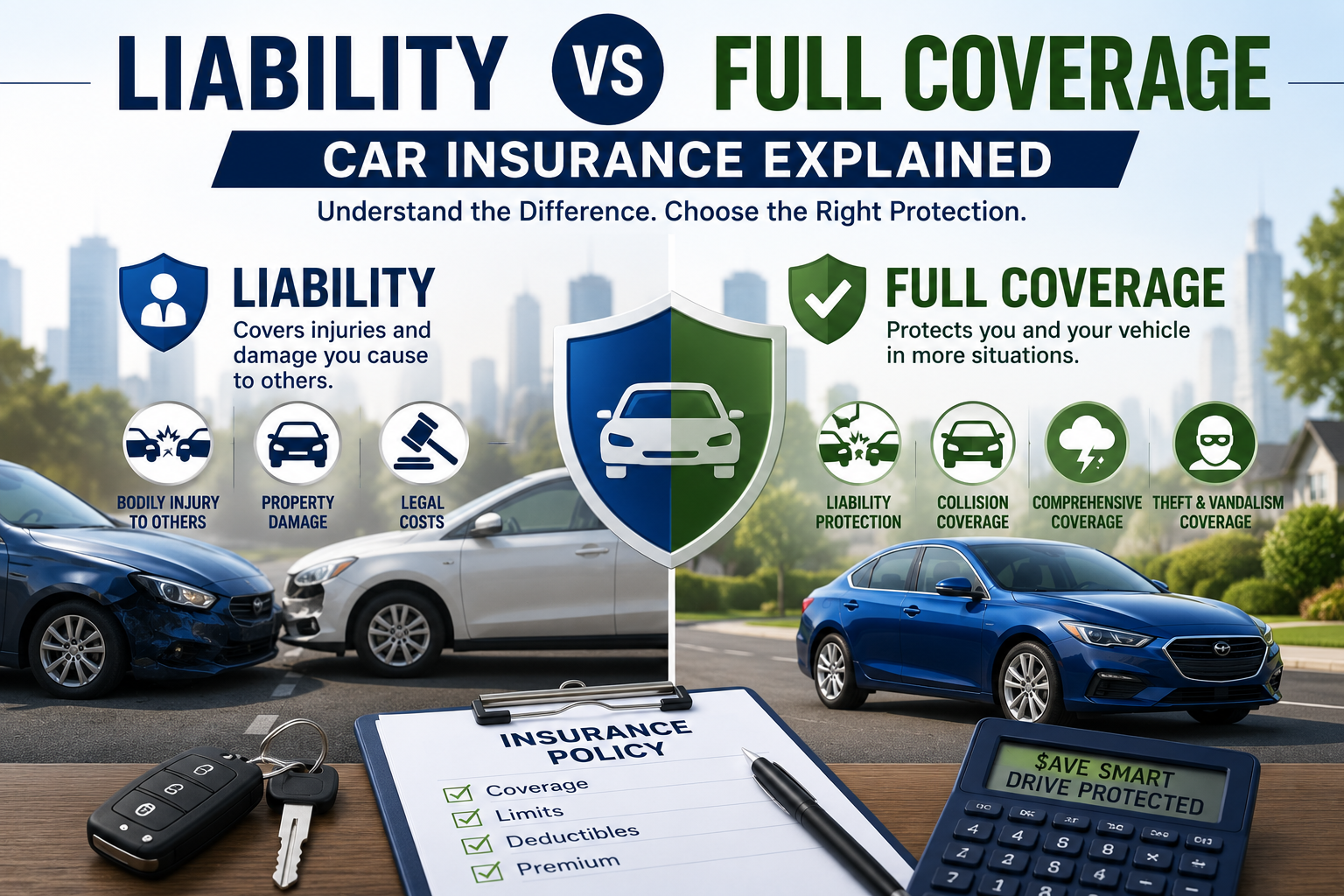
Liability vs. Full Coverage Car Insurance: What's the Difference?

Choosing car insurance involves more than finding the lowest monthly premium.
One of the most important decisions is determining how much financial protection you want for both other people and your own vehicle.
That is where the distinction between liability insurance and full coverage car insurance becomes important.
Liability coverage primarily protects you financially when you are legally responsible for injuries or property damage involving other people. The term full coverage usually refers to a broader policy that combines liability insurance with collision and comprehensive coverage for your own vehicle.
However, full coverage is not a standardized insurance product, and it does not mean that every possible accident, loss, or expense is covered.
What Is Liability Car Insurance?
Liability insurance helps pay certain costs when you are legally responsible for causing an accident.
Most states require drivers to carry some form of auto insurance, although minimum requirements and required coverage types vary by state.
Liability insurance generally has two major components:
- Bodily injury liability
- Property damage liability
What Does Bodily Injury Liability Cover?
Bodily injury liability can help pay eligible costs when other people are injured in an accident for which you are legally responsible.
Depending on the claim and policy, covered costs may include:
- Medical expenses
- Lost income
- Legal expenses
- Other covered damages associated with bodily injury
Coverage is subject to the limits and terms of the policy.
What Does Property Damage Liability Cover?
Property damage liability helps pay for damage you cause to another person's property.
This can include:
- Another vehicle
- A fence
- A building
- A utility pole
- Other covered property
Example
Suppose you accidentally rear-end another vehicle and cause $12,000 of covered damage.
If you are legally responsible and your property damage liability limit is sufficient, your insurer may pay the eligible damages up to the applicable policy limit.
Your own vehicle damage would generally require another form of coverage, such as collision insurance.
Liability Coverage Does Not Normally Repair Your Own Car

This is one of the biggest differences between liability-only insurance and broader auto coverage.
If you cause an accident and carry only liability insurance, your liability coverage generally helps address covered losses suffered by others.
It does not generally pay to repair your own vehicle after an at-fault collision.
What Does 100/300/100 Liability Coverage Mean?
Auto insurance liability limits are often displayed as three numbers.
For example:
100/300/100
A common interpretation is:
| Limit | Meaning |
|---|---|
| $100,000 | Bodily injury limit per person |
| $300,000 | Bodily injury limit per accident |
| $100,000 | Property damage limit per accident |
The actual policy wording controls coverage.
State Minimum Liability Coverage May Not Be Enough
Meeting your state's legal minimum does not necessarily mean you have enough financial protection.
Consider a simplified example.
Suppose your policy provides $25,000 of property damage liability coverage, but you cause a covered accident involving $60,000 of damage to another vehicle.
| Amount | |
|---|---|
| Covered property damage | $60,000 |
| Policy limit | $25,000 |
| Potential amount above the limit | $35,000 |
The amount above the policy limit could potentially create personal financial exposure depending on the circumstances.
The NAIC advises consumers to consider limits carefully rather than assuming state minimum coverage will be sufficient for a serious accident.
What Is Full Coverage Car Insurance?
Full coverage is an informal term rather than the name of one standardized insurance policy.
It commonly refers to a policy that includes:
- Liability insurance
- Collision coverage
- Comprehensive coverage
Other protections may also be included or purchased separately depending on the state, insurer, and policy.
Those can include:
- Uninsured motorist coverage
- Underinsured motorist coverage
- Personal injury protection
- Medical payments coverage
- Rental reimbursement
- Roadside assistance
Full Coverage Does Not Mean Everything Is Covered
The phrase can be misleading.
A so-called full coverage policy still has:
- Coverage limits
- Deductibles
- Exclusions
- Conditions
- Claim requirements
For example, your policy may include collision and comprehensive coverage but still exclude certain uses of the vehicle or specific types of losses.
Always review the declarations page and full policy instead of relying only on the phrase "full coverage."
What Is Collision Coverage?
Collision coverage generally helps pay for physical damage to your own vehicle resulting from a collision, subject to the policy's deductible, limits, and other terms.
Examples may include collisions with:
- Another vehicle
- A tree
- A guardrail
- A building
- Another covered object
Collision may also apply to certain rollover accidents according to policy terms.
Collision Example
Suppose your car suffers $9,000 of covered collision damage and you have a $1,000 collision deductible.
A simplified illustration would be:
| Amount | |
|---|---|
| Covered repair cost | $9,000 |
| Deductible | $1,000 |
| Potential insurer payment | Up to $8,000, subject to policy terms |
What Is Comprehensive Coverage?

Comprehensive coverage generally helps cover physical damage to your vehicle from certain events other than a collision.
Examples can include:
- Theft
- Fire
- Vandalism
- Hail
- Windstorm damage
- Falling objects
- Flood damage
- Animal impacts
- Certain glass damage
The exact coverage depends on the policy.
Liability vs. Full Coverage Comparison
| Coverage | Liability-Only Policy | Typical "Full Coverage" Policy |
|---|---|---|
| Bodily injury to others | Yes, subject to limits | Yes, subject to limits |
| Property damage you cause to others | Yes, subject to limits | Yes, subject to limits |
| Collision damage to your own car | Generally no | Generally yes |
| Theft of your car | Generally no | Generally covered through comprehensive |
| Hail or storm damage | Generally no | May be covered through comprehensive |
| Deductible for own-car physical damage | Usually not applicable to liability | Typically applies to collision and comprehensive |
Do You Need Full Coverage on a Financed Car?
If you finance or lease a vehicle, the lender or leasing company commonly requires collision and comprehensive coverage to protect the vehicle securing the loan or lease.
The NAIC notes that collision and comprehensive coverage are not generally required by state law, but a lending institution or lessor may require them. :contentReference[oaicite:1]{index=1}
If required coverage lapses, the loan agreement may allow the lender to take steps to protect its interest in the vehicle.
This should not be confused with optional products such as GAP insurance or extended warranties, which are separate products.
What Is GAP Insurance?
GAP insurance is different from liability, collision, and comprehensive coverage.
It may help cover some or all of the difference between what you owe on an auto loan and what your insurer pays if the vehicle is declared a covered total loss, subject to the GAP agreement.
Example
Suppose:
| Amount | |
|---|---|
| Auto loan balance | $28,000 |
| Covered insurance settlement | $23,000 |
| Potential gap | $5,000 |
Depending on the GAP product's terms, some or all of that difference may be covered.
The Consumer Financial Protection Bureau notes that GAP coverage is generally an optional add-on rather than something consumers must automatically purchase from a dealer or lender. :contentReference[oaicite:2]{index=2}
What Is Uninsured and Underinsured Motorist Coverage?
Uninsured motorist coverage can help protect you if you are injured or experience covered losses involving a driver who does not have insurance.
Underinsured motorist coverage can apply when the responsible driver's insurance is insufficient to cover eligible losses.
Requirements vary by state.
Some states require these coverages, while others allow consumers to decline them.
What Is Personal Injury Protection?
Personal injury protection, commonly called PIP, is used in certain states and can help cover eligible medical expenses and other losses regardless of who caused the accident, depending on state law and policy terms.
No-fault insurance systems and coverage requirements vary substantially between states.
Liability Insurance Does Not Protect Your Vehicle's Value
This is especially important if losing the car would create a major financial problem.
Suppose your vehicle is worth $22,000 and you carry only liability insurance.
If you cause an accident and the vehicle is destroyed, your liability coverage generally does not reimburse you for your own vehicle.
You could potentially lose most or all of the $22,000 vehicle value.
Should You Carry Full Coverage on an Older Car?
This is one of the most common auto insurance decisions.
As a vehicle becomes less valuable, the financial benefit of paying for collision and comprehensive coverage may decline.
But vehicle age alone should not determine the decision.
Consider:
- Current market value
- Annual collision and comprehensive premiums
- Deductible amounts
- Emergency savings
- Whether you could replace the vehicle yourself
- Whether the vehicle is financed or leased
Example: Is Collision Coverage Worth Keeping?
Suppose an older vehicle has an approximate market value of $5,000.
The collision portion of the insurance costs $600 per year and carries a $1,000 deductible.
| Factor | Amount |
|---|---|
| Vehicle value | $5,000 |
| Collision deductible | $1,000 |
| Annual collision premium | $600 |
If the vehicle were totaled in a covered collision, the maximum economic benefit from the physical damage coverage could be limited by the vehicle's actual cash value and the deductible.
A simplified calculation might be:
$5,000 vehicle value − $1,000 deductible = approximately $4,000
That does not automatically mean collision coverage should be dropped.
The real question is whether paying $600 each year to protect roughly that amount of vehicle value fits your financial situation.
Calculate the Premium-to-Vehicle-Value Relationship
A useful comparison is:
Annual collision and comprehensive premium ÷ vehicle value
Suppose your own-vehicle coverage costs $800 annually and the car is worth $6,000.
$800 ÷ $6,000 ≈ 13.3%
That means you are paying an amount equal to roughly 13% of the vehicle's current value every year for those coverages.
This is not a universal rule for dropping coverage, but it can help put the premium into context.
Could You Replace the Vehicle Tomorrow?
This may be more important than the vehicle's age.
Consider two drivers who both own a $7,000 car.
| Driver A | Driver B | |
|---|---|---|
| Vehicle value | $7,000 | $7,000 |
| Emergency savings | $20,000 | $1,000 |
| Ability to replace car without borrowing | Higher | Much lower |
Dropping collision coverage creates very different levels of financial risk for these two households.
How Deductibles Affect Full Coverage
Collision and comprehensive coverage commonly include deductibles.
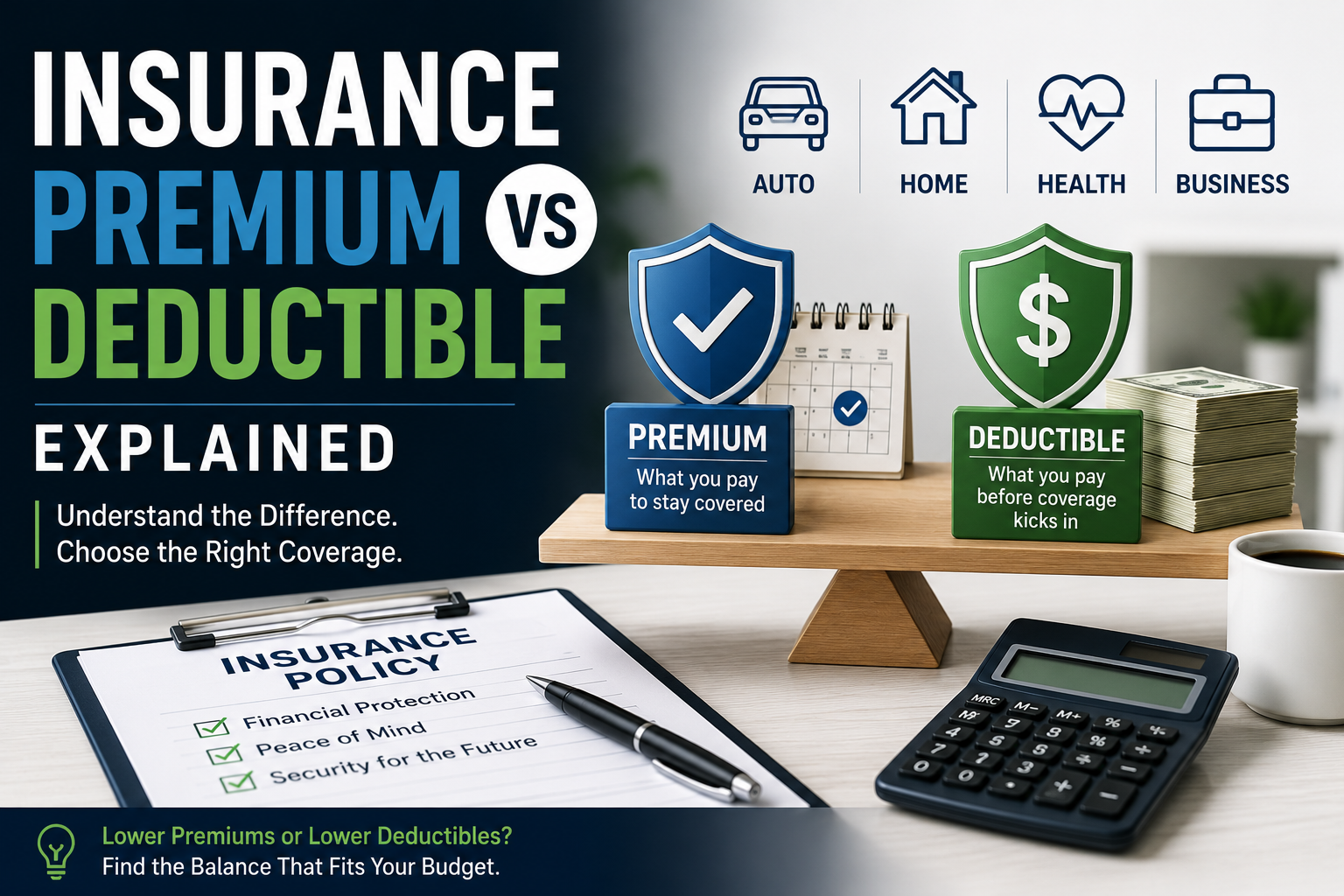
A higher deductible may reduce the premium but increases the amount you must absorb after an applicable covered loss.
For example:
| Option A | Option B | |
|---|---|---|
| Collision deductible | $500 | $1,500 |
| Annual premium | $2,200 | $1,900 |
Option B saves $300 annually but creates another $1,000 of deductible exposure after an applicable claim.
Related reading: Insurance Premium vs. Deductible Explained
Liability Limits May Be More Important Than the Full Coverage Label
Someone can carry collision and comprehensive coverage while maintaining very low liability limits.
That policy might be described casually as full coverage, but it could still leave substantial financial exposure after a severe at-fault accident.
For example, repairing your own $20,000 vehicle matters, but causing $300,000 in injuries to other people can create a much larger financial problem.
This is why liability limits deserve careful attention even when you purchase collision and comprehensive coverage.
FinanceHub USA Analysis: Protect Against the Loss You Cannot Easily Absorb
Auto insurance is most valuable when it protects you from losses that would seriously damage your finances.
That means insurance decisions should not be based exclusively on:
- Vehicle age
- Monthly premium
- Whether a policy is called "full coverage"
A stronger approach is to ask:
What would happen financially if I caused a serious accident or lost my vehicle tomorrow?
If replacing the vehicle would require a large loan or drain your emergency savings, physical damage coverage may have considerable value.
If the vehicle is inexpensive and you could comfortably replace it with cash, self-insuring that risk may become more reasonable.
Liability risk is different because even an inexpensive vehicle can cause extremely expensive injuries or property damage.
Example: Saving $40 per Month by Dropping Collision
Suppose removing collision coverage reduces your premium by $40 per month.
Annual savings:
$40 × 12 = $480
If the car is worth $12,000 and you could not afford to replace it, saving $480 per year means accepting potentially thousands of dollars of additional financial exposure.
The lowest premium is not automatically the lowest-risk financial decision.
What Happens If Your Car Is Totaled?
If a covered vehicle is declared a total loss under collision or comprehensive coverage, insurers generally base payment on the vehicle's value according to the policy and applicable claims rules rather than automatically paying the amount you originally paid for the car.
This is particularly important with financed vehicles.
You may owe more on the loan than the vehicle's insurance settlement.
That is one reason GAP coverage can sometimes be considered for borrowers with significant negative equity.
What If Another Driver Causes the Accident?
If another driver is legally responsible, their liability coverage may pay eligible damages up to their limits.
However, complications can arise if:
- The other driver has no insurance
- The other driver's limits are insufficient
- Liability is disputed
- Claim processing takes time
This is another reason uninsured and underinsured motorist coverage can matter.
Does Full Coverage Include Rental Cars?
Not necessarily.
Rental reimbursement is often a separate optional coverage.
If your car is being repaired after a covered loss, the policy may pay for a rental vehicle only if you purchased applicable rental reimbursement coverage.
Check the daily and total reimbursement limits as well.
Does Full Coverage Include Roadside Assistance?
Not automatically.
Towing, battery assistance, tire changes, and other roadside services may require an optional endorsement or separate roadside program.
Does Full Coverage Cover Personal Belongings Stolen From Your Car?
Not necessarily.
Comprehensive auto coverage may cover damage to or theft of the vehicle itself, but personal property inside the vehicle may instead be covered under a homeowners or renters policy, subject to its terms and deductible.
Does Full Coverage Pay for Mechanical Breakdowns?
Ordinary wear, maintenance problems, and mechanical failure are generally different from covered collision or comprehensive losses.
Auto insurance is not normally a replacement for routine maintenance or a vehicle warranty.
How Much Liability Insurance Should You Carry?
There is no single liability limit appropriate for every driver.
Factors to consider include:
- State minimum requirements
- Income
- Savings and investments
- Potential lawsuit exposure
- Cost of higher limits
- Other insurance protection
State minimums are legal minimums, not necessarily financial recommendations.
What Is an Umbrella Policy?
Drivers with significant assets or liability exposure may also evaluate personal umbrella insurance.
An umbrella policy can provide additional liability protection above certain underlying auto or homeowners policy limits, subject to its terms and eligibility requirements.
It is separate from collision and comprehensive coverage.
How to Compare Auto Insurance Quotes Correctly
Comparing two premiums is useful only if the policies provide comparable coverage.
When requesting quotes, compare the same:
- Liability limits
- Collision deductible
- Comprehensive deductible
- Uninsured motorist coverage
- Underinsured motorist coverage
- PIP or medical payments coverage where applicable
- Rental reimbursement
- Other optional benefits
The NAIC recommends providing the same information and requesting comparable coverages and limits when shopping among insurers. :contentReference[oaicite:3]{index=3}
Common Liability and Full Coverage Mistakes
- Assuming "full coverage" means every possible loss is covered. Policy exclusions and limits still apply.
- Buying only the state minimum without reviewing liability exposure. Minimum limits may be inadequate after a serious accident.
- Dropping collision because the car is old without checking its actual value. Age alone does not determine financial risk.
- Choosing a deductible that cannot be paid from savings. A claim can create a new debt problem if the deductible is unaffordable.
- Assuming a financed car needs only state-required insurance. Loan or lease agreements commonly require collision and comprehensive coverage.
- Confusing GAP insurance with full coverage. GAP is a separate product addressing certain loan-balance differences.
- Comparing quotes with different limits. A cheaper policy may simply provide less protection.
- Ignoring uninsured motorist protection. Not every driver has enough insurance to cover a serious accident.
FinanceHub USA Framework: Liability or Full Coverage?
| Situation | Coverage to Evaluate |
|---|---|
| Financed or leased vehicle | Liability plus required collision and comprehensive coverage |
| Newer or higher-value vehicle | Collision and comprehensive may provide substantial protection |
| Older low-value vehicle with strong emergency savings | Evaluate whether own-vehicle coverage still justifies its cost |
| Limited emergency savings | Consider the financial impact of losing the vehicle without coverage |
| Significant assets or income | Review liability limits carefully |
A Simple Auto Insurance Checklist
Before buying or renewing a policy, ask:
- What does my state require?
- What are my bodily injury liability limits?
- What is my property damage liability limit?
- Do I have collision coverage?
- Do I have comprehensive coverage?
- What are the deductibles?
- Do I have uninsured or underinsured motorist coverage?
- Does my loan or lease require additional coverage?
- What is my vehicle currently worth?
- Could I replace it without borrowing?
- What exclusions apply?
Final Thoughts
The difference between liability and full coverage car insurance comes down to what financial risks the policy is designed to address.
Liability insurance generally protects against covered injuries and property damage you cause to other people, subject to policy limits.
A policy commonly described as full coverage usually adds collision and comprehensive protection for your own vehicle.
But full coverage does not mean unlimited coverage or protection from every possible event.
Your real protection depends on:
- Liability limits
- Collision coverage
- Comprehensive coverage
- Deductibles
- Uninsured and underinsured motorist protection
- Policy exclusions
- Optional benefits
For financed or leased vehicles, lenders commonly require collision and comprehensive coverage. For an older vehicle owned outright, the decision becomes more about the relationship between the car's value, the additional premium, your deductible, and your ability to replace the vehicle yourself.
The cheapest insurance policy is not automatically the best policy.
The better objective is to choose limits and coverages that protect you from losses large enough to seriously damage your financial position while keeping the premium affordable.
Continue exploring FinanceHub USA for practical guides covering auto insurance, deductibles, credit, loans, budgeting, and personal finance.
Related reading: Insurance Premium vs. Deductible Explained
Sources and Further Reading
Frequently asked questions
What does liability car insurance cover?
Liability insurance generally covers bodily injury and property damage you cause to other people if you're responsible for an accident, subject to your policy limits.
Does full coverage include liability insurance?
Yes. Full coverage typically combines liability insurance with collision and comprehensive coverage, although the exact coverages vary by insurer and policy.
Is full coverage required by law?
No. Most states require liability insurance, but lenders often require collision and comprehensive coverage for financed or leased vehicles.
Should I keep full coverage on an older car?
It depends on your vehicle's value, your financial situation, and your ability to pay for repairs or replacement out of pocket. Older vehicles with low market value may not justify the additional premium.
How can I lower my auto insurance costs?
Comparing quotes, maintaining a clean driving record, choosing appropriate deductibles, bundling policies, and asking about available discounts can often reduce insurance premiums.