Best Banks for Small Businesses 2026 Top Picks
Discover the best banks for small businesses in 2026. We compare fees, features, interest rates, and customer service to help you choose the right banking partner.

Best Banks for Small Businesses in 2026

Choosing a business bank account can affect far more than where your company keeps its cash. Monthly fees, transaction limits, cash deposit rules, payment tools, branch access, integrations, and lending options can all influence how easily you manage day to day finances.
The best bank for a small business therefore depends heavily on how the business actually operates. A freelance consultant receiving payments electronically may benefit from a digital account with no monthly maintenance fee, while a restaurant handling cash every day may need convenient branch access and generous cash deposit allowances.
For this 2026 comparison, FinanceHub USA reviewed several widely available business banking options and focused on current account terms, fees, digital tools, cash handling, and the type of business each option may suit best.
Important: Banking terms, fees, APYs, eligibility requirements, and promotional offers can change. Always verify current information directly with the financial institution before opening an account.
Best Small Business Banks for 2026 at a Glance
| Provider | Best For | Monthly Fee on Entry Account | Physical Branches |
|---|---|---|---|
| Chase | Businesses wanting branches and a broad product lineup | $15, with several ways to avoid the fee | Yes |
| Bluevine | Digital businesses wanting interest on checking | $0 on Standard | No traditional branch network |
| Novo | Freelancers and online businesses | $0 | No traditional branch network |
| PNC | Businesses wanting traditional banking and cash services | $12, with waiver options | Yes |
| U.S. Bank | Businesses seeking a traditional account with no monthly fee | $0 on Silver Checking | Yes, concentrated in certain regions |
This comparison focuses on selected checking products and does not include every account, fee, service, or eligibility requirement offered by each institution.
1. Best Overall for Branch Access and Business Services: Chase
Chase Business Complete Banking can be a strong option for businesses that want a combination of physical branches, digital banking, payment acceptance, business credit cards, and lending products from one institution.
The account currently has a $15 monthly service fee. Chase provides several ways to reduce that fee to $0 during a statement period.
Those options currently include meeting certain balance, deposit, card purchase, relationship, or military banking requirements.
Key Features
- Business checking with branch access
- Online and mobile banking
- Built in invoicing
- Payment acceptance through Chase payment services
- Business credit cards
- Business loans and lines of credit
- ATM access
- Cash deposits at branches
Chase currently includes up to 20 teller transactions involving checks, deposits, or withdrawals per statement cycle at no additional charge on Business Complete Banking, along with up to $5,000 of cash deposits at branches without an additional cash deposit fee. Additional transactions or deposits can result in fees.
Who Chase May Be Best For
Chase can make sense for businesses that regularly handle cash, need branch access, or expect to use several business financial products from the same institution.
The account may be less attractive for very small digital businesses that rarely use branches and want to avoid monthly account requirements entirely.
2. Best Digital Business Checking for Earning Interest: Bluevine

Bluevine is a financial technology company offering business checking through banking partners. It can appeal to businesses that operate primarily online and want low account fees combined with the ability to earn interest on qualifying balances.
Bluevine currently offers three business checking plans: Standard, Plus, and Premier.
| Bluevine Plan | Monthly Fee | Current APY | Balance Eligible for Interest |
|---|---|---|---|
| Standard | $0 | 1.3% when monthly activity requirements are met | Up to $250,000 |
| Plus | $30, with possible waiver | 1.75% | Up to $250,000 |
| Premier | $95, with possible waiver | 3.0% | All qualifying balances |
For the Standard plan, Bluevine currently requires customers to meet at least one monthly activity requirement to earn the advertised APY. These include qualifying debit card spending or receiving a specified amount in customer payments.
Key Features
- No monthly fee on the Standard plan
- No minimum opening deposit requirement
- No overdraft fee
- Unlimited monthly transactions under current terms
- Interest available on qualifying balances
- Subaccounts for organizing business cash
- Digital payments and invoicing tools
- Business lending products available separately
Who Bluevine May Be Best For
Bluevine can work well for businesses receiving most revenue electronically and wanting a digital account that can earn interest.
A business depositing significant amounts of physical cash should review Bluevine's current cash deposit options and fees carefully before choosing it as the primary operating account.
3. Best for Freelancers and Online Businesses: Novo
Novo is a financial technology platform designed around independent businesses, freelancers, consultants, online sellers, and other companies that conduct most banking digitally.
Novo itself is not a bank. Banking services are provided by Middlesex Federal Savings, F.A., Member FDIC.
Novo currently advertises no monthly maintenance fee, no minimum balance requirement, and no transaction limits on its business checking account.
Key Features
- $0 monthly maintenance fee
- No minimum balance requirement
- Free standard ACH transfers
- Integrated invoicing
- Up to 20 Reserve categories for taxes, payroll, and other goals
- QuickBooks and Xero connections
- Integrations with Stripe, Shopify, Square, and other business tools
- Mobile check deposit
- Virtual and physical debit cards
Novo Reserves can be particularly useful for small business owners who want to separate portions of incoming cash for taxes, payroll, or future expenses without maintaining several completely separate accounts.
Cash Deposits Are an Important Limitation
Novo does not currently support traditional cash deposits into the account. That makes it considerably more suitable for businesses paid through ACH, cards, checks, or online payment processors than businesses receiving large volumes of physical cash.
Who Novo May Be Best For
Novo can be a good fit for freelancers, agencies, consultants, ecommerce sellers, and other businesses that value software integrations more than branch access.
4. Best Traditional Alternative for Smaller Businesses: PNC
PNC Business Checking combines traditional branch banking with online tools and business financial services.
According to PNC's current 2026 business checking fee schedule, the standard Business Checking account has a $12 monthly account maintenance fee.
PNC currently waives that fee during the first three months after opening the account. The fee can also be avoided afterward by meeting qualifying requirements.
One current option is maintaining a $500 average monthly collected balance. Certain qualifying business credit card activity can also provide another route to avoiding the maintenance fee.
Key Features
- Physical branch access in supported markets
- Online and mobile banking
- Business checking and savings options
- Merchant services
- Business credit cards
- Business loans and lines of credit
- Treasury and cash management services for growing companies
Who PNC May Be Best For
PNC may suit businesses that want traditional banking and access to a banker while still keeping the monthly balance requirement relatively modest compared with some competing accounts.
Availability and specific product terms can vary by market, so businesses should confirm that the desired products are available in their location.
5. Best Traditional Checking With No Monthly Fee: U.S. Bank

U.S. Bank Silver Business Checking is notable because its current pricing information lists a $0 monthly maintenance fee.
That makes it worth considering for businesses that want a traditional financial institution without having to maintain a balance solely to avoid a monthly checking fee.
Key Features
- $0 monthly maintenance fee on Silver Checking
- 125 transactions per statement cycle before additional transaction charges apply
- Online and mobile banking
- Mobile check deposit
- Branch access in supported markets
- Business credit cards
- Merchant and payment services
- Business lending products
U.S. Bank currently provides 125 transactions per statement cycle on Silver Checking before an additional per transaction fee applies. The account also has limits related to cash deposits before additional fees apply.
Who U.S. Bank May Be Best For
Silver Business Checking can appeal to smaller businesses wanting a traditional bank and branch access while avoiding a recurring monthly maintenance fee.
Businesses with very high transaction volumes should compare the included transaction allowance with their typical monthly activity.
What About Credit Unions?
Credit unions can also be strong choices for small businesses, particularly when they offer competitive fees and local service.
However, membership requirements vary considerably.
Navy Federal Credit Union, for example, limits membership eligibility primarily to qualifying military members, veterans, Department of Defense personnel, and eligible family members.
For that reason, it is not an option available to every small business owner.
If you qualify for a business account at a credit union, compare it with banks using the same criteria: fees, transaction allowances, cash handling, digital tools, lending, and deposit insurance.
Bank vs. Financial Technology Platform: Know the Difference
One important distinction in modern business banking is that not every company offering a checking interface is itself a bank.
For example, Novo identifies itself as a financial technology company, with banking services provided by Middlesex Federal Savings, F.A.
Bluevine also operates through banking partners.
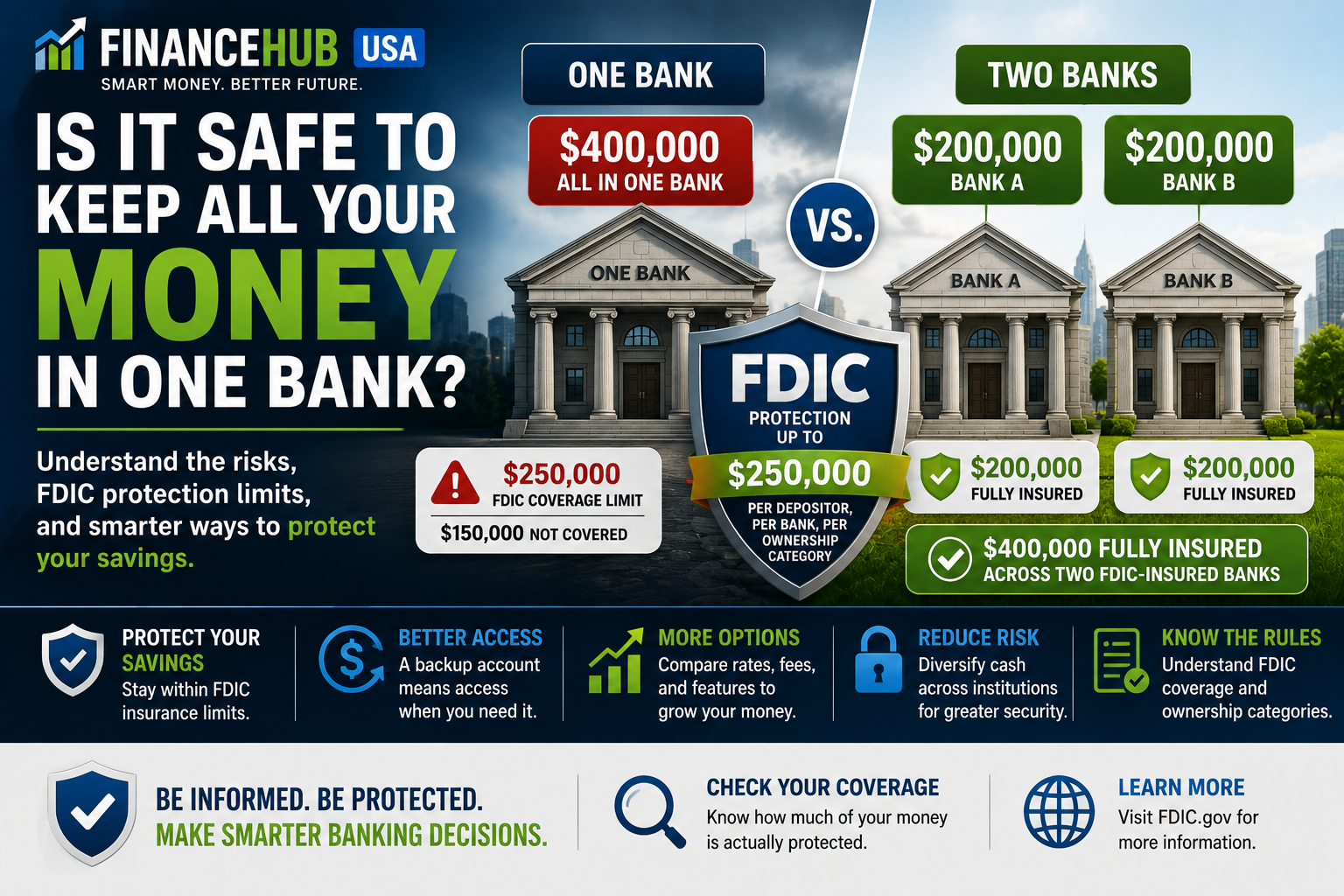
This does not automatically make those accounts less useful, but business owners should understand which institution actually holds the deposits and how FDIC insurance applies.
Before opening an account, verify:
- The name of the insured bank holding your deposits
- Whether the deposit account is eligible for FDIC insurance
- The applicable insurance limits
- Whether deposits are distributed among program banks
- How to access your money if the financial technology platform experiences a service interruption
How to Choose a Business Bank Account
The best account depends more on your operating needs than on a national ranking.
1. Start With Monthly Fees
Look at the monthly maintenance fee and the requirements for avoiding it.
A $15 monthly charge represents $180 per year if you never qualify for the waiver.
But a free account is not automatically better if another account provides services that save your business significantly more time or money.
2. Calculate Your Transaction Volume
Traditional business checking accounts often include a limited number of transactions before charging additional fees.
If your business makes hundreds of payments and deposits every month, those fees can become more important than the monthly account charge.
3. Evaluate Cash Deposits
This is especially important for restaurants, salons, retail shops, contractors, and other businesses receiving physical cash.
A digital account with excellent software tools may not be practical if depositing cash is expensive or inconvenient.
4. Review Payment Tools
Consider how customers pay your business.
Depending on your operation, useful features may include:
- ACH transfers
- Wire transfers
- Invoices
- Card acceptance
- Mobile check deposit
- Merchant services
- Payment links
5. Consider Accounting Integrations
Integrations with QuickBooks, Xero, Stripe, Shopify, Square, and other platforms can reduce manual bookkeeping for some businesses.
Do not select a bank solely because it lists an integration. Confirm that the integration supports the specific workflow your business needs.
6. Think About Future Financing
If you expect to need a line of credit, equipment financing, an SBA loan, or another borrowing product, consider whether having an established banking relationship could be useful.
That does not mean you should choose a more expensive checking account solely because the bank offers loans. Financing decisions remain subject to underwriting and approval.
Example: Which Account Could Fit Different Businesses?
| Business Type | Possible Priority | Account Worth Comparing |
|---|---|---|
| Freelance designer | No monthly fee and software integrations | Novo |
| Online consulting firm | Digital banking and interest on cash | Bluevine |
| Restaurant | Cash deposits and branch access | Chase or another traditional bank |
| Local contractor | Branches, checks, financing, and cash management | PNC |
| Small professional office | Traditional bank with no monthly checking fee | U.S. Bank Silver |
This table is illustrative only. The actual best account depends on location, transaction volume, cash activity, financing needs, and other business circumstances.
FinanceHub USA Analysis: The Cheapest Account Is Not Always the Best
Business bank comparisons often focus almost entirely on the monthly fee.
That can miss the larger picture.
Imagine Business A uses a free digital account but pays additional fees or spends several hours every month finding ways to deposit cash.
Business B pays $15 per month for an account with convenient nearby branches, cash deposits, merchant services, and accounting tools that fit its workflow.
Business B may actually receive greater value despite paying the higher advertised fee.
A better comparison is to calculate the total operating cost of the account.
That can include:
- Monthly account fees
- Transaction charges
- Cash deposit fees
- Wire fees
- ATM fees
- Payment processing costs
- Software costs
- The time required to manage banking tasks
The best business bank is therefore not necessarily the account with the lowest advertised price. It is the account that supports the way your business receives, stores, and spends money at a reasonable total cost.
Common Mistakes When Choosing a Business Bank
- Choosing only by monthly fee. Transaction and cash deposit fees may matter more for an active business.
- Ignoring cash deposit needs. A digital account may be inconvenient for a cash intensive company.
- Assuming every provider is itself a bank. Understand which insured institution actually holds your deposits.
- Ignoring transaction limits. Free transactions can be capped on some traditional accounts.
- Opening an account because of a temporary promotion. Compare the normal terms after introductory incentives end.
- Failing to compare accounting integrations. The right connection can reduce bookkeeping work, but only when it fits your workflow.
- Mixing business and personal finances unnecessarily. Maintaining clear financial records can make bookkeeping and business administration easier.
- Ignoring future growth. A suitable account today may become limiting as transaction volume, payroll, or cash reserves increase.
Final Thoughts
The best bank for a small business in 2026 depends on the way the company operates.
Chase can be attractive for businesses wanting branches, cash services, payments, lending, and other financial products under one institution. Bluevine offers a digital checking structure with interest earning options. Novo is designed around freelancers and online businesses. PNC provides a traditional banking alternative, while U.S. Bank Silver Business Checking currently offers the unusual combination of traditional branch access and no monthly maintenance fee.
Do not choose solely from a ranking.
Estimate how many transactions you make, how much cash you deposit, what payment methods customers use, whether you need branches, and which software integrations matter to your business.
Then compare the complete account terms.
The right business banking relationship should reduce friction in your financial operations rather than create another recurring administrative problem.
Continue exploring FinanceHub USA for practical guides on business banking, credit, loans, cash flow, taxes, investing, and financial management.
Sources and Further Reading
Frequently asked questions
What is the best bank for a small business startup?
For startups, I recommend Novo or Bluevine. Both are digital options with no fees and minimal requirements. If you need branch access and plan to seek business loans, Chase is a solid traditional choice. I've seen startups succeed with all of these options.
Do online banks offer business checking accounts?
Yes, absolutely. Online banks like Bluevine and Novo offer business checking accounts with no fees, higher interest rates, and excellent digital tools. The only catch is they don't have physical branches. If you don't need in-person banking, they're a great choice.
How much does a business checking account typically cost?
The average monthly fee is $12 to $15. However, many banks waive the fee if you maintain a minimum balance of $1,000 to $2,500 or meet monthly transaction requirements. Online banks often have no fees at all. I always recommend comparing fee structures before opening an account.
Can I open a business bank account with bad personal credit?
Yes, most banks will open a business account even if your personal credit isn't great. However, your ability to get business credit products like loans or credit cards may be limited until you establish business credit. I've seen this happen with several business owners I know.
What documents do I need to open a business bank account?
Typically, you'll need your business formation documents like Articles of Organization or Incorporation, your EIN, personal identification, business license, and Operating Agreement for LLCs. Requirements vary by bank, so I recommend calling ahead to confirm what you need.