Can You Pay Someone Else's Loan?
Can you pay someone else's loan? Learn how third-party payments work, possible gift-tax implications, lender restrictions, and what to check first.


Helping a parent, child, spouse, partner, or friend with debt can be as simple as covering one monthly payment—or as significant as paying off an entire loan. But sending money toward a debt you did not borrow can raise important financial, legal, and tax questions.
So, can you pay someone else's loan? In many situations, yes. A third party can provide money that is used to make another person's loan payment, and some creditors offer payment methods that can accept funds from someone other than the borrower. However, lender procedures, authorization requirements, privacy rules, and the type of loan can affect how the payment must be made.
There is another issue to consider when substantial amounts are involved: taxes. If you pay another person's debt without expecting repayment, the transfer may potentially be treated as a gift for federal gift-tax purposes. That does not necessarily mean you will owe gift tax, but larger transfers can create reporting requirements.
Before making a significant payment, it is important to understand what paying someone else's debt does—and what it does not do.
Key Takeaways
- You can often provide money to help another person make a loan payment.
- The lender may have specific procedures for accepting third-party payments.
- Making a voluntary payment does not automatically make you the borrower or cosigner.
- A payment made without expecting repayment may potentially be considered a gift for federal tax purposes.
- For 2026, the federal annual gift-tax exclusion is $19,000 per recipient for qualifying present-interest gifts.
- Exceeding the annual exclusion does not automatically mean you owe gift tax.
- If the other person is expected to repay you, documenting the arrangement as a genuine loan can become important.
Can You Legally Pay Someone Else's Loan?
There is no general federal rule that makes it inherently illegal to use your own money to help another person repay a legitimate debt. In practice, however, whether you can submit the payment directly to the creditor depends on the lender's procedures and the type of account involved.
A lender may require information such as the borrower's account number, payment reference, or other identifying information before it can correctly apply the payment.
However, being allowed to submit money toward an account does not necessarily mean the lender can disclose private account information to you. The borrower may need to participate if account access, payoff information, or other protected information is required.
For recurring electronic withdrawals from a consumer's bank account, federal Regulation E also contains authorization requirements. This is another reason to avoid attempting to access another person's loan account or bank information without authorization.
The safest approach is usually to involve the borrower and use a payment method officially accepted by the lender.
Ways Someone Else's Loan Could Be Paid
The appropriate payment method depends on what the creditor permits. Common approaches can include giving the borrower money to make the payment, paying through an approved creditor payment system, using an authorized bank transfer, mailing an accepted payment, or following another creditor-approved procedure.
| Method | How It Works | What to Verify |
|---|---|---|
| Give money to borrower | Borrower submits the payment | Whether the money is a gift or expected to be repaid |
| Direct lender payment | You send money directly to the creditor | Whether third-party payments are accepted |
| Electronic payment | Payment is funded from an authorized account | Authorization and payment-account requirements |
| Check or other accepted payment | Payment identifies the correct loan | Creditor instructions and processing time |
Consumer-finance regulations recognize multiple creditor-approved payment methods, including electronic and other forms of payment. However, that does not mean every lender must accept every method from every third party.
Before sending a substantial payment, verify the creditor's instructions directly and make sure the payment will be credited to the correct account.

Does Paying Someone Else's Loan Make You Responsible for the Debt?
Simply making a voluntary payment should not be confused with becoming the borrower, co-borrower, or cosigner. Those roles generally arise from contractual obligations rather than from voluntarily helping someone make a payment.
Consider Maria, who owes $15,000 on a personal loan. Her father voluntarily pays $1,000 directly to the lender as financial assistance. The payment reduces Maria's balance according to the loan terms, but making that payment does not by itself rewrite the original loan contract and turn her father into the borrower.
The situation would be different if her father originally cosigned the loan, became a co-borrower, assumed the debt through an agreement, or signed another contract creating legal responsibility.
| Role | Generally Responsible for Debt? |
|---|---|
| Borrower | Yes |
| Co-borrower | Yes, according to the contract |
| Cosigner | Can be responsible if the borrower does not pay |
| Person making a voluntary third-party payment | Not automatically made the borrower solely by making a payment |
This distinction is extremely important. Making a one-time payment is very different from signing a refinancing agreement, assuming another person's debt, becoming a joint borrower, or cosigning a loan.
Could Paying Someone Else's Loan Be Considered a Gift?
Yes, depending on the circumstances. This is where a simple act of financial assistance can potentially create federal tax-reporting considerations.
For federal gift-tax purposes, the IRS generally considers a transfer to be a gift when property or money is transferred without receiving full consideration in return.
If you voluntarily pay another person's personal debt and do not expect that person to repay you, the economic benefit provided to that person can potentially be treated as a gift.
For 2026, the federal annual gift-tax exclusion is $19,000 per recipient for qualifying present-interest gifts.
The annual exclusion generally applies to the donor's combined qualifying gifts to that recipient during the calendar year—not independently to every transaction.
Example: Paying $25,000 Toward a Family Member's Loan
Suppose David pays $25,000 toward his adult son's personal loan in 2026 and expects nothing in return. Assume David makes no other gifts to his son during the year and the transfer otherwise qualifies for the annual exclusion.
| Calculation | Amount |
|---|---|
| Payment toward son's loan | $25,000 |
| 2026 annual exclusion | $19,000 |
| Amount above annual exclusion | $6,000 |
The important point is that exceeding the $19,000 annual exclusion does not automatically mean David immediately owes federal gift tax on $6,000.
A gift above the annual exclusion can create a Form 709 filing requirement and generally reduces part of the donor's available lifetime gift and estate tax exclusion before an actual out-of-pocket federal gift-tax liability arises.
For 2026, the federal basic exclusion amount is $15 million per individual. Because large transfers can still have significant reporting and estate-planning consequences, anyone considering substantial gifts should consider consulting a qualified tax or estate-planning professional.

Who Pays Gift Tax: The Giver or the Borrower?
Federal gift tax is generally the responsibility of the donor—the person making the gift—rather than the recipient.
Therefore, if you make a qualifying gift by voluntarily paying another person's debt, any potential federal gift-tax reporting obligation generally belongs to you rather than the person whose debt was reduced.
This is different from ordinary income tax. Receiving a genuine gift is generally not treated the same way as receiving wages, self-employment income, or business revenue, although separate tax rules can apply in unusual circumstances or to income subsequently generated by gifted property.
For someone considering paying a relative's loan, useful questions include:
- Was the payment intended as a gift?
- Does the recipient have an obligation to repay you?
- Did you receive anything of comparable value in return?
- How much have you already given this recipient during the calendar year?
- Does the total exceed the applicable annual exclusion?
- Could Form 709 be required?
Keeping clear records becomes increasingly important as the amount of financial assistance grows.
What If You Expect the Person to Pay You Back?
If you pay another person's lender but genuinely expect the borrower to repay you, the transaction may be economically different from a gift. You may instead be creating a separate loan between yourself and that person.
For example, imagine you pay $20,000 to eliminate your brother's high-interest personal loan and he agrees to repay you over four years.
Simply calling the arrangement a "loan" does not necessarily determine its tax treatment. The facts and documentation should support the existence of a genuine debtor-creditor relationship.
For substantial family loans, documentation can include:
- The principal amount borrowed.
- A written repayment schedule.
- The applicable interest rate.
- The maturity date.
- Records of payments actually made.
- Terms explaining what happens if payments are missed.
Federal below-market loan rules can also become relevant when family loans carry little or no interest.
| Transaction | Economic Intent |
|---|---|
| Pay $10,000 and expect nothing back | Potential gift |
| Pay $10,000 under a genuine repayment agreement | Potential loan between the parties |
| Cosign the original debt | Contractual responsibility to creditor may exist |
For significant amounts, taxpayers should not casually label a transfer as a loan merely to avoid gift-tax reporting. The actual arrangement should support that characterization.
FinanceHub USA Analysis: Separate the Payment From the Obligation
The easiest way to understand third-party loan payments is to separate two questions: who owes the lender, and who provides the money?
If your daughter owes a bank $20,000 and you voluntarily contribute $5,000, the original debt relationship generally remains between your daughter and the bank unless contractual documents say otherwise. You supplied money; you did not automatically replace her as the borrower.
But your payment creates a second financial question between you and your daughter. Was the $5,000 a gift, or does she owe it back to you?
That distinction can affect documentation and federal tax considerations. Before making a large payment, clarify both relationships. Confirm with the creditor how the payment should be submitted, then document whether your transfer is intended as a gift or a genuine loan.
Separating those two relationships can prevent misunderstandings among family members while creating a much clearer financial paper trail.
Can You Pay Someone Else's Mortgage, Auto Loan, or Student Loan?
Often, but the process can vary significantly depending on the lender, servicer, and type of debt.
Mortgage servicers, auto lenders, student loan servicers, personal-loan companies, and credit-card issuers can all have different procedures for accepting payments.
A creditor may accept money as long as the payment is properly identified and credited to the correct account. However, privacy and account-security requirements can limit what information the creditor will disclose to someone who is not the borrower.
| Loan Type | Third-Party Payment May Be Possible? | Important Consideration |
|---|---|---|
| Mortgage | Often | Servicer procedures and correct account identification |
| Auto Loan | Often | Lender payment procedures can vary |
| Student Loan | Often | Servicer-specific requirements may apply |
| Personal Loan | Often | Verify lender policies before sending funds |
| Credit Card | Often | Issuer may require specific account information |
Because policies differ, contact the lender or loan servicer before sending a large payment and verify the accepted method.

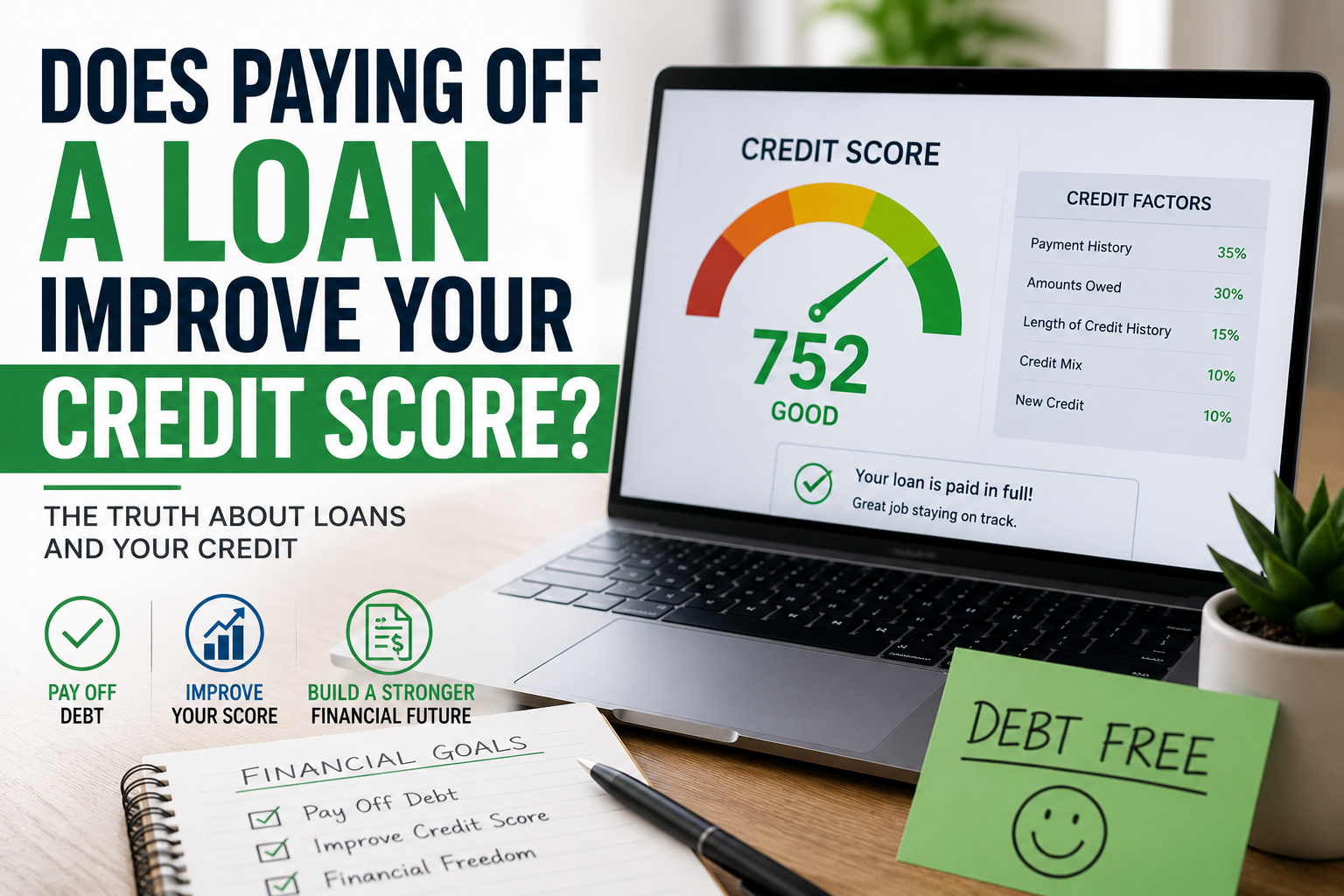
Will Paying Someone Else's Loan Affect Your Credit Score?
In most situations, voluntarily paying another person's loan does not directly improve or damage your own credit score because the account does not belong to you.
Credit reports generally track accounts for which you have a credit relationship or legal responsibility, such as loans you borrowed, cosigned, or jointly opened.
Simply making a payment on someone else's debt does not automatically add that loan to your credit report.
Example
Suppose Sarah helps her brother by making three monthly payments on his car loan. Those payments may help her brother keep the account current and avoid late-payment consequences.
Sarah, however, would not ordinarily receive a credit-score benefit simply because the money came from her account if she is not a borrower or cosigner on the loan.
| Person | Potential Credit Impact |
|---|---|
| Borrower | Payment history on the account can affect the borrower's credit |
| Third-party helper | Usually no direct credit impact solely from making the payment |
| Cosigner | Credit can be affected because the cosigner has contractual responsibility |
Should You Pay the Lender Directly or Give Money to the Borrower?
The better approach depends on trust, convenience, the lender's procedures, and the purpose of the financial assistance.
Paying the lender directly can create a clearer paper trail showing that the money was actually applied toward the debt. It can also reduce the possibility that funds intended for the loan are used for something else.
Giving the money directly to the borrower provides greater flexibility but requires confidence that the borrower will use it as intended.
- Direct lender payments can improve transparency.
- Borrower-controlled payments provide greater flexibility.
- Large transfers should be documented.
- Gift-versus-loan intentions should be clear.
- Written records can help prevent future family disputes.
As the amount involved increases, documentation becomes increasingly important.
Potential Risks of Paying Someone Else's Debt
Helping someone financially can be generous and sometimes extremely valuable, but the decision should still be evaluated carefully.
| Potential Risk | Why It Matters |
|---|---|
| Family conflict | Different expectations about repayment can damage relationships |
| Gift-tax reporting | Larger gifts can create federal filing considerations |
| Financial strain | Helping someone else can weaken your own emergency savings or retirement position |
| Poor documentation | Unclear records can create future financial or tax confusion |
| Incorrect payment | Funds sent using the wrong procedure may not be credited as intended |
One of the most important mistakes to avoid is helping another person at the expense of your own financial stability.
Someone without adequate emergency savings, carrying expensive debt of their own, or falling behind on retirement contributions should carefully consider whether making a large payment for another person's debt is financially sustainable.
FinanceHub USA Analysis: Protect Your Finances While Helping Someone Else
Helping a family member avoid default or escape expensive debt can have real financial value. But generosity does not eliminate the need for planning.
Before making a substantial payment, consider what would happen if you never received that money back. If losing the money would prevent you from paying your own bills, drain your emergency fund, force you into credit-card debt, or compromise your retirement plan, the assistance may be larger than your finances can comfortably support.
The strongest approach is usually to decide in advance exactly what the payment represents. If it is a gift, treat it as money you do not expect to recover. If it is a genuine loan, establish clear terms and maintain appropriate documentation.
Most importantly, do not confuse helping someone repay a debt with becoming legally responsible for that debt. Those are separate financial decisions.
If you're deciding whether extra cash should go toward debt or remain in savings, you may also want to read Should You Save Money or Pay Off Debt First?.
Final Thoughts
So, can you pay someone else's loan? In many situations, yes. You can often provide money to help another person make a payment, and some lenders may allow you to submit the payment directly using an approved method.
However, making a payment does not automatically make you the borrower, give you access to private account information, or transfer legal responsibility for the debt to you.
For larger amounts, there is another important consideration. A payment made without expecting repayment may potentially be treated as a gift for federal tax purposes. If the transfer exceeds the applicable annual exclusion, a federal gift-tax return may be required even when no immediate gift tax is owed.
If you expect repayment, clearly documenting a genuine loan between you and the borrower can become important, particularly when substantial amounts are involved.
Before sending money, verify the lender's payment requirements, determine whether your assistance is a gift or loan, maintain appropriate records, and make sure helping someone else will not undermine your own financial security.
Continue exploring FinanceHub USA for practical guides covering loans, taxes, credit, banking, investing, retirement planning, and personal finance.
Financial & Tax Disclaimer: This article is for general educational and informational purposes only and does not constitute financial, tax, or legal advice. Federal and state rules can vary depending on the transaction and individual circumstances. For substantial gifts, family loans, or other significant transactions, consider consulting a qualified tax or legal professional.
Official Sources
Frequently asked questions
Can I legally pay someone else's loan?
In many cases, yes. Lenders often accept payments from third parties, although procedures vary by institution.
Does paying someone else's loan make me responsible for the debt?
Generally no. Simply making a payment does not usually make you the borrower, co-borrower, or cosigner.
Can paying someone else's loan be considered a gift?
Yes. If you provide money without expecting repayment, the transfer may be treated as a gift for federal tax purposes.
Will paying another person's loan improve my credit score?
Typically not. Credit reporting usually reflects accounts for which you are legally responsible.
Should I pay the lender directly?
Direct payments often provide clearer records and greater assurance that the funds are applied to the intended debt.