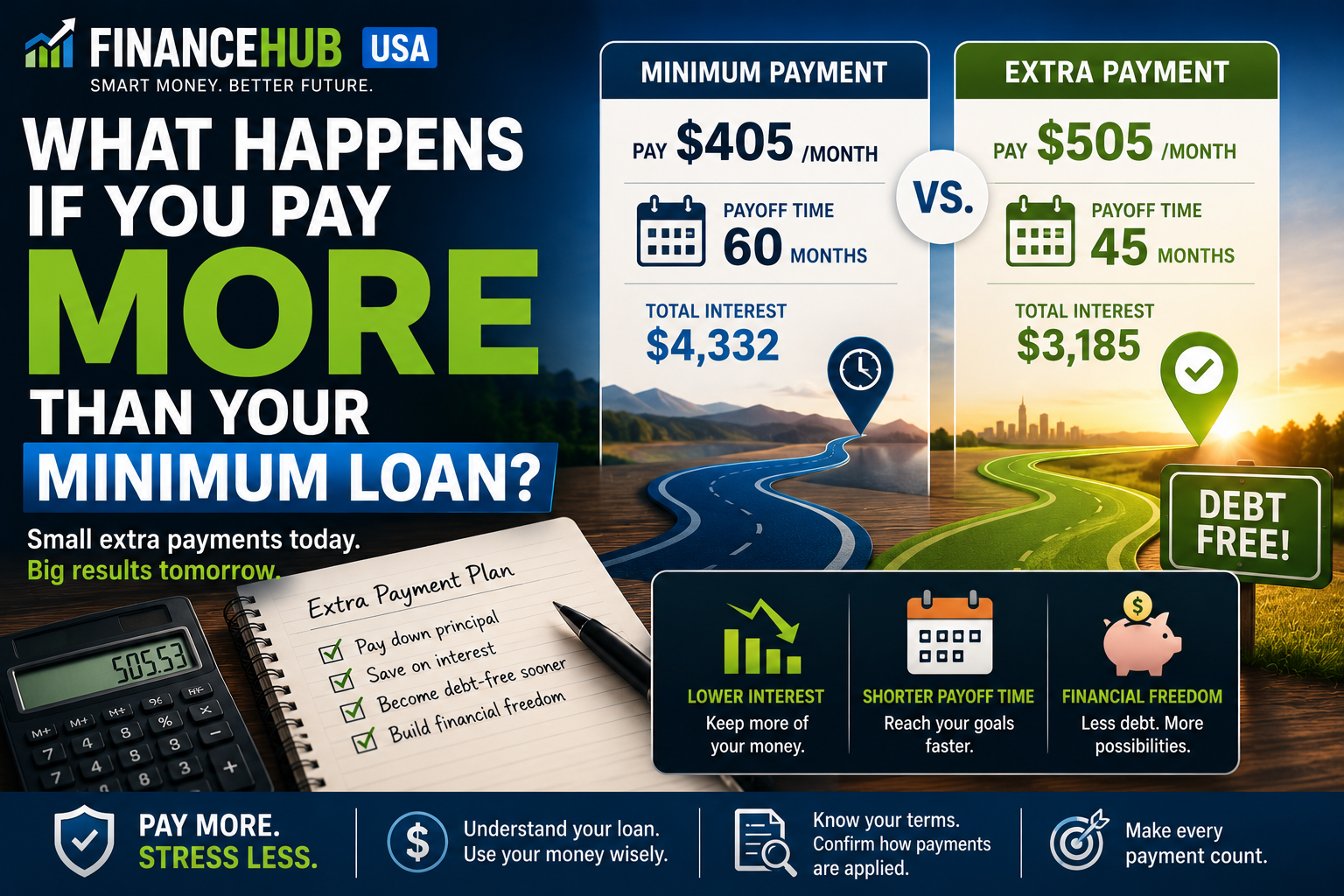
Does Paying a Loan Early Save Interest?
Paying a loan early can reduce interest, but the savings depend on your rate, loan structure, and fees. Here's how to decide if paying early makes sense.
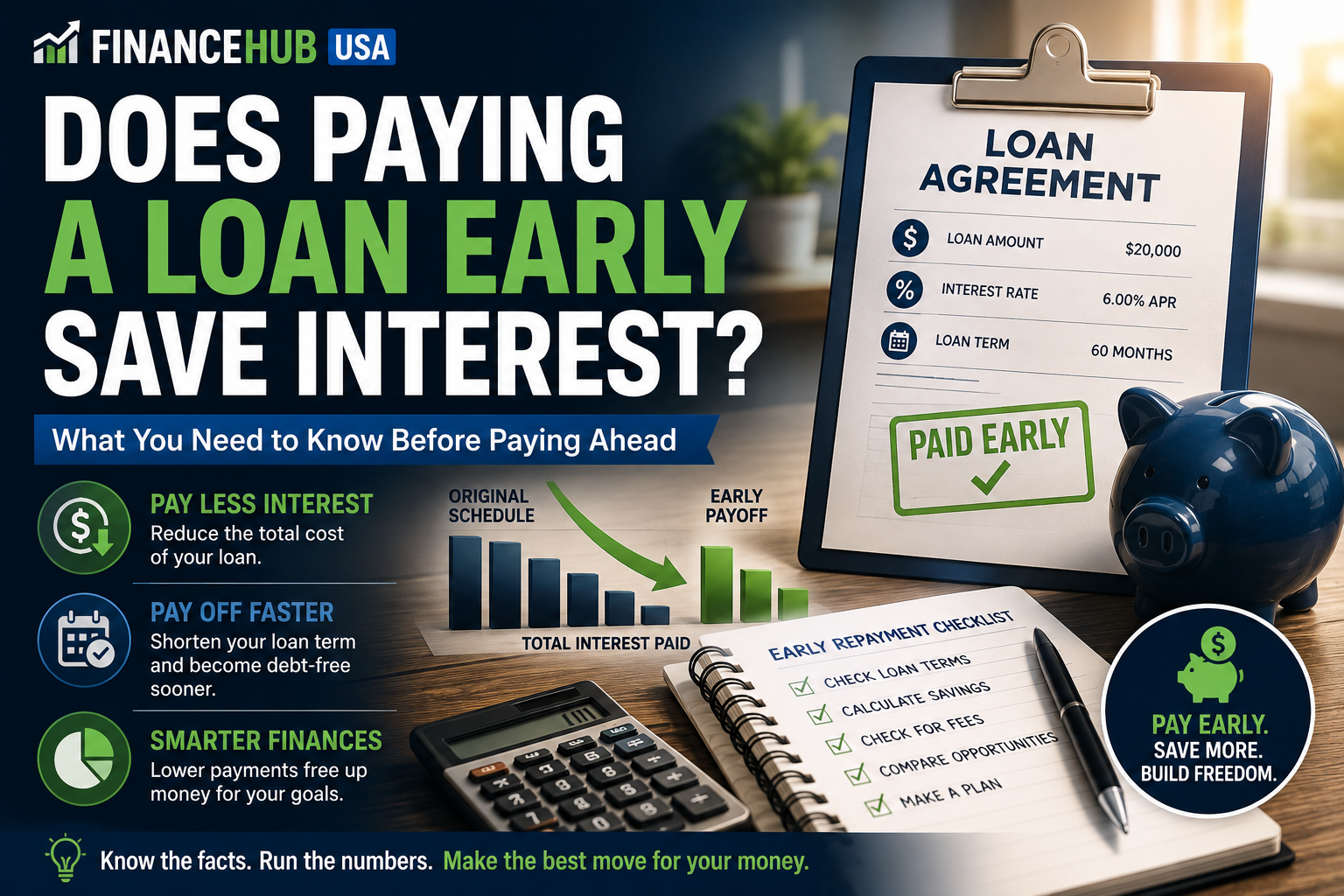
Does Paying a Loan Early Save Interest?

Paying a loan off ahead of schedule can reduce the total amount of interest you pay, but the exact savings depend on how the loan is structured.
If interest is calculated on the outstanding principal balance, reducing that balance sooner generally leaves less money for future interest to accumulate on. However, not every loan uses the same interest method, and some contracts may include prepayment penalties or special rules for additional payments.
So, does paying a loan early save interest? In many cases, yes. But before sending extra money, borrowers should understand how their loan calculates interest, how additional payments are applied, and whether the savings justify using cash that could serve other financial priorities.
Why Paying a Loan Early Can Reduce Interest
Many installment loans require a fixed monthly payment that includes both principal and interest.
The principal is the amount you borrowed. Interest is the cost charged for borrowing that money.
When interest is based on the remaining principal balance, lowering that balance faster can reduce future interest charges.
Simple Example
Suppose you owe $10,000 on a loan.
If the lender calculates interest based on that outstanding balance, reducing the principal to $7,000 earlier than scheduled means future interest may be calculated on a smaller amount.
The faster the balance falls, the less time and principal remain available for interest to accumulate.
Principal vs. Interest
Understanding the difference between principal and interest makes early payoff much easier to evaluate.
| Loan Component | Meaning |
|---|---|
| Principal | The amount of money still owed from the original loan |
| Interest | The cost charged for borrowing the money |
When you make a normal loan payment, part may go toward interest and part toward reducing principal.
If an extra payment is applied directly to principal, the outstanding loan balance falls faster.
Example: A $20,000 Personal Loan
Suppose a borrower takes out a $20,000 personal loan at a 6% annual interest rate with a five-year repayment term.
A standard amortized payment would be approximately $387 per month.
If the borrower makes only the scheduled payments for all 60 months, the total interest paid would be roughly $3,200.
| Scenario | Repayment Pattern | Potential Effect |
|---|---|---|
| Scheduled payments only | Required payment until maturity | Interest continues across the full loan term |
| Extra payments | Additional amounts reduce principal | Balance may fall faster |
| Early payoff | Remaining balance eliminated before maturity | Future interest may be reduced substantially |
This is a simplified illustration. Actual payments and interest depend on lender calculations, payment timing, APR, fees, and loan terms.
Why Paying Earlier Usually Saves More Interest
When a loan still has several years remaining, there is more time for interest to accumulate.
That means an extra $1,000 payment made early in the loan can often reduce more future interest than the same payment made shortly before the loan's final due date.
The exact benefit depends on how the loan calculates interest.
Simple Interest Loans
Many personal loans and auto loans use simple interest.
With a simple-interest loan, interest is generally calculated using the outstanding principal balance.
A simplified formula is:
Interest = Principal × Interest Rate × Time
Reducing principal sooner can therefore reduce future interest.
Example
Suppose a loan balance is $10,000 at a 10% annual rate.
A simplified one-year interest illustration would be:
$10,000 × 10% = $1,000
If the balance were reduced to $6,000 instead:
$6,000 × 10% = $600
The smaller balance produces less interest exposure.
Actual loan interest calculations can occur daily or according to another method, so this example is only meant to illustrate the relationship between principal and interest.
What Is Precomputed Interest?
Some loans may calculate interest differently.
With a precomputed-interest structure, the lender calculates part or all of the interest expected over the loan term in advance and builds it into the repayment schedule.
Early payoff may still reduce the cost of the loan, but the calculation can differ significantly from a simple-interest loan.
Borrowers should review:
- The loan agreement
- Truth in Lending disclosures
- Payoff quote
- Any rebate or refund method for unearned interest
Do not assume that every loan saves interest in exactly the same way.
Extra Payment Does Not Always Mean Principal Reduction
This is one of the most important details to verify.
When you send more than the required monthly payment, the lender may handle that extra amount in different ways.
Depending on the contract and servicing system, the extra money may:
- Reduce principal immediately
- Advance the next payment due date
- Be applied partly to accrued interest
- Be handled according to another contractual method
If your goal is to reduce the loan balance faster, confirm how the lender applies additional payments.
How to Make Sure Extra Payments Help Reduce Interest
Before making additional payments:
- Review the loan agreement.
- Check the lender's payment instructions.
- Ask how additional payments are applied.
- Review the next statement to confirm the balance changed as expected.
Do not assume the payment automatically works the way you intend.
What Is a Payoff Quote?
A payoff quote is the amount required to completely satisfy the loan through a specific date.
It can include:
- Remaining principal
- Accrued interest
- Applicable fees
- Prepayment charges, if any
The payoff amount can differ from the balance displayed on a monthly statement because interest may continue accruing between the statement date and the payoff date.
Why You Should Request a Payoff Quote
Suppose your online account displays a balance of $6,000.
If several days of interest have accrued, the exact payoff amount might be slightly higher.
Sending exactly $6,000 could leave a small residual balance.
Requesting the official payoff amount helps avoid that problem.
Prepayment Penalties Can Reduce Your Savings

Some loan agreements may include a fee for repaying the debt earlier than scheduled.
If one applies, compare the fee with the amount of interest you expect to avoid.
Example
| Item | Amount |
|---|---|
| Estimated future interest avoided | $1,200 |
| Prepayment penalty | $300 |
| Potential net savings | $900 |
A penalty does not automatically make early payoff a bad decision, but it changes the calculation.
When Paying Early May Save Less Than Expected
Several factors can reduce the financial benefit.
You Are Near the End of the Loan
If only a few payments remain, much of the interest may already have been paid.
The remaining savings could therefore be relatively small.
Your Interest Rate Is Very Low
A low-rate loan carries a smaller financing cost, so the amount saved by paying it early may be modest.
A Prepayment Penalty Applies
A fee can offset some of the avoided interest.
Extra Payments Are Not Applied as Expected
If the lender does not immediately reduce principal, the interest savings may be smaller than expected.
Does Paying Off an Auto Loan Early Save Interest?
It can.
If the auto loan uses simple interest and there is no significant prepayment penalty, reducing the principal faster can reduce future interest.
However, borrowers should verify:
- Whether the auto loan is simple interest or precomputed
- Whether additional payments reduce principal
- Whether the lender charges any prepayment fee
- The exact payoff amount
Does Paying Off a Personal Loan Early Save Interest?
Often, yes.
Many personal loans calculate interest based on the outstanding balance, so paying them off early can reduce the total borrowing cost.
Related reading: Can You Pay Off a Personal Loan Early?
What About Mortgages?
Making additional mortgage principal payments can reduce interest and shorten the repayment period on many standard mortgage structures.
However, mortgages involve additional considerations such as:
- Loan terms
- Escrow
- Prepayment rules
- Tax considerations
- Opportunity cost
Borrowers should review their mortgage contract and payment instructions before making large additional payments.
Does Paying a Loan Early Always Make Financial Sense?
No.
Saving interest is only one part of the decision.
The money used to pay off the loan could potentially serve other important purposes.
This is the concept of opportunity cost.
Paying Debt vs. Keeping Emergency Savings

Suppose you have:
- $8,000 in savings
- $8,000 remaining on a low-rate personal loan
Using every dollar of savings to eliminate the loan would leave you with no liquid emergency reserve.
If an unexpected $3,000 expense arrives immediately afterward, you might need to borrow again at a much higher rate.
This is why debt payoff should be considered alongside emergency savings.
Related reading: Should You Save Money or Pay Off Debt First?
Paying One Loan vs. Paying Higher-Interest Debt
If you have several debts, compare their borrowing costs.
Suppose you owe:
| Debt | Balance | APR |
|---|---|---|
| Personal loan | $7,000 | 6% |
| Credit card | $7,000 | 24% |
Directing extra money toward the 24% credit card may reduce borrowing costs more aggressively than accelerating the 6% loan.
The exact decision depends on balances, minimum payments, fees, and your broader financial situation.
Paying a Loan vs. Investing
This comparison should be handled carefully.
Suppose your loan charges 8% interest.
Paying down the loan reduces a known borrowing cost.
Investing the same money may produce a higher return over time, but market returns are uncertain.
It is therefore not accurate to compare:
8% debt cost vs. an assumed guaranteed 10% investment return.
The better comparison includes:
- Loan APR
- Investment risk
- Taxes
- Fees
- Time horizon
- Liquidity
- Risk tolerance
Employer Retirement Match Can Change the Decision
If paying a loan early causes you to give up an employer retirement contribution, compare that benefit before redirecting all available cash toward debt.
For example, if an employer matches part of your 401(k) contributions, stopping contributions completely could mean giving up part of your compensation.
The appropriate choice depends on the employer plan and your financial situation.
FinanceHub USA Analysis: Compare the Certain Cost With the Uncertain Alternative
One of the clearest benefits of early loan repayment is that the borrowing cost is known.
If your contract charges 12% interest on a declining principal balance, eliminating that balance removes a real financing expense.
An alternative investment does not provide the same certainty.
That does not mean high-interest debt should always be paid before every investment or savings goal.
It means the comparison should account for risk.
| Use of Extra Money | Primary Benefit | Main Trade-Off |
|---|---|---|
| Pay down loan | Reduce a known borrowing cost | Cash becomes less liquid |
| Keep in emergency savings | Maintain liquidity | Loan interest continues |
| Invest | Potential long-term growth | Returns are uncertain |
| Pay higher-rate debt | Potentially reduce a larger financing cost | Lower-rate loan remains outstanding |
Example: Paying $200 Extra Each Month
Suppose your required loan payment is $400 per month and you add another $200.
Your total monthly payment becomes:
$400 + $200 = $600
Over one year, the extra payments equal:
$200 × 12 = $2,400
If the full additional amount reduces principal, the loan balance could fall substantially faster.
The exact interest savings depend on the original balance, APR, payment timing, remaining term, and loan structure.
Extra Payment Amounts Add Up
| Extra Monthly Payment | Extra Paid Per Year |
|---|---|
| $25 | $300 |
| $50 | $600 |
| $100 | $1,200 |
| $200 | $2,400 |
| $500 | $6,000 |
Even smaller extra payments can shorten a loan when consistently applied to principal.
Should You Make One Lump-Sum Payment or Monthly Extra Payments?
Both approaches can reduce a loan balance.
Lump-Sum Payment
A large payment reduces principal immediately and may therefore reduce future interest sooner.
Monthly Extra Payments
Smaller recurring payments can be easier to fit into a household budget while still accelerating repayment.
The better approach depends on:
- Available cash
- Emergency savings
- Loan terms
- Interest rate
- Other financial priorities
Should You Use a Tax Refund or Bonus?
One-time income can be used to reduce debt without permanently increasing monthly expenses.
However, borrowers do not necessarily need to direct the entire amount toward the loan.
Illustrative $5,000 Bonus
| Use | Illustrative Amount |
|---|---|
| Extra loan payment | $3,000 |
| Emergency savings | $1,500 |
| Upcoming expenses | $500 |
This example illustrates that early repayment does not need to be an all-or-nothing decision.
When Paying Early May Be Especially Attractive
Early loan payoff may deserve stronger consideration when:
- The interest rate is relatively high
- No significant prepayment penalty exists
- You have sufficient emergency savings
- You do not have more expensive debt
- The monthly payment is limiting your cash flow
- The remaining loan term is long enough for meaningful interest to accumulate
When Paying Early May Be a Lower Priority
Early payoff may deserve less priority when:
- The loan rate is very low
- Paying it off would drain emergency savings
- You have substantially higher-interest debt
- You would lose valuable employer retirement matching
- A large prepayment fee applies
- You need the cash for a near-term obligation
How Paying Off a Loan Changes Monthly Cash Flow
Interest savings are important, but eliminating a required monthly payment can also improve future cash flow.
Suppose your loan payment is $450 per month.
Once the loan is paid off, the annual cash flow previously committed to that payment equals:
$450 × 12 = $5,400
This is not a $5,400 investment return because the principal had to be repaid eventually.
But the monthly obligation has disappeared.
That $450 can potentially be redirected toward:
- Emergency savings
- Retirement accounts
- Other debts
- Future purchases
- Long-term investing
Common Early Loan Payoff Mistakes
- Assuming every loan uses simple interest. Review the loan's actual interest method.
- Assuming every extra payment automatically reduces principal. Confirm how the lender applies additional money.
- Using the statement balance instead of a payoff quote. Accrued interest may make the exact payoff amount different.
- Ignoring prepayment penalties. Fees can reduce the expected savings.
- Draining emergency savings. Paying off inexpensive debt can backfire if the next emergency requires expensive borrowing.
- Ignoring higher-interest debt. Compare all borrowing costs before choosing which balance to accelerate.
- Treating expected investment returns as guaranteed. Market returns are uncertain.
FinanceHub USA Framework: Five Questions Before Paying Early
| Question | Why It Matters |
|---|---|
| How does the loan calculate interest? | Determines how much early principal reduction may save |
| How are extra payments applied? | Confirms whether the balance actually falls faster |
| Is there a prepayment fee? | Can reduce the benefit of early payoff |
| How much cash will remain afterward? | Protects emergency liquidity |
| Is there a better financial priority? | Higher-rate debt or employer benefits may deserve attention first |
A Practical Early Payoff Checklist
- Request the current payoff quote.
- Review the loan agreement.
- Check for prepayment penalties.
- Confirm how additional payments are applied.
- Estimate the remaining scheduled interest.
- Protect appropriate emergency savings.
- Compare higher-interest debts.
- Review employer retirement benefits.
- Decide how you will use the freed monthly payment.
Final Thoughts
Does paying a loan early save interest?
In many cases, yes.
When interest is calculated based on the outstanding principal balance, reducing that balance sooner can reduce future interest and shorten the repayment period.
The amount you save depends on:
- The interest rate
- The remaining balance
- The remaining loan term
- How early you make extra payments
- How the lender calculates interest
- How additional payments are applied
- Any prepayment penalties
But paying a loan off as quickly as possible is not automatically the strongest financial decision.
Using all of your available cash to eliminate a low-rate loan can leave you without emergency savings. Paying a 6% loan while carrying 24% credit card debt may also be inefficient.
The better objective is to compare the interest savings with the financial value of keeping cash, eliminating higher-rate debt, receiving employer retirement benefits, or pursuing other important goals.
Run the numbers before making a large payment.
Then use your extra money where it produces the strongest overall improvement in your financial position.
Continue exploring FinanceHub USA for practical guides covering loans, debt payoff, saving, credit, investing, banking, and personal finance.
Related reading: Can You Pay Off a Personal Loan Early?
Related reading: Should You Save Money or Pay Off Debt First?
Sources and Further Reading
Frequently asked questions
Does paying off a loan early reduce the total interest?
Often, yes. For loans where interest is based on the outstanding principal, reducing the balance sooner can reduce the amount of future interest that accumulates. The exact savings depend on the loan terms.
Is it better to pay extra toward principal or interest?
Additional payments that reduce principal can lower the balance used to calculate future interest on many loans. Borrowers should verify with their lender how extra payments are applied.
Can a lender charge me for paying a loan off early?
Some loan agreements may include prepayment penalties or other fees. Review your contract and request a payoff statement before making a large early payment.
Should I use my savings to pay off a loan early?
Not necessarily. Keeping an adequate emergency fund can be more important than eliminating low-cost debt immediately. Compare the interest savings with the financial security provided by your cash reserves.
Should I pay off a loan or a credit card first?
If the credit card carries a substantially higher interest rate, directing extra money toward that balance may save more interest. Compare APRs, fees and your overall financial situation before deciding.