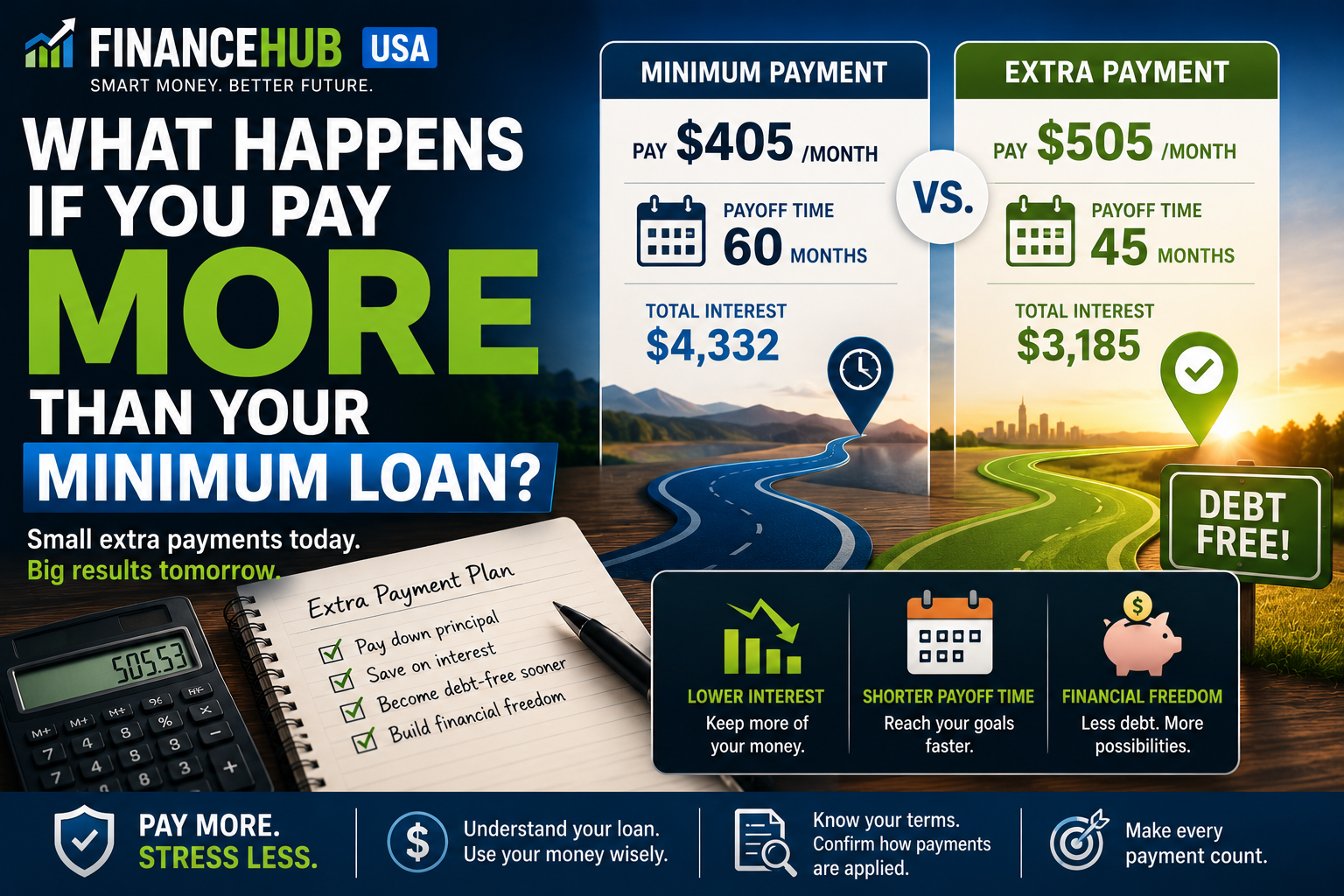
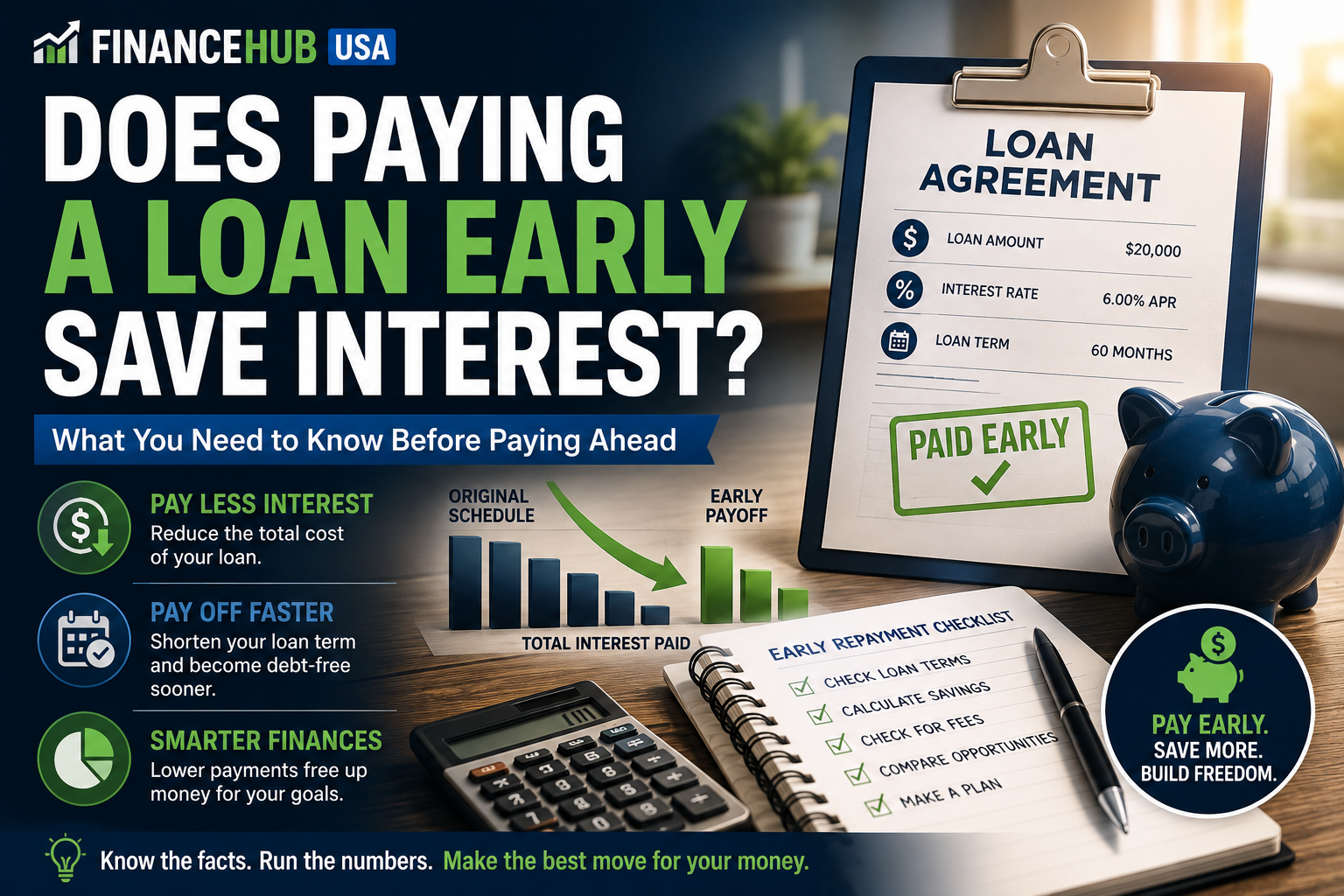
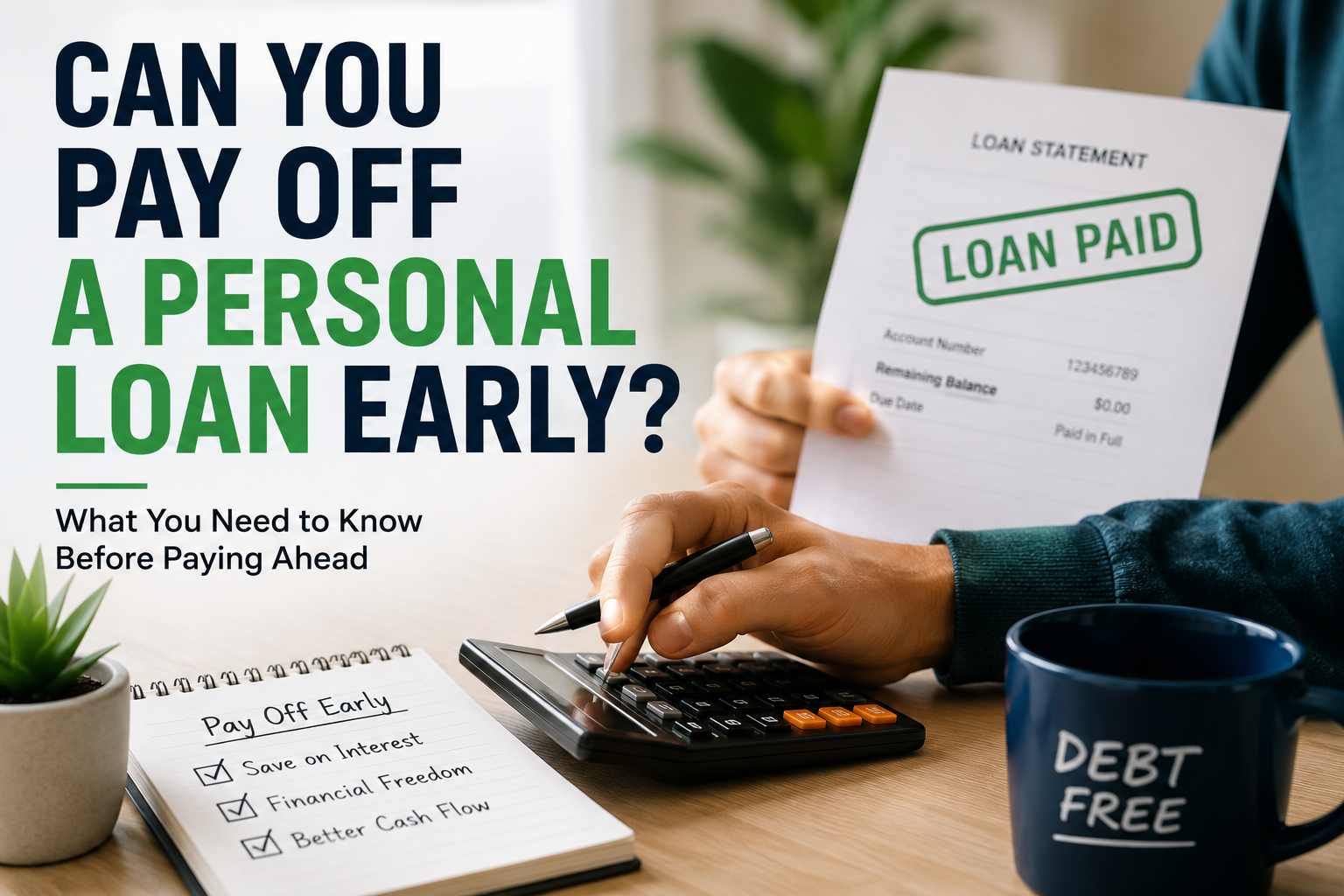
Does Paying Off a Loan Improve Your Credit Score?
Learn how paying off a loan affects your credit score, why your score may temporarily change, and what it means for your long-term financial health.
Does Paying Off a Loan Improve Your Credit Score?

Paying off a loan can strengthen your overall financial position, but it does not guarantee an immediate increase in your credit score.
Depending on your credit profile and the scoring model being used, your score could rise, remain relatively stable, or even decline temporarily after an installment loan is paid off and closed.
That can feel confusing. You successfully repaid a debt, so why would your credit score not automatically improve?
The answer is that credit scores evaluate more than how much debt you owe. They also consider your payment history, the types of accounts you manage, how long you have used credit, revolving balances, and recent credit activity.
This guide explains what happens to your credit score after paying off a loan, why scores can sometimes decline, and what matters more for building strong credit over time.
Does Paying Off a Loan Automatically Raise Your Credit Score?
No.
Paying off a loan is generally positive for your finances because it eliminates a debt obligation. But a credit score is not designed to reward individual financial events with a guaranteed number of points.
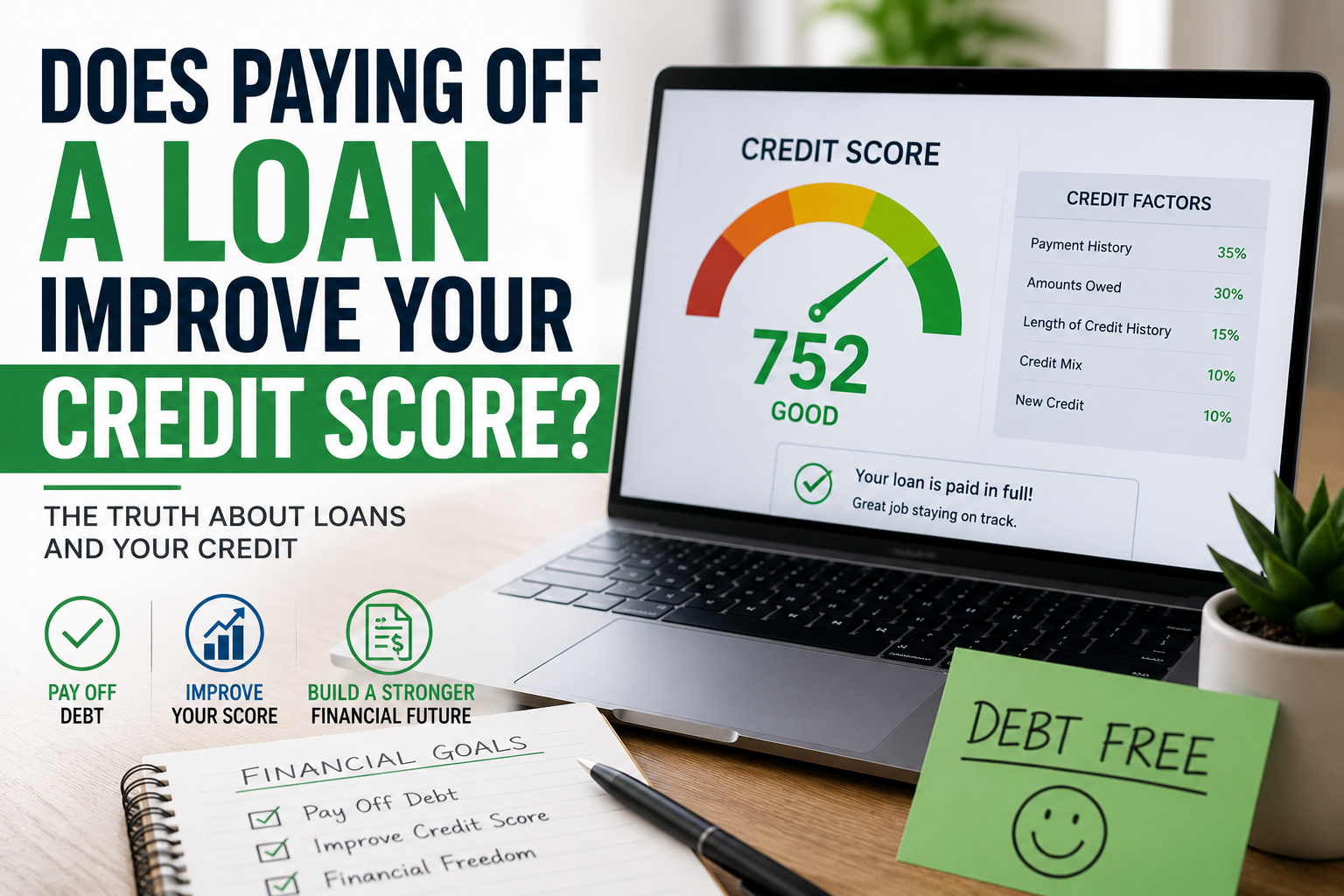
FICO scoring models evaluate information across several categories:
| FICO Score Category | Typical Weight |
|---|---|
| Payment history | 35% |
| Amounts owed | 30% |
| Length of credit history | 15% |
| New credit | 10% |
| Credit mix | 10% |
These percentages describe general FICO scoring categories. The importance of each category can vary depending on the information in an individual's credit report.
Why Can Your Credit Score Drop After Paying Off a Loan?

A small decline can occur because paying off an installment loan changes the information being evaluated in your credit profile.
Your Active Credit Mix May Change
Credit mix refers to the different types of credit accounts in your history.
These can include:
- Credit cards
- Auto loans
- Personal loans
- Mortgages
- Other installment accounts
FICO states that credit mix represents one part of its scoring model, although consumers do not need to have one of every account type to earn a strong score.
If the loan you repay is your only active installment account, closing it can change the composition of your active credit profile.
The Loan Is No Longer an Active Account
While the loan is open and being paid as agreed, it provides ongoing information about how you manage installment debt.
Once it is paid in full, that account is closed.
This does not mean the positive history immediately disappears, but the account is no longer an active installment obligation.
Your Positive Payment History Does Not Immediately Disappear
Paying off a loan does not normally erase years of responsible payments from your credit report.
The Consumer Financial Protection Bureau explains that positive payment information may continue to appear after a loan is paid off and even after the account is closed. :contentReference[oaicite:1]{index=1}
That means a loan with years of on-time payments can continue contributing useful information to your credit history after the balance reaches zero.
Payment History Is Still Extremely Important
For FICO Scores, payment history is the largest individual scoring category.
FICO states that payment history represents approximately 35% of a FICO Score and reflects whether accounts have historically been paid as agreed. :contentReference[oaicite:2]{index=2}
That is one reason the way you repay a loan can matter more than simply reaching the final payment.
A loan that was paid on time throughout its life provides a very different credit history from one that included repeated late payments.
Installment Loans and Credit Cards Affect Credit Differently
This distinction is important when evaluating debt payoff strategies.
Installment Credit
An installment loan generally has:
- A fixed original loan amount
- A repayment schedule
- Regular payments
- An expected payoff date
Examples include personal loans, auto loans, and mortgages.
Revolving Credit
Credit cards operate differently.
You receive a credit limit and can repeatedly borrow and repay amounts within that limit.
One important factor associated with revolving accounts is credit utilization, which compares card balances with available credit limits.
Paying Off a Credit Card Can Affect Your Score Differently
Suppose you have a credit card with a $10,000 limit and a $6,000 reported balance.
Your utilization on that card is:
$6,000 ÷ $10,000 = 60%
If you pay the balance down to $1,000:
$1,000 ÷ $10,000 = 10%
| Before Payment | After Payment | |
|---|---|---|
| Credit limit | $10,000 | $10,000 |
| Balance | $6,000 | $1,000 |
| Utilization | 60% | 10% |
Reducing revolving balances can therefore change an important part of the amounts-owed category.
Paying off an installment loan does not work exactly the same way because installment loans do not use revolving credit limits.
How Long Does It Take for a Paid-Off Loan to Affect Your Credit?
The change usually does not appear the moment you make the final payment.
Lenders normally need to update the account and report the new balance and status to the credit bureaus.
Experian notes that lenders often report account information at the end of a billing cycle, meaning it can take around 30 days or more before a payoff is reflected in a credit report and score. :contentReference[oaicite:3]{index=3}
The exact timing depends on:
- The lender's reporting schedule
- The credit bureau
- The scoring model
- When the score is recalculated
Do not assume something is wrong simply because your score does not change immediately after the final payment.
Will a Score Drop After Paying Off a Loan Be Permanent?
Not necessarily.
A score change after paying off an installment loan can be small and may be temporary, but there is no universal rule guaranteeing that every person's score will return to a particular number within a specific period.
Your credit score continues changing as new information is added to your credit report.
Future changes can depend on:
- Credit card balances
- New accounts
- Payment history
- Account age
- Credit inquiries
- Other debts
Example: Why Two Borrowers Can See Different Results
Consider two hypothetical borrowers who both pay off a personal loan.
| Borrower A | Borrower B | |
|---|---|---|
| Credit cards | 3 | 1 |
| Credit utilization | 8% | 75% |
| Other installment loans | Mortgage | None |
| Payment history | Strong | Strong |
Both borrowers completed the same financial action, but their credit profiles are very different.
The scoring impact therefore does not have to be identical.
Should You Keep a Loan Open Just for Your Credit Score?
Usually, keeping debt solely to maintain a particular credit-score component is not a strong reason to continue paying interest unnecessarily.
Suppose you owe $5,000 on a personal loan charging 12% interest and have enough money to repay it without damaging your emergency savings.
Continuing to pay interest simply because you are worried about losing an active installment account can create a real financial cost in exchange for an uncertain scoring benefit.
A credit score is a financial tool, not the final objective.
Reducing unnecessary borrowing costs and maintaining financial stability can be more important than attempting to optimize every possible scoring factor.
Paying Off a Loan Can Improve Monthly Cash Flow
Credit scores receive a lot of attention, but eliminating a loan also changes your actual budget.
Suppose your monthly loan payment is $450.
After payoff, that obligation disappears.
Annual cash flow previously committed to the loan equals:
$450 × 12 = $5,400
This does not mean paying off the loan created a $5,400 profit. You were already obligated to repay the principal.
But it does mean future monthly cash flow becomes more flexible.
That money could potentially be redirected toward:
- Emergency savings
- Retirement
- Other debt
- A future home purchase
- Long-term investing
Related reading: Can You Pay Off a Personal Loan Early?
Does Paying Off an Auto Loan Affect Credit Differently?
An auto loan is generally an installment account.
Once it is paid off, the account is closed and reported accordingly.
The possible score impact follows many of the same principles as paying off another installment loan:
- Your amount owed decreases
- Your active credit mix may change
- Your positive payment history may remain on the report
The precise result depends on the rest of your credit profile.
What About Paying Off a Mortgage?
A mortgage is also an installment account, although it may have been part of your credit history for many years.
Paying it off can eliminate a major financial obligation while also changing your active account mix.
Again, the financial benefit of eliminating a mortgage and the credit-score effect should be evaluated separately.
A score may fluctuate, but owning a home without a mortgage is materially different from still owing a large balance.
Does a Paid-Off Loan Stay on Your Credit Report?

Yes, a paid loan can remain on a credit report after it is closed.
The CFPB states that positive information can continue to be reported after a loan has been paid off and the account is closed. :contentReference[oaicite:4]{index=4}
This means successfully paying off a loan does not normally erase the record of responsible repayment immediately.
What Should You Check After Paying Off a Loan?
Once the lender processes the final payment, verify that the account is accurately reflected in your records.
Check for:
- Zero remaining balance
- Paid or closed account status
- No unexpected additional interest
- No remaining automatic payment
After the lender has had time to report the update, review your credit reports to make sure the account information appears accurate.
What If the Loan Still Shows a Balance?
Reporting does not always update immediately.
First, allow time for the lender's normal reporting cycle.
If incorrect information remains after the account should have been updated, contact the lender and consider disputing inaccurate information with the appropriate credit reporting company.
Keep documentation showing:
- The final payment
- The payoff confirmation
- The lender's zero-balance statement
FinanceHub USA Analysis: Your Credit Score and Financial Health Are Not the Same Thing
This distinction is one of the most important lessons in credit management.
A credit score is primarily designed to help lenders evaluate credit risk.
It does not directly measure:
- Your emergency savings
- Your retirement balance
- Your income
- Your net worth
- Your monthly budget
That means a financial action can strengthen your overall finances without necessarily increasing your credit score immediately.
Paying off a loan is a good example.
You may eliminate thousands of dollars of debt and free hundreds of dollars in monthly cash flow while seeing little change in the number displayed by a credit-scoring service.
Credit Score vs. Net Worth
Consider someone with the following situation:
| Before Loan Payoff | After Loan Payoff | |
|---|---|---|
| Personal loan balance | $10,000 | $0 |
| Monthly loan payment | $400 | $0 |
| Credit score | May vary | May rise, fall, or remain similar |
The person's debt burden clearly improved even if the credit score did not increase.
What Matters Most for Building Strong Credit?
Rather than trying to manipulate one scoring variable, focus on behaviors that strengthen the entire credit profile.
Pay Bills on Time
Payment history is the largest category in FICO's general scoring framework. :contentReference[oaicite:5]{index=5}
Manage Revolving Balances
High credit card balances relative to available credit can affect the amounts-owed component of a score.
Apply for New Credit Selectively
New credit represents part of FICO's scoring framework, and multiple new accounts or inquiries can affect scores depending on the circumstances. :contentReference[oaicite:6]{index=6}
Maintain Established Accounts Responsibly
Length of credit history is another scoring factor.
Review Credit Reports for Errors
Incorrect balances, late payments, or accounts can potentially affect credit decisions.
Do You Need to Carry a Credit Card Balance to Build Credit?
No.
Carrying a balance from month to month and paying interest is not required simply to demonstrate credit usage.
A credit card can report activity even when the statement balance is paid in full.
Paying interest unnecessarily does not create an automatic credit-scoring advantage.
Credit Utilization Example
Suppose you have two cards:
| Card | Credit Limit | Reported Balance |
|---|---|---|
| Card A | $5,000 | $2,500 |
| Card B | $5,000 | $500 |
Total available revolving credit:
$5,000 + $5,000 = $10,000
Total reported balance:
$2,500 + $500 = $3,000
Overall utilization:
$3,000 ÷ $10,000 = 30%
If the balances were reduced to $1,000 total, utilization would become:
$1,000 ÷ $10,000 = 10%
This illustrates why revolving balances can be an important part of a credit profile.
Common Mistakes After Paying Off a Loan
- Panicking if the score falls slightly. A short-term change does not automatically mean paying off the debt was a mistake.
- Taking out another loan solely to improve credit mix. Borrowing money creates real costs and should serve a genuine financial purpose.
- Ignoring high credit card balances. Revolving utilization can remain important even after an installment loan is eliminated.
- Closing old credit cards unnecessarily. Closing a card can reduce available revolving credit and affect utilization.
- Expecting an immediate score update. Credit reports generally update after lenders submit new account information.
- Paying interest just to maintain a credit score. A score should support your finances, not require unnecessary debt.
- Failing to verify the loan is reported correctly. Review the account after the payoff has been processed and reported.
FinanceHub USA Framework: Debt First, Score Second
A useful way to evaluate a loan payoff is to separate the financial decision from the credit-scoring outcome.
| Question | Why It Matters |
|---|---|
| How much interest will I avoid? | Measures the direct financial benefit |
| How much monthly cash flow will I recover? | Shows the effect on the household budget |
| Will I still have emergency savings? | Protects against having to borrow again |
| How might my credit profile change? | Provides context for possible score fluctuations |
If paying off a loan improves the first three areas but causes a temporary score fluctuation, the broader financial result may still be positive.
How to Strengthen Credit After Paying Off a Loan
- Continue paying every remaining account on time.
- Keep revolving balances manageable.
- Avoid opening unnecessary new accounts.
- Review your credit reports for accuracy.
- Maintain older accounts responsibly when they continue to make financial sense.
- Use the cash flow freed by the loan payoff intentionally.
Final Thoughts
Does paying off a loan improve your credit score?
It can, but an increase is not guaranteed.
Your score may rise, remain similar, or decline temporarily depending on the credit-scoring model and the rest of your credit profile.
Paying off an installment loan can:
- Reduce your outstanding debt
- Eliminate a monthly payment
- Change your active credit mix
- Leave a positive repayment history on your credit report
The most important point is that your credit score should not be the only measure of whether paying off debt was financially beneficial.
Eliminating interest costs, reducing monthly obligations, and improving cash flow can strengthen your finances even when the score itself does not immediately rise.
Instead of borrowing money purely to influence a credit score, focus on the habits that matter over time: paying obligations as agreed, managing revolving balances, applying for new credit carefully, maintaining accurate credit reports, and avoiding unnecessary debt.
Continue exploring FinanceHub USA for practical guides covering credit scores, loans, debt payoff, credit cards, budgeting, and personal finance.
Related reading: Can You Pay Off a Personal Loan Early?
Related reading: Should You Save Money or Pay Off Debt First?
Sources and Further Reading
Frequently asked questions
Will my credit score increase immediately after paying off a loan?
Not necessarily. Some borrowers see gradual improvement over time, while others may experience little change or even a temporary decrease depending on their overall credit profile.
Why would my credit score drop after paying off a loan?
Closing an installment loan can affect your credit mix and active accounts, which may cause a temporary change in some credit scoring models.
Does payment history still matter after a loan is paid off?
Yes. A history of on-time payments remains one of the most important factors influencing your credit profile.
What has the biggest impact on a credit score?
Payment history, credit utilization, length of credit history, credit mix, and recent credit activity are among the primary factors used by major credit scoring models.
Is paying off debt still a good financial decision if my score doesn't increase immediately?
Generally, yes. Eliminating debt can reduce interest costs, improve cash flow, and strengthen your overall financial health even if your credit score changes slowly.