Does Car Insurance Cover Parking Lot Damage?
Does car insurance cover parking lot damage? Learn how collision, comprehensive and liability coverage may apply to dents, hit-and-runs and other damage.
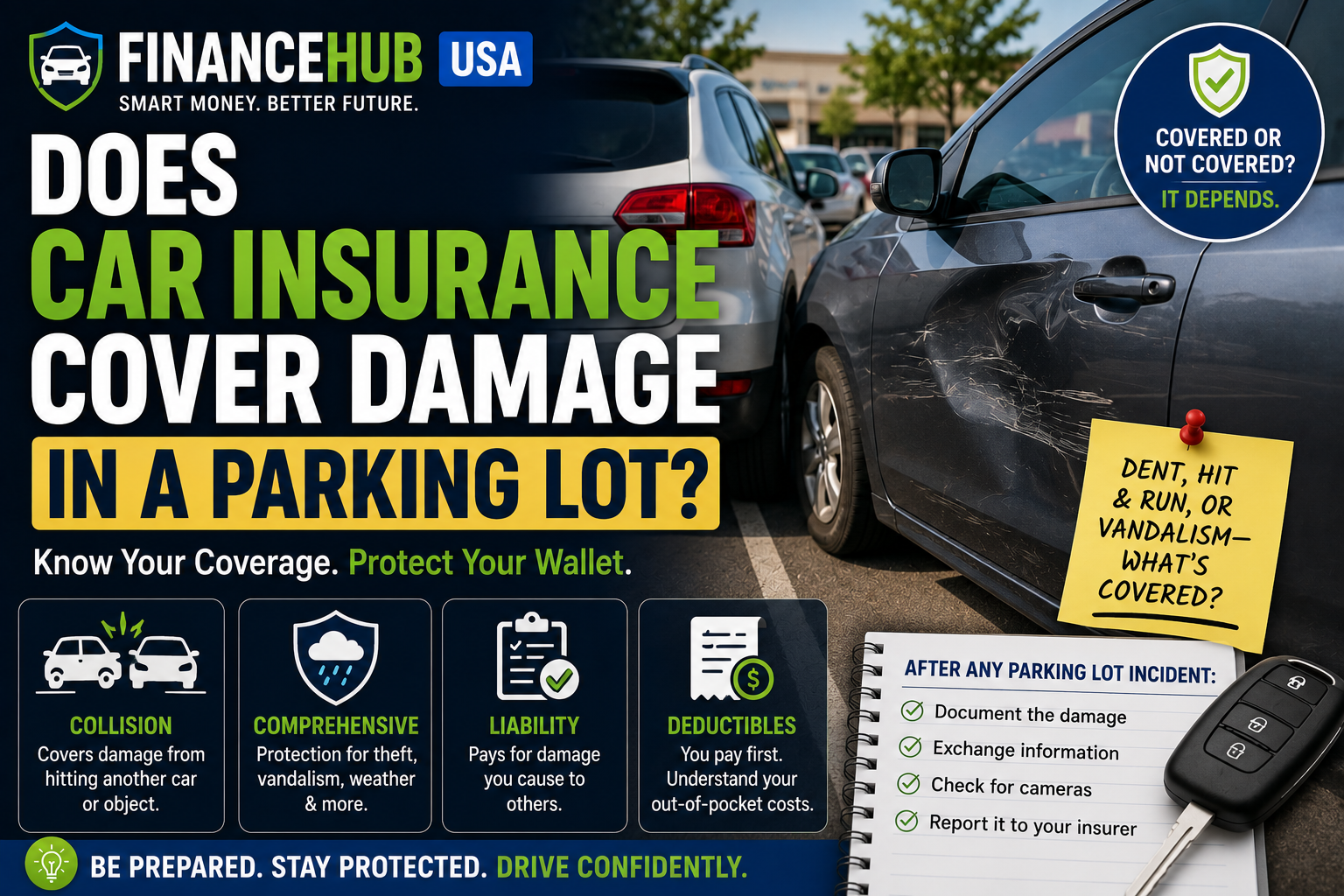

You return to your car after shopping and discover a fresh dent in the door. Maybe another driver backed into your bumper, a shopping cart struck the vehicle, someone vandalized the paint, or the driver responsible disappeared without leaving a note. The obvious question is: does car insurance cover damage in a parking lot?
In many situations, yes—but the answer depends on what caused the damage and which coverages you purchased. Collision coverage can generally help with damage caused by contact with another vehicle or object, while comprehensive coverage generally addresses certain non-collision losses such as theft, vandalism, hail, and falling objects.
If another driver caused the accident, that driver's property damage liability insurance may potentially pay for your repairs. If the responsible driver cannot be identified, your own collision coverage—or uninsured motorist property damage coverage in certain states and circumstances—may become relevant.
Deductibles, policy limits, exclusions, fault rules, state law, and the specific language of your policy can all affect the final result.
Key Takeaways
- There is no special type of "parking lot insurance." The applicable coverage depends on how the damage occurred.
- Collision coverage generally applies to covered damage caused by hitting another vehicle or object.
- Comprehensive coverage generally applies to covered non-collision events such as theft, vandalism, hail, fire, and falling objects.
- If another driver is responsible, their property damage liability coverage may pay for your repairs.
- A hit-and-run may be covered by collision or certain uninsured motorist property damage coverage, depending on the policy and state.
- Your deductible can determine whether filing a relatively small claim makes financial sense.
- Parking lot accidents do not automatically result in a particular fault determination.
- Photographs, witnesses, surveillance footage, and other documentation can be extremely important.
Which Car Insurance Coverage Applies in a Parking Lot?
There is no single insurance coverage specifically designed for parking lots. Instead, insurers generally look at what caused the damage and which coverages are included in the policy.
The National Association of Insurance Commissioners explains that collision coverage generally covers damage to your vehicle resulting from a collision with another vehicle or object. Comprehensive coverage generally addresses covered physical damage from causes other than collision, including events such as theft, vandalism, fire, hail, and certain falling objects.
| Parking Lot Incident | Coverage That May Apply | Key Consideration |
|---|---|---|
| Another car hits your vehicle | At-fault driver's property damage liability or your collision coverage | Fault and available insurance matter |
| You back into another vehicle | Your property damage liability for the other vehicle | Your own damage generally requires applicable first-party coverage |
| You hit a pole or concrete barrier | Collision | Your collision deductible generally applies |
| Someone vandalizes your car | Comprehensive | Subject to policy terms and deductible |
| Your vehicle is stolen | Comprehensive | Subject to coverage terms and policy limits |
| Hail damages your parked vehicle | Comprehensive | Comprehensive deductible may apply |
| Shopping cart damages vehicle | May depend on insurer and circumstances | Classification can depend on how the loss occurred |
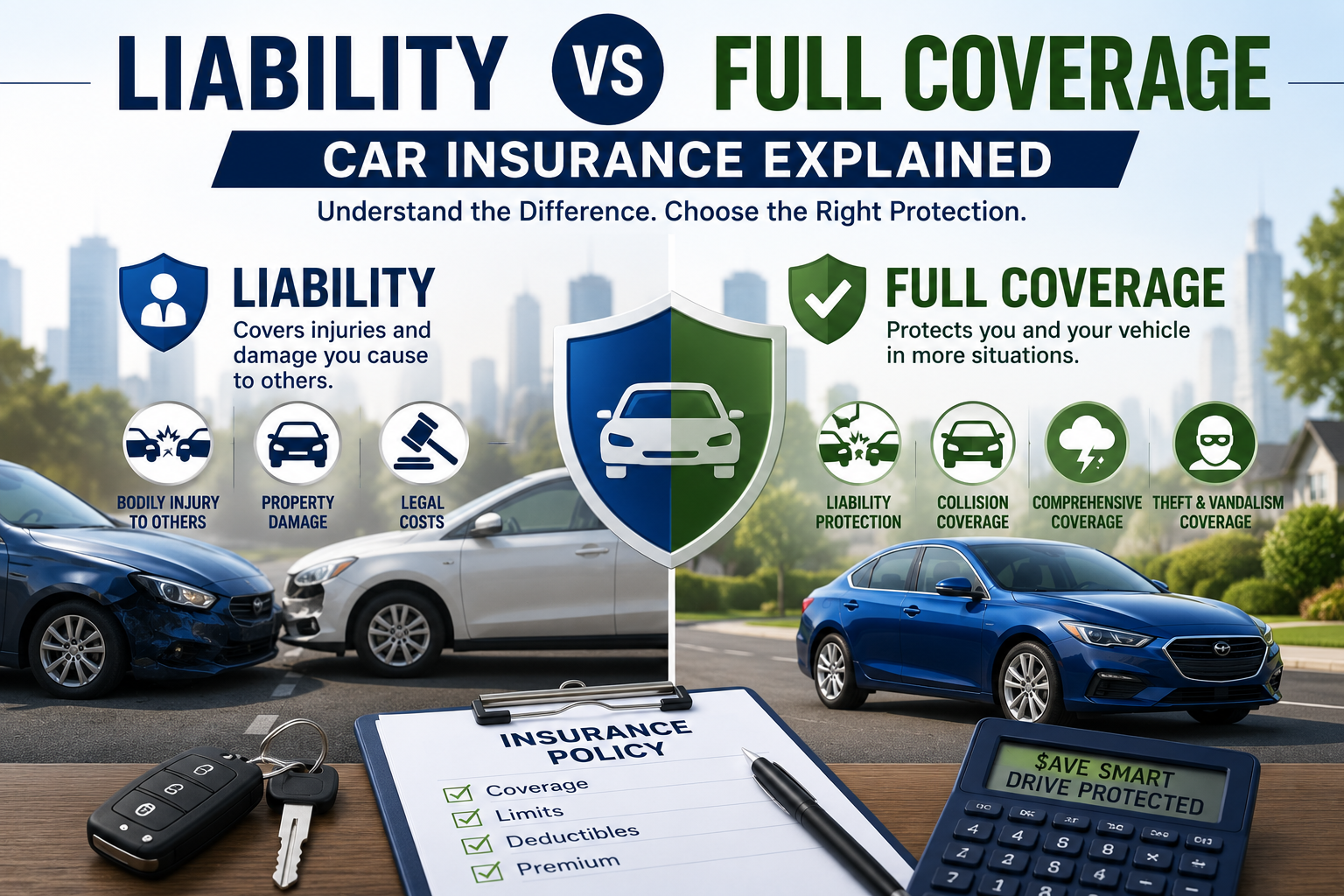
Liability insurance is fundamentally different from collision and comprehensive coverage. Property damage liability is generally designed to pay for damage you are legally responsible for causing to someone else's property, subject to policy limits. It normally does not pay to repair your own vehicle.
What If Another Driver Hits Your Parked Car?
If another driver hits your legally parked vehicle and remains at the scene, the claim can be relatively straightforward when responsibility is clear.
You should obtain the driver's name, contact information, insurance information, license plate number, and vehicle information. Photograph both vehicles, the damage, parking spaces, lane markings, signs, and the surrounding area.
If the other driver is determined to be legally responsible, their property damage liability coverage may pay for covered repairs, subject to the applicable policy limit, liability determination, and state law.
You may also have the option of making a claim through your own collision coverage if you carry it. Your collision deductible may initially apply.
If your insurer pays a covered loss caused by another driver, it may later seek reimbursement from the responsible party or insurer through a process known as subrogation. Whether your deductible is eventually recovered can depend on the circumstances and the success of the recovery process.
Example: Another Driver Backs Into Your Car
Suppose your parked SUV suffers $3,000 in bumper and body damage after another driver backs into it.
| Scenario | Potential Payment Source |
|---|---|
| Other driver is identified and liable | Their property damage liability insurance may cover the loss |
| You use your own policy | Collision coverage may pay subject to your deductible and policy terms |
| Other driver has insufficient insurance | Your own available coverage may become important |
| Other driver cannot be identified | Collision or applicable uninsured motorist coverage may become relevant |

What If Someone Hits Your Car and Leaves?
A parking lot hit-and-run can be more complicated because the responsible driver may never be identified.
If you carry collision coverage, it may generally cover physical damage to your vehicle resulting from a collision even when the other driver cannot be located, subject to your deductible and policy conditions.
Uninsured motorist property damage coverage may also be relevant in some states and circumstances. However, this coverage is not available or structured the same way everywhere, and some policies or states can impose specific requirements for unidentified-driver claims.
For that reason, do not automatically assume uninsured motorist coverage will pay every parking lot hit-and-run claim. Check your declarations page and policy terms or ask your insurer which coverage applies.
What Should You Do After a Parking Lot Hit-and-Run?
- Photograph the damage. Take close-up and wider photographs from multiple angles.
- Document the parking area. Photograph the space, nearby vehicles, lane markings, signs, and debris.
- Look for security cameras. Stores, garages, apartment buildings, and nearby businesses may have video.
- Request footage quickly. Surveillance recordings may be automatically overwritten.
- Write down the timeline. Record approximately when you parked and when you discovered the damage.
- Look for witnesses. Ask nearby people whether they saw what happened.
- Consider a police report. It may be required by state law, local rules, or your insurer depending on the circumstances.
- Notify your insurer promptly. Follow applicable policy requirements if you intend to make a claim.
Documentation becomes especially important when there is no identified driver to provide insurance information or another account of what occurred.

Does Insurance Cover Damage If You Hit a Pole?
If you accidentally back into a light pole, concrete pillar, wall, or parking barrier, collision coverage generally is the portion of an auto policy designed to cover damage to your own vehicle from that type of impact.
Your property damage liability coverage normally does not pay to repair your own car.
However, if you damage property belonging to someone else—such as a parking garage barrier—your property damage liability coverage may potentially apply to damage for which you are legally responsible, subject to your policy terms and limits.
Example
Imagine you back into a concrete pillar and cause $2,800 of covered damage to your vehicle. You have collision coverage with a $500 deductible.
| Repair Cost | Collision Deductible | Illustrative Insurer Portion |
|---|---|---|
| $2,800 | $500 | $2,300 |
In this simplified example, the insurer's portion would be $2,300 after the $500 deductible. The actual payment can differ based on the covered-loss determination, repair estimate, policy provisions, limits, and other applicable factors.
Does Comprehensive Insurance Cover Parking Lot Damage?
Comprehensive coverage can apply to certain parking lot losses that do not result from a traditional collision.
Examples of parking lot incidents that may involve comprehensive coverage include:
- Someone intentionally scratches or vandalizes your vehicle.
- Your vehicle is stolen from a parking garage.
- A tree branch falls onto your parked car.
- Hail damages your vehicle while it is parked.
- A covered falling object damages the vehicle.
- Fire damages the vehicle.
A comprehensive deductible generally applies unless the policy or applicable law provides otherwise.
One of the easiest ways to understand the difference is that collision generally concerns impacts involving your vehicle, while comprehensive generally addresses covered losses caused by events other than collision. The exact policy language still controls.
What About Shopping Cart Damage?
Shopping-cart damage can be less intuitive because the classification may depend on exactly how the incident occurred and how the policy defines collision and other physical-damage losses.
If a moving shopping cart rolls into a parked vehicle, an insurer may evaluate the loss under collision coverage because the vehicle was struck by another object. However, specific circumstances and policy wording can affect the determination.
Instead of assuming every shopping-cart claim is automatically comprehensive or collision, describe exactly what happened when contacting the insurer and ask which coverage and deductible would apply.
FinanceHub USA Analysis: The Deductible Can Matter More Than You Expect
Knowing that parking lot damage is technically covered does not automatically mean filing a claim is financially worthwhile.
Suppose a covered incident causes $650 in damage and your applicable deductible is $500. A simplified claim would potentially provide only $150 after the deductible.
By comparison, a $4,000 covered repair with the same $500 deductible creates a substantially larger potential insurance benefit.
| Covered Repair Estimate | Deductible | Illustrative Insurance Portion |
|---|---|---|
| $450 | $500 | $0 |
| $650 | $500 | $150 |
| $1,500 | $500 | $1,000 |
| $4,000 | $500 | $3,500 |
These figures are simplified illustrations rather than guaranteed claim outcomes, but they demonstrate why drivers should know their collision and comprehensive deductibles before damage occurs.
Claims history can also be one factor insurers consider when determining premiums, although the effect of an individual claim varies based on state regulations, fault, insurer rating practices, prior claims, discounts, and other underwriting factors.
Who Is at Fault in a Parking Lot Accident?
There is no universal rule that automatically determines fault simply because an accident happened in a parking lot.
Responsibility can depend on how each vehicle was moving, traffic signs, lane markings, witness statements, surveillance footage, vehicle damage, and applicable state law.
For example, a driver backing out of a parking space generally needs to watch for vehicles and pedestrians already traveling through the lane. However, another driver's actions can also contribute to an accident.
| Parking Lot Scenario | Important Evidence |
|---|---|
| Driver backs into passing vehicle | Vehicle positions, right-of-way rules, witnesses and video |
| Two vehicles back into each other | Timing, movement, damage location and surveillance footage |
| Vehicle hits legally parked car | Photos, witness statements and driver information |
| Collision at parking-lot intersection | Signs, lane markings, direction of travel and applicable law |
Insurers may review the available evidence before making a liability determination. Because state negligence and insurance rules vary, drivers should avoid assuming that every similar-looking parking lot accident will produce the same fault result.
Are Door Dings Covered by Car Insurance?
A door ding may be covered, but whether filing a claim is worthwhile is another question.
If another vehicle's door strikes your car, your insurer may evaluate the incident under the physical-damage provisions of your policy. If the responsible person is identified and legally liable, their property damage liability coverage may also become relevant.
For minor dents, however, the deductible can significantly reduce or eliminate the potential insurance payment.
Example
Suppose repairing a door ding costs $450 and your applicable deductible is $500.
| Repair Estimate | Deductible | Illustrative Insurance Payment |
|---|---|---|
| $450 | $500 | $0 |
Even if the damage otherwise qualifies as a covered loss, there may be no first-party insurance payment because the repair cost does not exceed the deductible.
What If You Find Damage but No Note?
Discovering unexplained damage does not necessarily prevent you from making a claim. The challenge is determining what likely happened and which coverage applies.
Before leaving the parking lot, photograph the damage and surrounding area. Look for paint transfer, broken vehicle parts, debris, nearby cameras, and potential witnesses.
If the parking lot belongs to a store, apartment complex, office building, hotel, or parking garage, ask whether surveillance footage exists and how long recordings are retained.
Do not wait unnecessarily to request video. Some surveillance systems automatically overwrite older recordings after a limited period.
If the evidence suggests another vehicle caused the damage and left, consider reporting the incident to law enforcement when appropriate or required. Your insurer can explain which documentation is necessary for a potential hit-and-run claim.
Can a Parking Lot Insurance Claim Raise Your Premium?
It can, but there is no universal rule stating that every parking lot claim will increase your insurance rate.
The effect can depend on the type of claim, fault determination, claims history, state insurance regulations, insurer rating practices, available discounts, and other underwriting factors.
A comprehensive vandalism claim, an at-fault collision, and a claim involving damage caused by another identified driver may not necessarily be treated the same way.
Drivers should therefore avoid assuming either that a claim will definitely raise their rate or that it can never affect future premiums.
Should You File a Claim or Pay Out of Pocket?
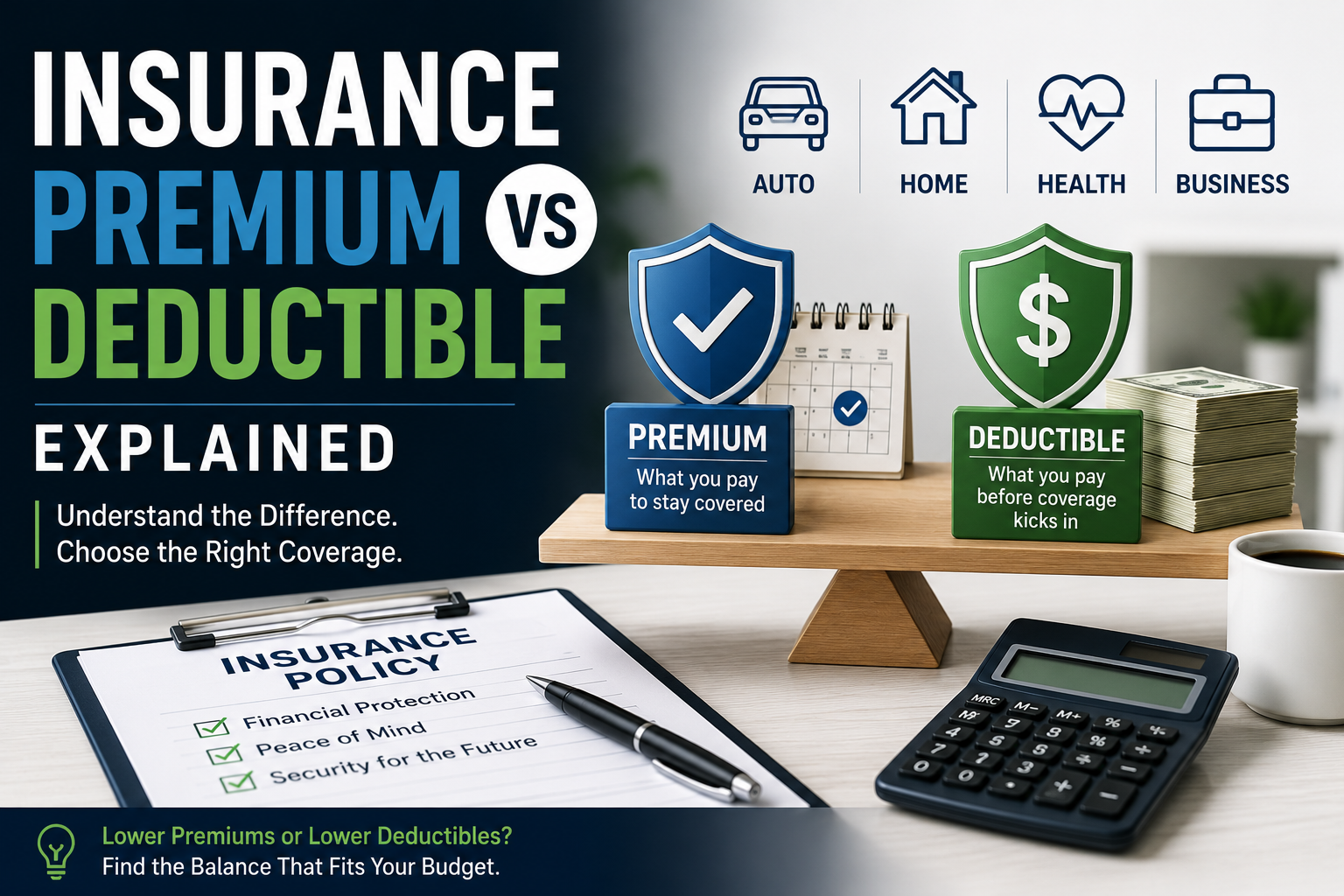
Before filing a relatively small first-party physical-damage claim, compare the repair estimate with your deductible.
| Repair Estimate | Deductible | Illustrative Maximum Before Other Adjustments | Financial Question |
|---|---|---|---|
| $400 | $500 | $0 | Claim may provide no payment |
| $750 | $500 | $250 | Is a relatively small claim worthwhile? |
| $2,000 | $500 | $1,500 | Potential insurance benefit becomes more significant |
| $6,000 | $500 | $5,500 | Potential benefit is substantially larger |
These calculations are simplified examples, not guaranteed settlements. Actual payments depend on coverage, repair estimates, policy limits, exclusions, deductibles, and the insurer's claim determination.
Drivers should also consider the urgency of the repair, whether another party is responsible, whether the damage could conceal additional problems, and their ability to pay the repair cost themselves.
What If the Repair Cost Is Below Your Deductible?
If a covered repair costs less than your applicable deductible, your insurer generally would not make a first-party payment for that loss.
For example, assume your collision deductible is $1,000 and a parking lot incident causes $600 in covered damage to your vehicle. Because the damage does not exceed the deductible, you would generally be responsible for the entire $600 repair cost under your own collision coverage.
However, this does not necessarily mean you should ignore the incident. If another identifiable driver is legally responsible, you may potentially have a third-party claim against that driver's property damage liability insurance.
The deductible analysis can therefore differ depending on whether you are using your own physical-damage coverage or pursuing a responsible driver's insurer.
What If the Other Driver Has No Insurance?
If the responsible driver is identified but uninsured, your available options depend on your policy and state law.
Your collision coverage may still cover your own vehicle's physical damage, subject to the applicable deductible and policy conditions.
Uninsured motorist property damage coverage may also be available in certain states or policies. Requirements, limits, deductibles, and eligibility rules vary significantly, so drivers should verify exactly what coverage they purchased.
You may also have legal rights against the responsible driver personally, although collecting directly from an uninsured individual can present practical challenges.
Does It Matter Whether the Parking Lot Is Private Property?
The fact that an accident occurred on private property does not automatically mean insurance coverage disappears.
Auto insurance policies can still apply to covered incidents occurring in shopping-center parking lots, apartment parking areas, office garages, and other private locations.
However, traffic enforcement, police-report procedures, property-owner responsibilities, and fault analysis can vary depending on the jurisdiction and circumstances.
Drivers should not assume that "private property" means an accident does not need to be documented or reported.
What Should You Do Immediately After Parking Lot Damage?
- Check for injuries first. If occupied vehicles were involved and someone is injured, seek emergency assistance.
- Photograph everything. Take close-ups and wider photographs of the vehicles and parking area.
- Exchange information. Obtain the other driver's name, contact details, insurance information, and license plate when applicable.
- Document both vehicles. Record makes, models, license plates, and visible damage.
- Find witnesses. Independent observations can help when responsibility is disputed.
- Check for cameras. Nearby stores and parking facilities may have valuable surveillance footage.
- Contact police when appropriate. Reporting requirements vary by jurisdiction and circumstances.
- Notify the appropriate insurer. Explain what happened accurately rather than guessing which coverage applies.
- Obtain a repair estimate. This can help you compare the expected repair cost with your deductible.
- Keep your records. Save photographs, estimates, reports, emails, video information, and claim documents.
Common Parking Lot Insurance Mistakes
| Mistake | Why It Can Matter |
|---|---|
| Leaving without taking photographs | Important evidence can disappear |
| Assuming liability insurance repairs your own car | Your vehicle generally requires applicable first-party coverage unless another responsible party pays |
| Calling every parking lot loss comprehensive | Collision and comprehensive generally cover different causes of damage |
| Ignoring the deductible | Minor damage may produce little or no first-party insurance payment |
| Waiting too long to request camera footage | Recordings may be automatically overwritten |
| Assuming every claim raises premiums by the same amount | Rate effects vary by insurer, state, fault and claims history |
| Repairing immediately without documenting the damage | Evidence relevant to the claim can be lost |
| Assuming private property means insurance does not apply | Covered auto losses can still occur in private parking lots |

FinanceHub USA Analysis: Coverage and Claim Value Are Different Questions
Parking lot accidents illustrate an important insurance principle: asking whether damage is covered is only the first question. Drivers should separately consider how much financial value they could realistically receive from filing the claim.
A $600 covered loss with a $500 deductible is fundamentally different from a $5,000 covered loss with the same deductible. The applicable coverage might respond in both situations, yet the potential financial benefit is dramatically different.
This is also why drivers should understand their insurance before an accident rather than trying to learn the policy after discovering damage.
Three pieces of information are particularly useful:
- Your collision deductible
- Your comprehensive deductible
- Which physical-damage coverages actually appear on your declarations page
Your vehicle's approximate market value also matters. Paying for extensive collision and comprehensive coverage on a valuable newer vehicle presents a different financial calculation from carrying the same deductibles on an older vehicle worth relatively little.
Ultimately, the question is not simply "Will insurance cover this?" It is also "Which coverage applies, what deductible applies, what amount could insurance realistically pay, and what are my alternatives?"
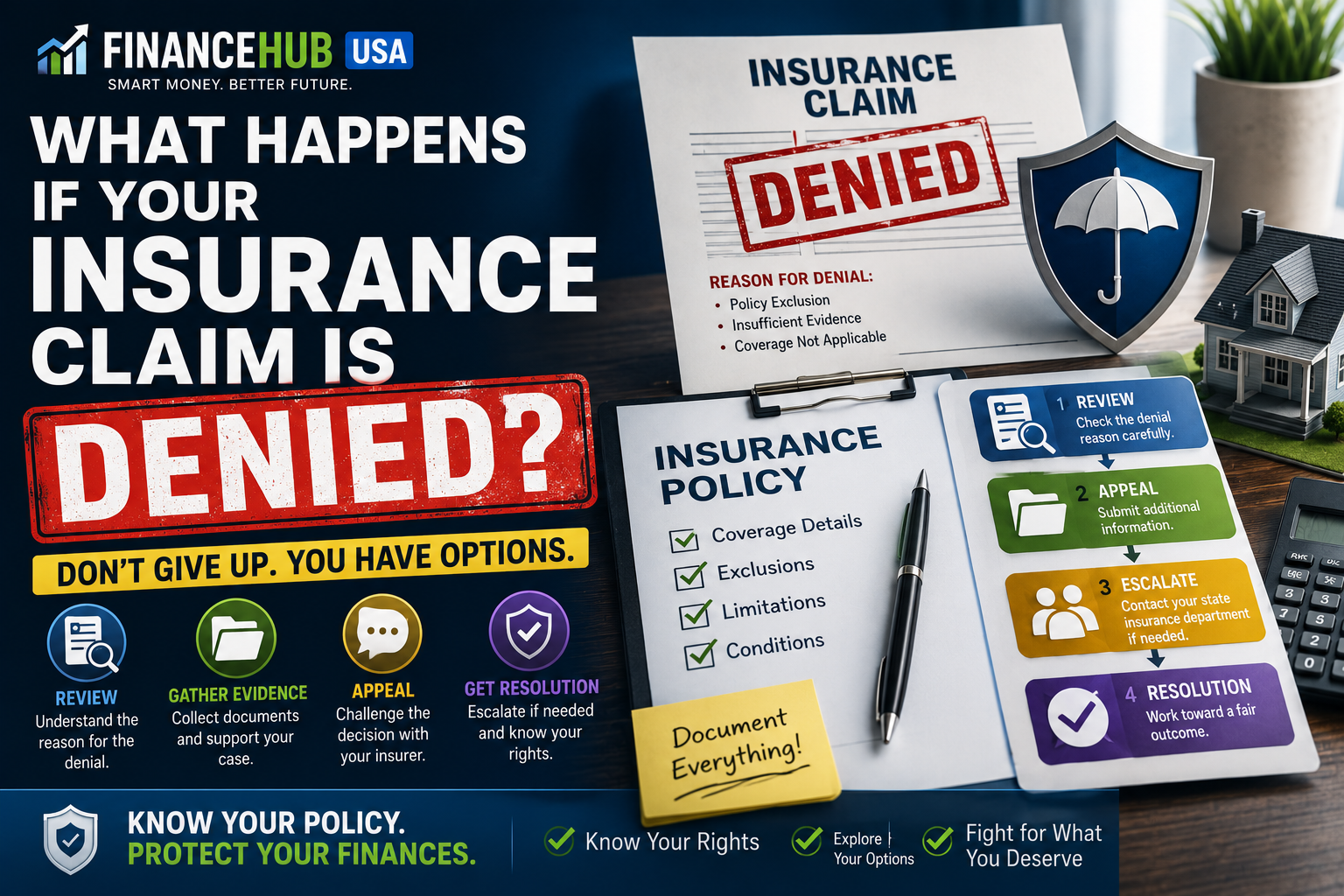
For another FinanceHub USA insurance guide, read What Happens If Your Insurance Claim Is Denied?.
Final Thoughts
So, does car insurance cover damage in a parking lot? Often it can, but the applicable coverage depends primarily on what caused the damage and what insurance you purchased.
Collision coverage can generally help repair your vehicle after covered impacts with another car or object. Comprehensive coverage generally addresses covered non-collision events such as theft, vandalism, hail, fire, and falling objects. If another driver caused the damage, their property damage liability insurance may also be relevant.
A hit-and-run, shopping-cart incident, door ding, collision with a parking barrier, or unexplained dent can each involve different coverage considerations.
Before filing a claim, document the incident carefully, determine which coverage may apply, obtain a repair estimate when practical, and compare the expected cost with your deductible.
Because policy language and state insurance rules vary, review your declarations page and policy documents or contact your insurer when the circumstances are unclear.
Continue exploring FinanceHub USA for practical guides covering insurance, credit, banking, investing, retirement planning, and everyday personal finance.
Insurance Disclaimer: This article is for general educational and informational purposes only and does not constitute insurance, financial, or legal advice. Coverage varies by insurer, policy, state law, endorsements, exclusions, deductibles, limits, and individual circumstances. Review your policy documents and contact your insurer or a licensed insurance professional for information about your specific coverage.
Official Insurance Resources
Frequently asked questions
Does car insurance cover damage while parked?
It can. The applicable coverage depends on what caused the damage and the coverages on your policy. Collision can apply to certain impacts, while comprehensive generally covers specified non-collision events.
What happens if someone hits my parked car and leaves?
Collision coverage may generally cover the physical damage subject to your deductible. Uninsured motorist property damage may also apply in some states and policies, but requirements vary.
Does insurance cover a door ding in a parking lot?
Potentially. Coverage depends on how the damage occurred and your policy. For minor damage, the repair cost may also be below or only slightly above your deductible.
Does car insurance cover hitting a pole in a parking lot?
Collision coverage generally covers damage to your insured vehicle resulting from a covered collision with an object such as a pole, subject to the deductible and policy terms.
Does comprehensive insurance cover parking lot damage?
Comprehensive generally covers specified non-collision events such as theft, vandalism, fire, hail and certain falling-object losses. It does not replace collision coverage for every parking lot incident.
Does liability insurance pay for damage to my own car?
Generally no. Property damage liability is intended to pay for damage you are legally responsible for causing to another person's property, subject to policy limits.
Is shopping cart damage covered by insurance?
It may be covered, but classification can depend on the circumstances and policy language. Ask your insurer whether collision or another applicable coverage applies.
Will a parking lot claim raise my insurance rate?
It can, but not every claim has the same effect. Fault, claim type, claims history, state regulations and insurer rating practices can influence future premiums.
Should I file a claim for a small parking lot dent?
Compare the repair estimate with your deductible. If the damage is below the deductible, your collision or comprehensive coverage generally would not provide a first-party payment for that loss.
What should I do if I find parking lot damage with no note?
Photograph the damage and surroundings, look for witnesses and cameras, document when you discovered it, consider a police report when appropriate, and contact your insurer if you intend to make a claim.